Article updated on December 4, 2024.
Have you ever questioned whether you are happy in your job? Probably yes. Especially if you are like me, one of those people who seek job happiness and are aware that it affects your personal life.
One of the peculiarities of millennials (people belonging to Generation Y, born in the last two decades of the twentieth century) is their propensity to change jobs much more often than previous generations.
In my case, before returning to entrepreneurship and academia, I changed jobs several times, especially since I arrived in Chile.
On one of those occasions, I had been with a company for less than a year, had an interesting position, but for multiple reasons, I didn't feel fulfilled.
Still, it seemed too early to abandon ship, and I decided to seek help.
The fundamental questions I needed to answer were: should I change jobs? If the answer was yes, how do I do it? If it was no, how do I manage to be happy in this company?
It's like going to a psychologist. You can talk to your friends about your problems, but you can also seek specialized help.
I don't remember how I found them, whether it was by searching on Google (most likely) or through LinkedIn, but somehow I discovered that there was a specialized company that could help me define my professional goals and teach me how to achieve them.
Also, I felt I needed guidance from a Chilean perspective since I had only been in this country for a short time and, frankly, I hadn't yet fully experienced the culture shock.
Outplacement is a type of support that arises from the need to assist people in high-level positions when they are laid off.
Perhaps you can imagine that it is an expensive service and not accessible to everyone. Often, the companies that lay off a manager pay for it to ensure their smooth reintegration into the job market.
That was more or less the idea I had at that time (in 2010 – 2012) since I had seen these services in Canada.
Obviously, I didn't let that prejudice take hold of me, nor did I want to reach a degree of job unhappiness that would require a psychologist.
I looked for an employment coaching company and saw it as an investment in my present and future.
However, it's not enough to just ask for help. I remember that in the first meeting with my coach, I left with a folder full of articles I had to read, as well as exercises to complete.
More homework? I thought.
If we go into detail, these are some of the topics I remember working on and studying with my coach:
- Understanding how the job market works in Chile.
- Defining my value proposition for this job market.
- Identifying which company I can add value to.
- Learning to communicate my proposal: through my CV, for example.
-
Learning to build professional networks. This is one of the areas where I believe I had made the most progress at that time.
- Knowing how to perform in a job interview.
- Learning to negotiate.
I don't think I even finished the coaching before I realized that I needed to change jobs. That I wouldn't find job happiness in that organization if I continued as I was.
In a way, it was what my inner voice was already telling me.
The difference between before and after employment coaching was that I had many tools that I didn't have at the beginning.
Years later, as the world is very small, one of my Master's classmates did his thesis on a similar topic.
Attending his final defense, I noted that fortunately, today professionals have many more methods and tools at their disposal to design their careers.
The same goes for companies to make their selection and, once people are selected, ensure that their journey within the company is one of growth.
That's how I met Macarena Paredes from Populus Group, a company that, among other things, specializes in employment coaching.
I clarify that she was not my coach, as I didn't know her at that time, but if I had to recommend her, I would do so with my eyes closed.
Soon after, together we undertook the task of designing the Professional Career Planner.
One of the ingredients I put into this planner was precisely my personal experience. That's why we selected a series of activities and materials that serve to guide professionals in managing their careers.
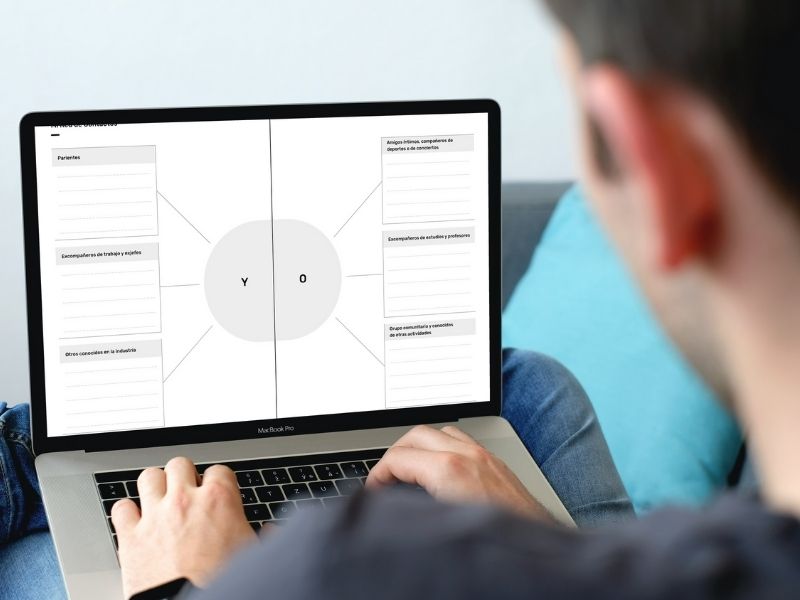
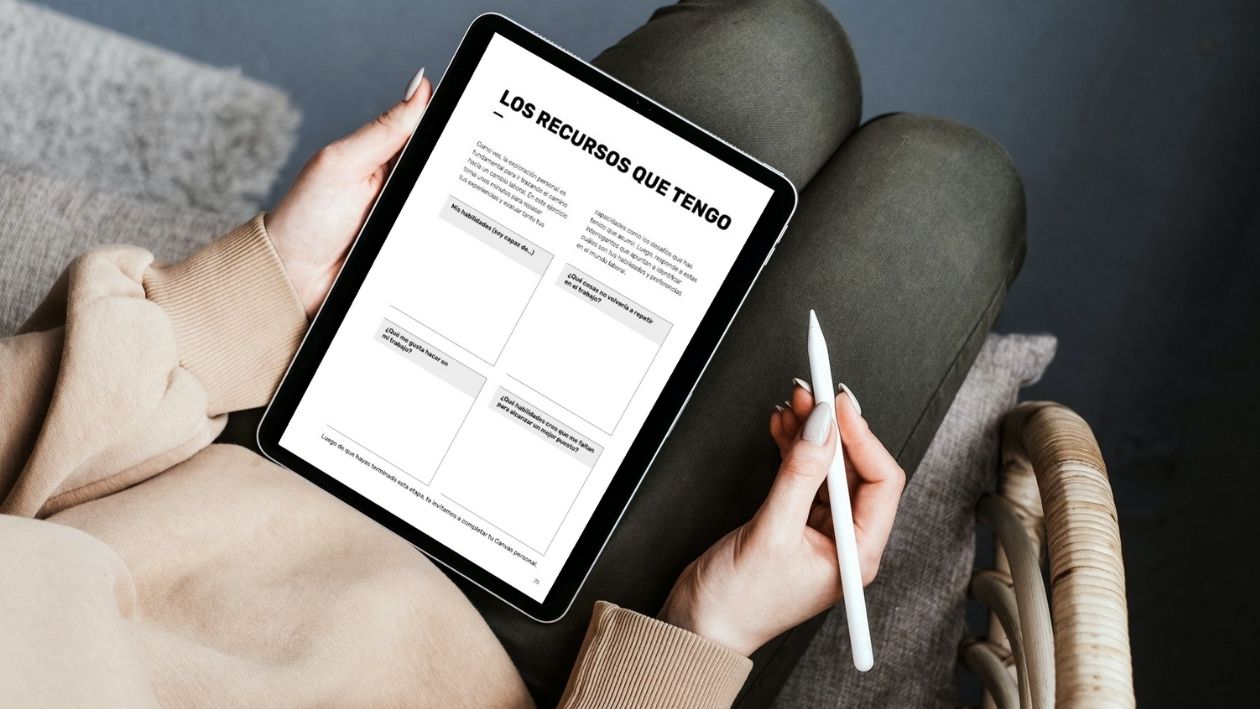
The Professional Career Planner is a practical and accessible tool that guides you through the process of rediscovering your career purpose and building a personalized strategy to achieve your goals. It accompanies you from the first steps, with self-exploration exercises that help you identify your strengths, analyze your current job situation, and clarify your objectives.
With this foundation, you can design a solid plan focused on professional growth.
Among its most outstanding resources is the Personal Canvas, a tool designed to help you develop your value proposition and define your professional brand.
Additionally, you'll find practical materials such as templates for creating an effective CV and cover letter, tips for building and strengthening your network of contacts, and exercises for managing the search for new opportunities.
And all of this is complemented by guides for evaluating job offers and effectively tracking your interviews.
But that's not all, because the Professional Career Planner also contains resources to motivate and inspire you during times of uncertainty.
With elements like a vision board for your dreams and aspirations, career diagnostic tests, and monthly planning exercises, this tool will help you take control of your future and confidently move towards the career you truly want to build.
In summary, this tool will help you:
- Clarify your career goals.
- Identify your strengths.
- Build your value proposition.
- Work with materials for your job search.
- Develop networking strategies.
- Efficiently manage selection processes.
- Evaluate job opportunities.
- Create personalized monthly planning.
- Maintain constant motivation.
The Professional Career Planner is compatible with e-ink tablets, so you can work on the document using a digital pen. If you prefer, you can also print your planner and work on traditional paper.
The idea was to make a tool available to everyone that helps you discover how you feel about your current job situation and to develop the value proposition that will set you apart when you look for a new job opportunity.
Have you asked for or sought professional help to define your value proposition, career goals, to look for a job, or to review your CV?

 By
By