For some people, the word "planning" can be a bit daunting. Sometimes we think we're not good at it, but we forget that it's a very human habit. Think for a moment: what do you do before going grocery shopping for the week? Do your trips and vacations just pop up overnight? Surely, throughout your life, you've practiced planning even in the most mundane actions.
Furthermore, the human brain is a very efficient machine when it comes to planning, to the point that it still cannot be imitated by the most sophisticated computers in many processes involving the management of our lives. So, having acknowledged these advantages, what are you waiting for to start planning other tasks related to your life as well?
Planning to improve personal and professional productivity
Every so often, it's essential to conduct a task analysis, retrospectively reviewing what you are actually doing. That's why we want to invite you to optimize your time and organize your work to improve your personal and professional productivity in your demanding daily life.
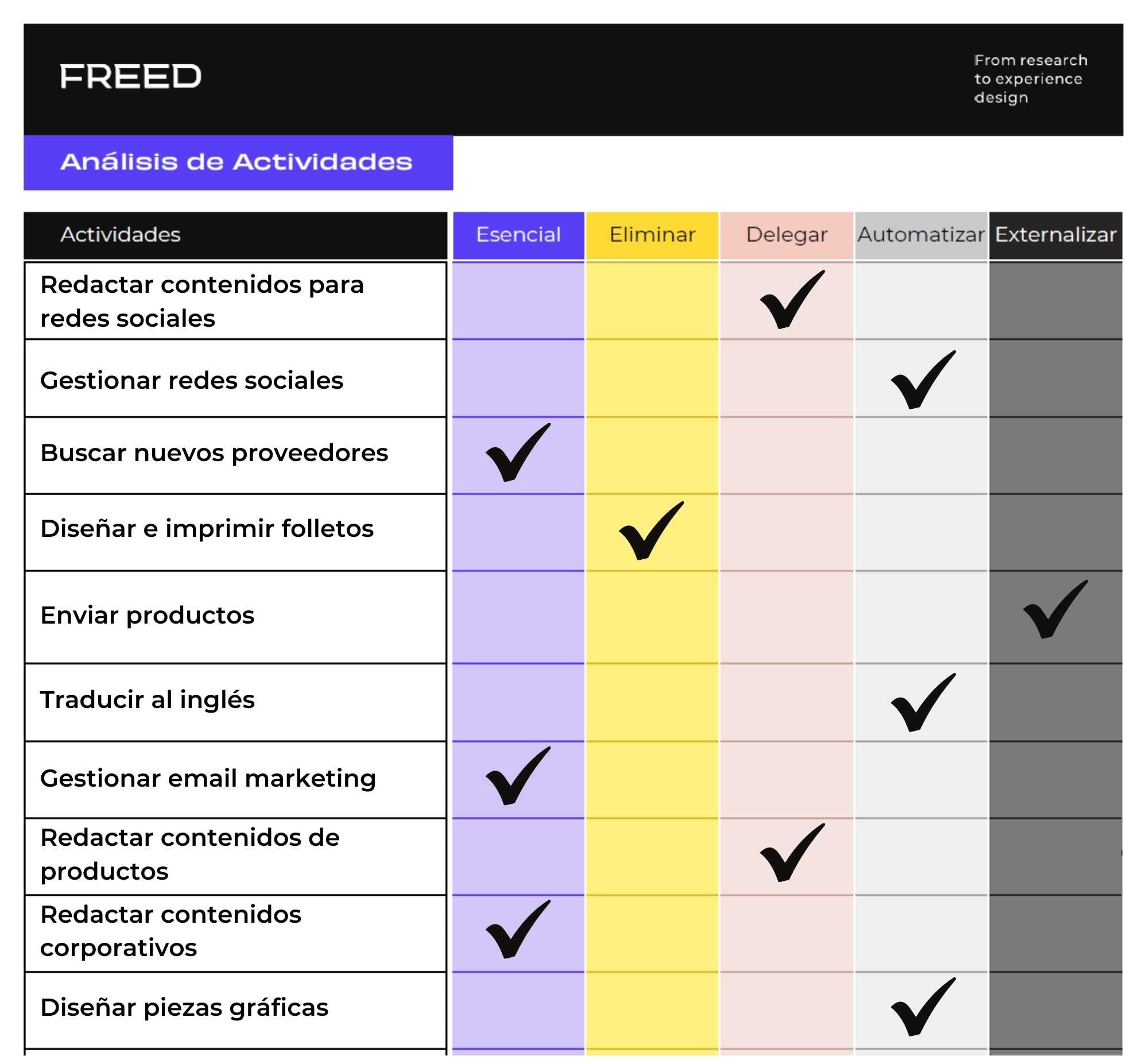
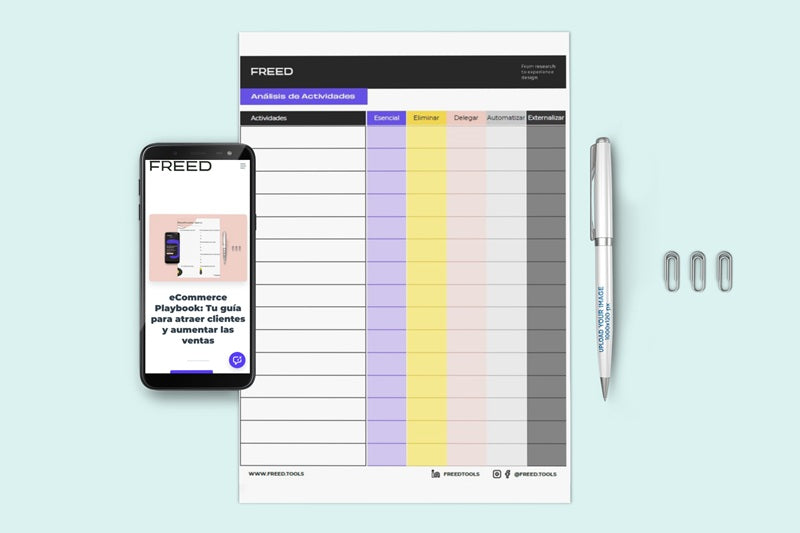
For this, at FREED, we designed the Activity Analysis Template, which you can download, print, and fill out. This exercise will be very useful for understanding which tasks and activities are essential, what you can stop doing, what can be outsourced, and for learning to delegate.
This dynamic consists of the following:
- In the first column on the left, list all the tasks that take up your time, are recurring, and have an associated number of hours. Include your ongoing and pending projects.
- In the second column, identify what is essential. These are the tasks, activities, and projects that only you can perform. Mark with a check those that fall into this category.
- Then, in the third column, mark the tasks you could eliminate, those you can stop doing because they don't add value to the client or your team.
- In the fourth column, mark everything that can be delegated, something another person could do. To figure this out, ask yourself: "If my hourly rate is X, can I pay someone else to do it while I focus on what's essential?"
- In the fifth column, mark the tasks that can be automated. They are repetitive, time-consuming, and today there are applications and web platforms that could help you automate them: scheduling meetings, text translations, transcriptions of audio and video interviews or talks, image editing, etc.
- In the sixth column, ask yourself: "Is it really necessary for me to do this task?" The idea is to identify everything that can be outsourced.