FREED study · Free download
Phygital experience: physical and digital interactions are part of the same conversation
We researched how product and service brands design phygital experiences: consumer macrotrends, Smart Packaging, QR codes and the perspective of 7 local packaged-goods brands.
Note: the PDF is in Spanish. An English version is coming soon.
- consumer macrotrends analyzed
- 8
- Smart Packaging technologies
- 4
- CPG brands interviewed in Chile
- 7
- QR codes recorded in the field
- 50
Consumer macrotrends
Deep shifts in how people behave
Unlike a fad, a macrotrend is a deep shift in people's behavior. These eight trends directly shape how we interact with products and services in a phygital context.
More conscious consumers
A growing segment prefers sustainable products and brands with a clear purpose, and is willing to pay a bit more for them.
Different routines
The pandemic transformed people's routines and forces brands to rethink how their customers acquire products and services.
Low-touch economy
Consumers can't physically touch, smell or try products. MAC Cosmetics responded with virtual augmented-reality try-ons.
Contactless interactions
Technology removes even the touch of card payments: Amazon One lets you pay by holding your palm to a biometric scanner.
Always connected
Internet access is a top priority worldwide: in the United States, 50% of people would postpone an important event to stay connected.
Less artificial, more intelligent
People want practical augmented- and virtual-reality applications, and demand ethical, unbiased algorithms and artificial intelligence.
New purchase decisions
People no longer follow established behavior patterns: to capture their attention, brands must show up in micro-moments.
A phygital world
For millennials, the line between physical and digital doesn't exist: 82% want to access products both online and in-store.
Smart Packaging
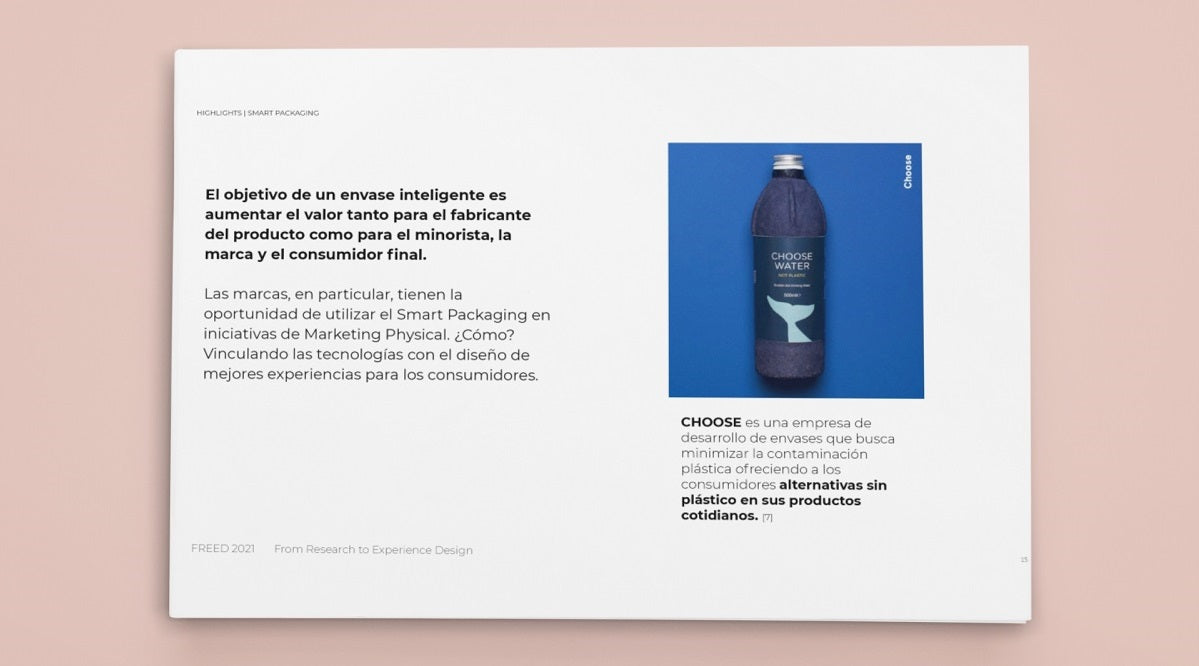
Packaging as an extension of the brand
Smart packaging protects the quality and safety of products while also opening a way to tell sustainability stories and connect with a digital environment. Here are the four main technologies.
Shelf-life sensors
Detect, record and transmit information about changes in the environment or the state of packaged food: temperature, oxygen, carbon dioxide and more.
NFC
Wireless data transfer through a chip delivers product information, warns about allergenic components, verifies authenticity and activates promotions.
Indicators
Track temperature and freshness through changes in color or intensity, and detect gases, pH changes and microbiological contamination.
RFID
Radio-frequency identification automatically captures data to track inventory, location, handling and product security.
QR codes on products and services
What we found scanning 50 QR codes in retail spaces
We visited supermarkets, department stores, shops and branches to record QR codes on packaging, labels, displays, POP materials and shelving. We observed that the share of brands implementing them is still low.
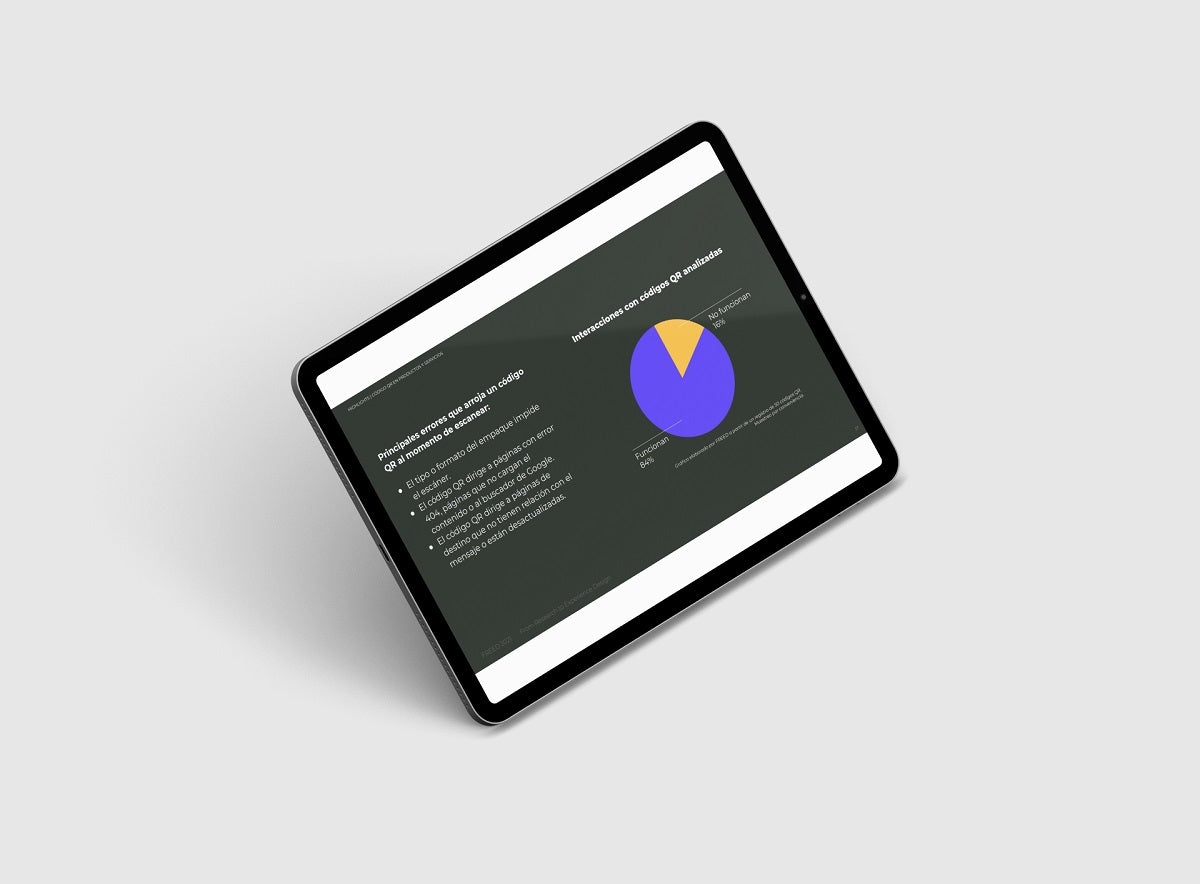
QR code interactions analyzed
16% of the codes don't work: packaging that blocks scanning, pages showing 404 errors, or outdated destinations unrelated to the message.
- Work84%
- Don't work16%
Chart by FREED based on a record of 50 QR codes. Convenience sample.
Industries already betting on QR
Brands that do move consumers from a physical space to a digital one belong to very diverse industries.
- Packaged consumer goods
- Fashion & apparel
- Retail
- Food & beverage
- Real estate
- Beauty
- Telecommunications
In consumer goods, QR codes lead to direct-to-consumer e-commerce (D2C), to the online product page, and to corporate sites. In retail, they're used to reduce physical contact in customer service, payments and catalogs.
Local brands
The voice of 7 packaged-goods brands
In late 2020 we interviewed seven professionals in charge of brands and products in Chile's CPG sector —Brand Managers and KAMs— along with professionals from B2B2C companies such as supermarkets, department stores and printers.
A key finding: sales channels often operate independently, and omnichannel experiences are nearly nonexistent for consumers.
The 6 channels where CPG brands sell
- Own e-commerce (D2C)
- Modern physical channel
- Modern digital channel
- Traditional channel
- HORECA
- Marketplaces
“Launching a product takes at least 6 months, and for this company that's fast, but for the market it's very slow.”
For creators of B2B solutions
Challenges and recommendations from the study
4 challenges
Link technology with experience
Phygital experiences require understanding what technology the customer has, how they use it and what they expect from it.
Deliver meaningful added value
Connecting the physical and digital worlds requires experiences that bring real value to the end customer, not just a technological gesture.
Generate short-term benefits
Brands expect solutions that are simple to use, easy to integrate, and that produce positive changes in their operations in the short term.
Experiment early on
Involve consumers before and during the design of the phygital experience to catch failures and improve in time.
4 recommendations
Explore the brand's digital ecosystem
Sending users to a digital environment doesn't pay off if the platforms don't meet basic standards of user experience, mobile optimization and security.
Connect with other key players
Agencies, consultancies and printers are part of the packaging, labeling and display ecosystem: they will recommend this type of solution.
Evangelize
In an immature local market, you need to invest in educating brand decision-makers. Inbound marketing and content make that process easier.
Assess what a QR solution really means
Modifying packaging involves multiple stakeholders: build consensus and evaluate how the experience will be maintained for as long as the QR code is live.
“Adding a QR code isn't enough to get people to scan it. People need to know what happens if they do.”
Who is this study for?
Technology companies building phygital solutions, such as B2B providers of connected experiences.
Retail product brands planning to design interactions for a phygital experience for their consumers.
CX, marketing and innovation teams looking for research foundations to connect physical and digital touchpoints.
Note: this study was originally conducted and published in Spanish. The PDF you download will be in Spanish.