Searching on Google will surely bring up endless tests and articles with advice telling you to change jobs if a series of expectations haven't been met, if you haven't received a pay raise, or if a promotion hasn't arrived within a certain timeframe. But this is a very important decision, and you should know that it requires a very personal evaluation, following a process of self-exploration to first assess your situation, and then plan your next steps.
Here, we'll conduct a test with the key aspects you should consider, and we'll also discuss a tool that will greatly help you with self-exploration activities and designing the professional career you desire.
We start the test with the most important question you should ask yourself to evaluate the possibility of changing jobs, as there is a direct link between happiness in your work life and happiness in your personal life.
Indeed, at an event held by Adolfo Ibáñez University on International Happiness Day, academic Wenceslao Unanue, Co-Director of the Diploma in Happiness Management at Work from the Business School of that institution, was asked if someone unhappy at work could be happy in their personal life. His answer was a resounding no, arguing that happiness in life cannot be separated from job satisfaction.*
Along with other academics, they conducted the research "Revisiting the link between job satisfaction and life satisfaction: the role of basic psychological needs," where they state that the most accepted hypothesis is that "work experiences extend to other spheres of life, and vice versa, suggesting a positive relationship between the two variables."**
At the same event, academic and Doctor in Social and Organizational Behavior, Mariana Bargsted, stated that what is relevant is that work be a "gratifying, challenging experience where people can feel useful, competent, and part of something important, and that this does not interfere with the possibility of feeling the same and being happy in other spheres of life."***
We have already presented three very important aspects for you to test whether you should change jobs:
- Are you happy with your current job?
- If the answer is no, is that affecting your personal life?
- Is your job gratifying, challenging, and does it make you feel useful?
Don't be alarmed if your answers are negative; you would be part of the majority, because according to a survey published in March 2019 by Trabajando.com, 60% of Chileans are not happy with their current jobs.****
Among the most common reasons highlighted were:
- "not having a good salary" (26%),
- "lack of appreciation" (18%),
- "lack of growth opportunities" (14%),
- "inability to balance personal and professional life" (13%),
- "not being able to develop professionally" (12%), among others.
With that in mind, the next step would be to begin self-exploration to define what you like and dislike in the workplace, to gather the initial data that will allow you to design the professional career you desire.
But before making such an important decision as changing jobs, it is very important to have enough clarity to choose the best path, the one that leads you to the fulfillment of your professional goals.
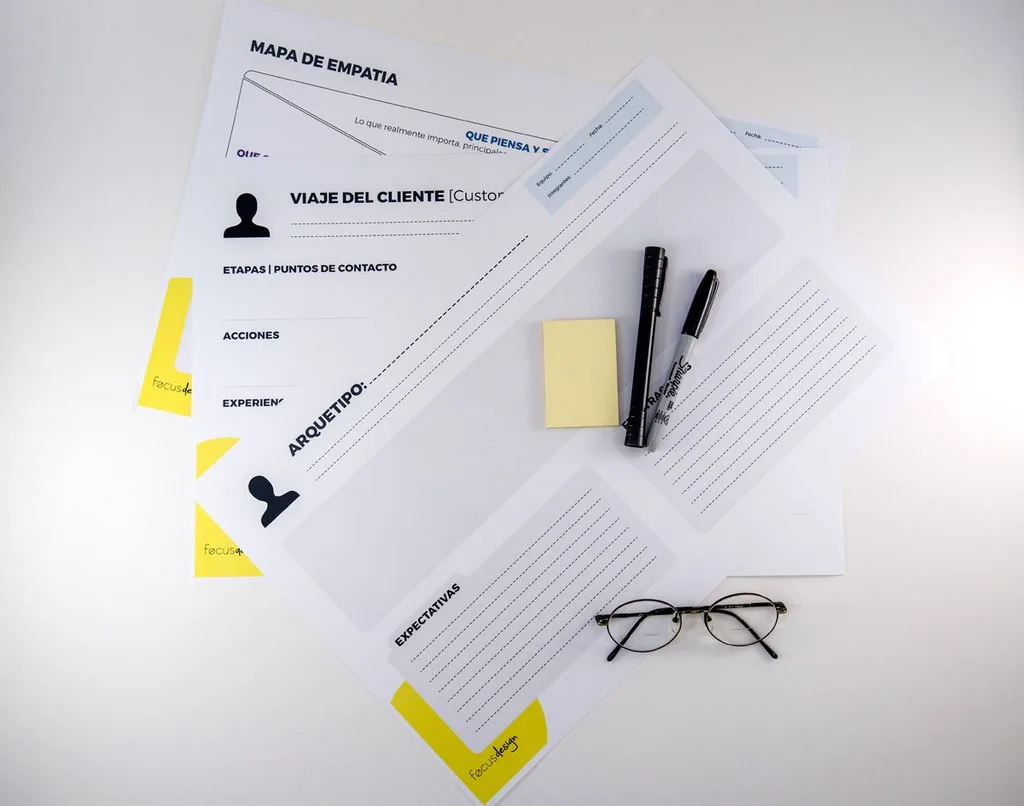
 If you believe the time to change jobs has come, FREED developed the Career Planner, which contains diagnostic tests of your current work situation, easy-to-perform activities, planning tools, and materials for professional career management that have proven very effective in the world of coaching and innovative business development.
This planner begins with diagnostics to discover how you feel at work today, if negative feelings have appeared, and if you no longer see a future there. If these evaluations reveal that your time to change jobs has arrived, it will help you design the professional career you wish to develop, setting your own goals. You will also be able to discover your strengths and weaknesses, and you will find the Personal Canvas, a tool to develop your value proposition, the brand that will distinguish you when you seek new job opportunities.
Likewise, it will provide you with advice for something as important as creating a Curriculum Vitae and Cover Letter, two fundamental elements that you should never leave to chance, as they will be the first thing a recruiter evaluates when you apply for a position. And it doesn't end there, because with the Career Planner, you can plan your next steps and consult advice for building your Network of Contacts, the most effective way to find a job, since 80% of hires come from recommended candidates.
But it's not all about tasks and managing your job search, because this planner also provides a lot of motivation and inspiration.
(*) and (***) Universidad Adolfo Ibáñez, Work Happiness in Chile: What role do bosses play? Page consulted on August 26, 2019.
(**) Wenceslao Unanue, Marcos E. Gómez, Diego Cortez, Juan C. Oyanedel, Andrés Mendiburo-Seguel, Revisiting the link between job satisfaction and life satisfaction: the role of basic psychological needs [PDF]. Document consulted on August 26, 2019.
(****) Trabajando.com, Empathy and communication are the most valued qualities by workers in their bosses. Page consulted on August 26, 2019.
-->