
FREED report · Free download
80 QR code examples, insights, and tips
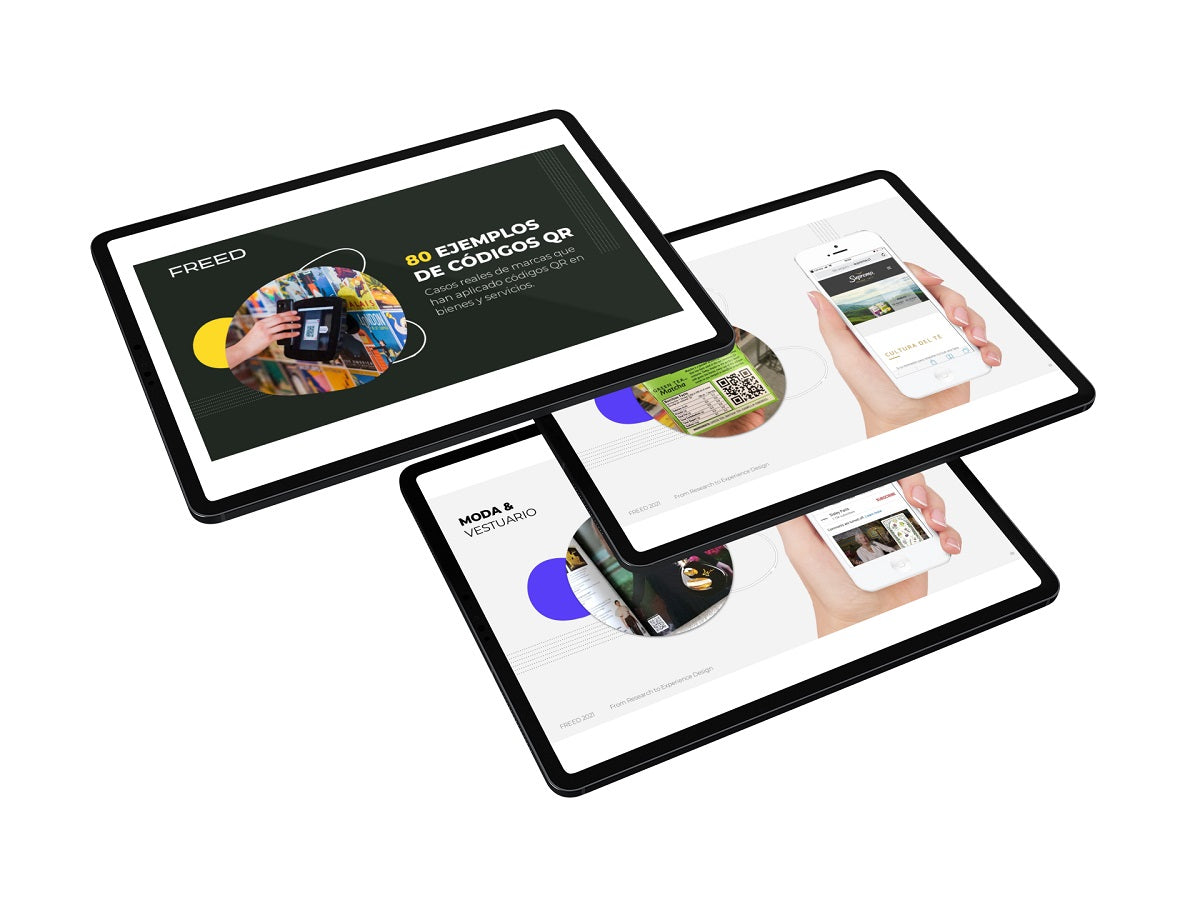
A tour through 80 real brand cases that use QR codes to move people from the physical world into a digital environment, across more than 20 industries.
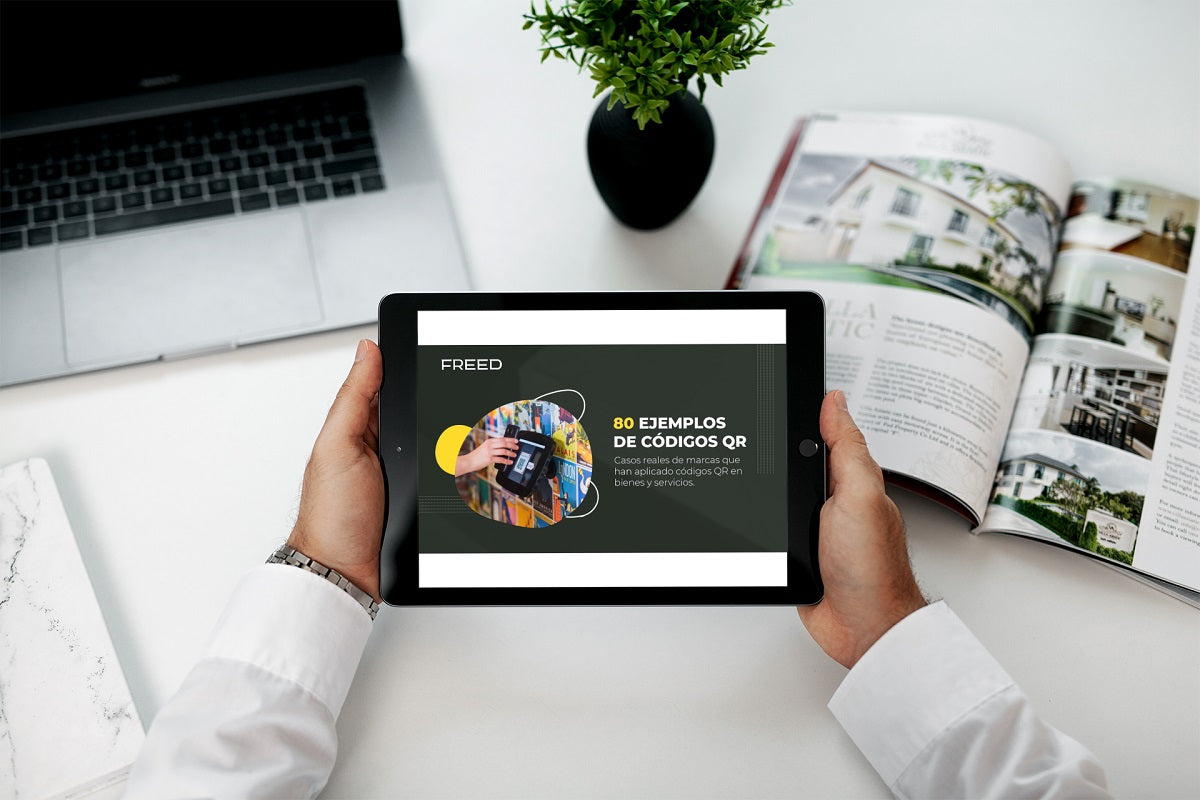
- real QR code examples
- 80
- industries analyzed
- 20+
- codes recorded in the study
- 50
- of QR codes work
- 84%
Key insights
What we discovered analyzing 50 real-world QR codes
Charts built by FREED from a record of 50 QR codes, using convenience sampling based on the feasibility of accessing the goods and services that feature them.
What are brands trying to achieve with QR codes?
Brands mainly use QR codes to capture people's attention and encourage them to take some kind of action: filling out a form, buying online, or downloading an app.
Frequency of objectives across a record of 50 QR codes. A single code can support more than one objective.
Where does the QR code lead to?
When scanning a QR code, people are mainly directed to an informational website about the brand, its products, and services.
- Website58%
- E-commerce13%
- App store9%
- Social media6%
- Not applicable6%
- PDF4%
- Google4%
QR code interactions analyzed
11% of the QR codes analyzed don't work. The most common errors relate to materials, code dimensions, and outdated web links.
- Works84%
- Doesn't work11%
- Not applicable5%
Coverage
Examples from more than 20 industries
The report brings together QR codes applied to packaging, labeling, stationery, furniture, and other types of physical surfaces, along with the digital interactions linked to each scan.
Heads up: this study was originally conducted in Spanish, and the PDF you'll download is in Spanish.
- Online scheduling
- Aeronautics
- Packaged food
- Product rental
- Beverages & spirits
- Events
- Food & dining
- Home & decor
- Printing
- Real estate
- Investments
- Cleaning & hygiene
- Logistics
- Payment methods
- Fashion & apparel
- Stationery
- Retail
- Magazines
- Health & beauty
- Insurance
- Software
Best practices
Recommendations based on 80 real examples
Design a hybrid experience
Treat the QR code as part of an experience that blends the physical and digital worlds, not as an isolated element.
Optimize for mobile
Before moving a user from a physical touchpoint to a digital environment, make sure your channels work flawlessly on mobile devices.
Keep the destination consistent
The message accompanying the QR code should be consistent with the landing page. If your goal is to sell online, the purchase process should be as smooth and effortless as scanning the code.
Apps worth downloading
Encouraging an app download means meeting higher expectations: people only install apps that solve real problems. Prove that it's worth it.
Test before printing
Applying a QR code requires prior testing: the material it will be printed on, elements that could block it, and dimensions that allow it to be read from a smartphone.
A specific, up-to-date landing page
Make sure the landing page is specific to the intended interaction and is actually working. If the QR code belongs to a seasonal campaign, check how long it will remain live.
Who is this report for?
Stakeholders looking to connect with their consumers.
Digital teams designing customer experiences.
Software and packaging providers developing solutions that involve this type of technology.
Note: the original study was conducted in Spanish, so the downloadable PDF is in Spanish.
Free tool
Want to create your own QR code?
Use FREED's free generator: links, WiFi, contact card, events, WhatsApp or reviews, with your colors and your logo. Download in PNG or SVG — no sign-up, no limits.