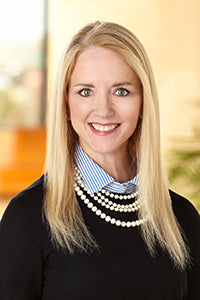
We had the opportunity to listen to and converse with Mary Lou Kelley, an independent director at various companies and former President of e-commerce at Best Buy, a global leader in the field, with over 25 years of experience in the specific world of e-commerce.
We want to share with you two notes from Kelley's talk, organized by Girls in Tech Chile and Startup Chile. One is about e-commerce in general, covering best practices and reflections on customer experience in a world marked by the use of multiple devices, as well as challenges impacting omnichannel. The other note, which we will publish in the future, focuses on professional career development and leadership in the e-commerce world.
Let's start with the e-commerce lessons. The quotes in English belong to Mary Lou Kelley (MLK), while the analysis and examples are part of our editorial.
1. The customer
Listen to and understand the customer
“Focus on research and understand” (MLK).
Listening is not "conducting a study" or "doing a focus group" every time strategic planning is prepared; it's about being close to your customers, whether by monitoring contact channels, conducting ethnographic studies, listening to call center calls, or simply sitting in a branch or physical store and observing what happens. How do customers experience it?
Make customer-centric decisions
Mary Lou started by talking about the customer and ended by talking about the customer. “Keep your customer at the center of your decision”. In practice, when it comes to making decisions, choosing between different action plans, or prioritizing initiatives, one way to stay focused is to ask yourself, "Does this impact the customer?"
Be transparent and authentic, acknowledging your limits
“You communicate what you can do and what you can't do” (MLK).
In this report on trends in Latin America by Trend Watching, transparency stands out as a fundamental component in customer relationships. People want to interact with organizations that are transparent about their products, supply chain, distribution, and pricing. Not perfect, but transparent.
Advice, service, and convenience everywhere
“Advice. Service. Convenience. Regardless on the location (…) We know the consumer will research, compare online and then they will go to a store.” (MLK)
Get our analysis in your inbox
Subscribe to the FREED newsletter: applied research, trends and tools.
No spam. Unsubscribe anytime.
2. The e-commerce business
Focus on e-commerce as a specific business
In this sense, it is important to view e-commerce as a business in itself and not as an articulation or technological derivative of something that already exists. “Focus on ecommerce as a business”. For this: systems, processes, and branding: “Systems, processes, branding (…) Adapted or changed” (MLK).
Physical store versus online store
The coexistence of physical and online stores is a permanent challenge for retail. Traditional businesses transitioning to e-commerce must find a way to manage change through communication and organizational culture. Employees in physical stores cannot feel their jobs are threatened by the growth of e-commerce. E-commerce is not stealing their sales but creating new business opportunities and reaching customers where they are, leaving more room for in-person advice. And vice versa, those developing e-commerce should not feel they are struggling to earn the respect of those with more seniority and retail knowledge.
“Change the conversation from 'you are stealing our sales' to 'how to use ecommerce to have an impact on all business (…) over communicating about ecommerce'” (MLK).
A frequent question in the e-commerce world, when the business originated as a physical store, is "what do we do?". Mary Lou's answer is simple: teamwork and collaboration between the traditional store and e-commerce:
“Teamwork and collaboration. We work really well as a team with the store team. Best Buy is a machine. I don’t care where the consumer chooses to transact, as long as they transact with Best Buy”. (MLK)
Logistics for e-commerce
Undoubtedly, a sensitive point for an e-commerce business is logistics. Mary Lou's recommendation to ensure impeccable service: hire people who have done it (“Hire people who have done it”).
In Chile, logistics issues greatly affect delivery times in regions, service reliability, and add an additional cost variable that, unfortunately, continues to be passed on to the customer. While we always try to compare ourselves with much more advanced countries that have years of e-commerce practice, one thing is certain: these are different realities.
As the former Best Buy executive comments, they, like other large retail companies in the United States and Canada, had a catalog business before they had e-commerce (“Catalog business before e-commerce”), which essentially means that a logistics system was already in place that had to be refined and further developed with e-commerce. But they didn't start from scratch making the quantum leap from traditional store to online store. Skipping stages means assuming there's a possible gap and a learning process that wasn't done, nor a gradual evolution.
In fact, Mary Lou comments that Best Buy still has a strong catalog sales business. E-commerce evolved in different historical contexts, but in the context of globalization, people's demands are similar despite regional particularities.
How to attract customers to the web and make them interact with the brand
Some tips to attract customers and generate conversations:
Be relevant.
Maintain a small margin: “Very thin margin. At Best Buy, we don’t give a lot of discounts”. Specifically, they have discounts and campaigns like "Back to school" but the business is not based on this.
Email marketing still works.
Invest in organic positioning (SEO) and have a dedicated team: “Invest in SEO. Dedicate a team to it”.
Personalized content on Facebook.
3. The omnichannel experience
“Total retail experience” (MLK).
Brand and omnichannel
Ensuring consistency and impeccable service across all channels is the business's task. For the customer, the experience neither begins nor ends in a specific contact channel. What the customer has in mind is the brand, regardless of whether they were served by a sales executive in a store or bought online.
“Customer think Best Buy. They don´t think channels” (MLK).
In the same concept of omnichannel experience, if delivery fails, the experience fails, and with it, the brand fails, even if the delivery (logistics) is the responsibility of a third party.
Take charge of the complete experience
Bringing the idea of omnichannel to daily life, every person in contact with the customer or in the back office must feel empowered and have clarity about their role. Furthermore, the brand must assume that e-commerce is more than just delivering the product: it is about ensuring the complete experience, from information search, to website interaction, to purchase, delivery, installation, and after-sales. “Delivery, installation, repair”.
Consistency, speed, and reliability
While brand consistency is an overused concept in marketing on one hand, and experience consistency in UX/CX on the other, in practice, ensuring a consistent and coherent customer experience remains a challenge. Mapping the customer journey, identifying potential breaking points, and ensuring impeccable service at all touchpoints are fundamental aspects of experience design. In an e-commerce context, ingredients such as speed and reliability must be added to consistency. The customer must know the status of their delivery, when they will receive their order, and have confidence that the promised delivery time will be met:
“Think about the consistency (…) The challenge is consistency, speed and reliability. They want to know when they are going to get it” (MLK).
Don't neglect the physical store
While the strategic focus of the organization may be to develop or boost e-commerce, the physical store cannot be neglected. “Your physical store still really matters”. Mary Lou insisted several times that in addition to a consistent experience, you have to be willing to serve the customer where they want, understanding that in-person contact with the sales executive is a fundamental instance for providing advice.
“You need to consider the entire ecosystem”. (MLK)
Furthermore, Mary Lou recommends displaying each store's inventory through the web and, if it adds value to the experience, delivering in-store: “Ship in store. Open the inventory to the online channel”. (MLK)
4. Design and technology for e-commerce
Design with mobile devices in mind first
“Mobile first” is an established trend and means designing first with the mobile phone screen in mind, considering all the limitations of this interaction, and finally designing with the computer screen in mind.
In Chile, as in many other countries, mobile device traffic has grown exponentially in recent years. Despite this, brands still need to focus on the search experience through mobile devices.
How to make design decisions? By simplifying and keeping the focus on what is essential for the customer: “Focus on what is important for the customer” (MLK). On mobile, everything that is not essential at first glance is removed.
Which technology to choose
A recurring question when setting up an e-commerce business or scaling an existing one is the platform on which it will operate. Locally, in large companies, we often hear about "world-class technology," and without overlooking all the advantages that a world-class brand can bring to a business, it is interesting to see how a giant like Best Buy decided to adopt open-source technology:
“At Best Buy, we are open source. We develop APIs that people use” (MLK) .
At a Latin American level, MercadoLibre is a good case study of a company that opens its doors by providing APIs for developers.
If you want to know more about the system architecture that a giant like Best Buy manages in the cloud, the organization of the architecture team, and the benefits they found in OpenStack under the Continuous Delivery Cloud modality, you can watch the presentation given by the head and director of architecture at an OpenStack conference here:
Bonus track: What to do in an e-commerce startup?
While many of Mary Lou Kelley's tips can be applied to a large company or a startup, perhaps the most relevant tip for a startup is that everyone must be willing to give their all and work for the customer, even if it sometimes seems like they are overqualified to do what is needed:
“Everyone was working even if they were overqualified (…) You do what it takes”. (MLK)
To reflect: Is there a 100% e-commerce future?
During her presentation, Mary Lou commented on the vision of Scott Galloway, a marketing professor at NYU Stern School of Business, who on more than one occasion stated that pure e-commerce has no future:
“Pureplay ecommerce has no future. Almost every pureplayer will open stores or go out of business” ~@profgalloway
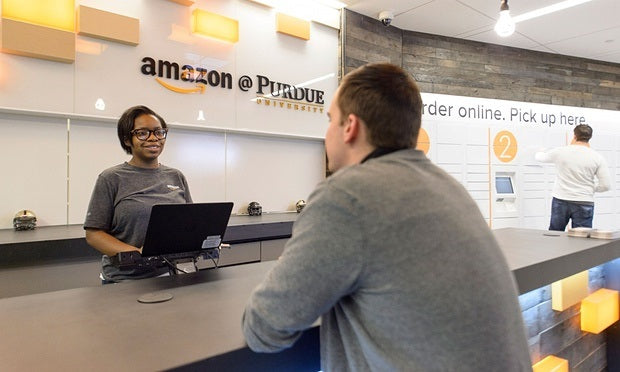
If for many retail players worldwide and in Latin America, e-commerce is a business that emerges after the physical store, the opposite also occurs. In 2015, the giant Amazon opened its first physical store at a university in Indiana, United States.
About Mary Lou Kelley
She has over 25 years of experience in the e-commerce world, with a career marked by both large organizations and startups. She began her career as a consultant at McKinsey and held senior management positions in e-commerce (she was Senior Vice President of e-commerce at Chico's FAS and L.L.Bean, among other retail brands). She was President of e-commerce at Best Buy, where in addition to leading BestBuy.com's activities, she was responsible for all of the brand's digital marketing actions and mobile commerce (m-commerce). Today, she is an independent director at YETI Coolers, Finning International, and Vera Bradley, as well as an Advisor to the Board of Directors and Senior Leadership at Falabella.
If you want to orchestrate those messages based on each customer's real behavior —email, push, in-app and SMS from one place— a tool that does this well is Customer.io. (Affiliate link: signing up through it supports FREED at no extra cost to you.)
Share this article
Follow us on YouTube
Nuevas Economías, Research Thinking and FREED AI Studio: conversations and analysis on business, technology and human behavior (in Spanish).
Effective leadership, how to drive change, and tips for building your e-commerce team; we discussed these topics and much more with expert Mary Lou Kelley.
I share my experience to discuss whether it's possible to leave an entire e-commerce operation in the hands of a single professional, and what conditions must be met.

 By
By 
 We had the opportunity to listen to and converse with Mary Lou Kelley, an independent director at various companies and former President of e-commerce at Best Buy, a global leader in the field, with over 25 years of experience in the specific world of e-commerce.