The word "crowdsourcing" was coined by Jeff Howe and Mark Robinson in 2006 in Wired magazine to define the outsourcing of a typically internal company function to a generally large and undefined network of people.
"Simply defined, crowdsourcing represents the act of a company or institution taking a function once performed by employees and outsourcing it to an undefined (and generally large) network of people in the form of an open call. This can take the form of peer production (when work is done collaboratively), but it is often also done by individual people. The fundamental prerequisite is the use of the open call format and the large network of potential workers."
<p>
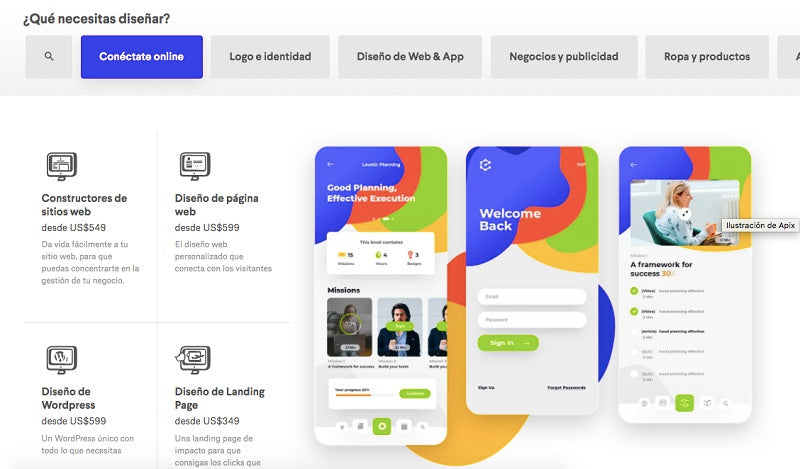
Currently, services such as translation, writing (on platforms like envato.com), design (99designs.com), development, and even more complex tasks like QA project management (utest.com, crowdsourcetesting.com), among others, can be outsourced.
<p>
Next, I will review some of the benefits of crowdsourcing for individuals and businesses, and some case studies of the impact of these platforms in developing countries.
There can be many reasons to outsource tasks through crowdsourcing, as we saw in a previous article. Let's now look at what the outsourcing or contracting company gains.
The benefits are numerous:
- Finding talent,
- temporarily increasing the capacity of their internal work team,
- reducing costs,
- reducing execution times, or
- gaining access to a greater number of ideas.
For many organizations, it means expanding the spectrum of possibilities they have internally:
"Thanks to the Web, companies that are moving now can tap into a global pool of talent, ideas, ... that far exceeds what they could hope to gather internally."
(Kevin Maney, Technology Editor, USA Today)
The increase in crowdsourcing adoption by large global companies has occurred especially in the consumer goods and technology segments [4].
Beyond outsourcing, delegating tasks to a crowdsource platform also implies redefining typically in-person collaboration, taking it to a remote work context, generally with unknown professionals who will probably never meet in person.
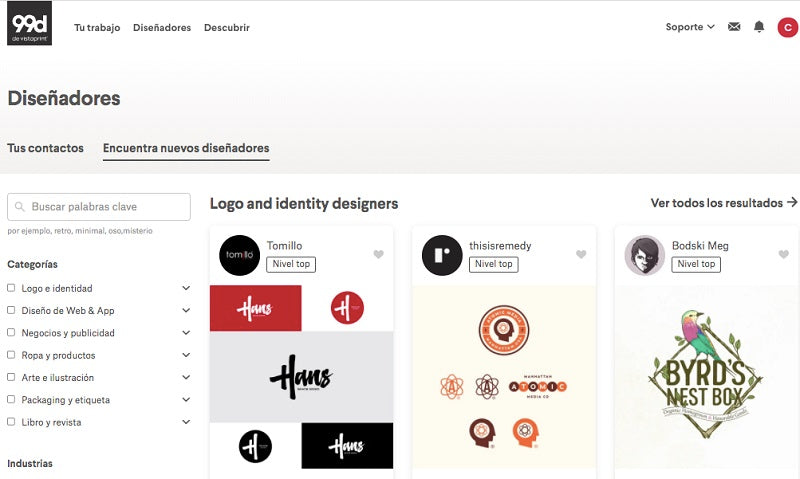
For example, on 99designs, a client contracting a design service can interact with their designer through an interface that allows project tracking.
In the first stage, it involves sharing files, leaving specific comments for each interaction element to be corrected, viewing the deadline, and evaluating.
Subsequently, the designer receives payment, delivers the source files, and closes the project.
99designs
Why would a professional or a company from a developing country work in crowdsource mode?
From the freelancer's or provider's perspective, using a crowdsource system means having access to new business opportunities, expanding their client portfolio, and even professionalizing their work.
Understanding specific requirements, often in a language that is not their native tongue (imagine a Pole collaborating with their German client in English through Elance.com), and having to meet specific delivery times, can be different work variables from the context one is used to.
This forces them to professionalize their conduct, meet deadlines, be self-demanding, and ultimately, learn how to add value by being competitive, in addition to updating their work methodology (moving, for example, from waterfall development to agile or lean methods) [5].
For a professional in a developing country, working in crowdsource mode represents the possibility of improving their quality of life by generating higher income [2].
For a service provider company in a developing country, these platforms allow them to lower entry barriers, give them access to new clients, and facilitate payments and payment times.
However, not all services provided are necessarily complex; microtasks can also be outsourced, as proposed by Amazon Mechanical Turks or the Indian project mClerk [2], a platform that aimed to delegate microtasks to be solved massively through text messages (SMS).
Among other things, mClerk allowed reaching many people (given the relative simplicity of the task) at a low cost. For its users, it easily became a paid hobby, as they could go from using their free time (waiting for the bus, for example) to dedicating themselves to solving microtasks full-time and thus generating a reasonable income.
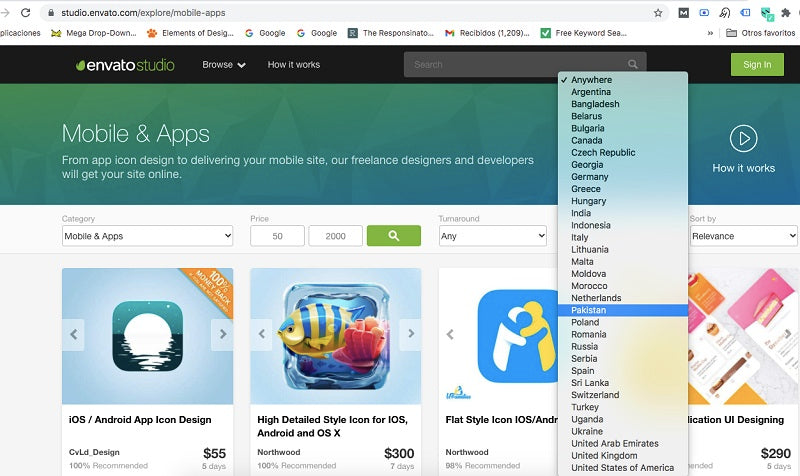
Analyzing the services that can be contracted on Envato Studios, for development in the mobile & apps category, there are 117 professionals and agencies, of which:
- 1 from Argentina
- 6 from Bangladesh
- 1 from Belarus
- 1 from Bulgaria
- 1 from the Czech Republic
- 1 from Georgia
- 1 from Greece
- 39 from India
- 10 from Romania (in 2016 there were 38)
- 3 from Moldova
- 10 from Indonesia, among others.
Envato Studio
Five years ago, I did the same exercise, and as of 2021, I see a notable decrease in the supply of professionals and agencies on Envato.
I believe there has been a migration from generic platforms with lower prices to other more specialized ones like Upwork, which has grown significantly during this period and stands out as a very good option for identifying new clients and business opportunities.
Without going into a deeper analysis of the distribution of professions by country versus total population, there is no doubt that for a number of developing countries, crowdsourcing is a good source of income for their professionals and businesses.
This could explain the higher prevalence in countries like India, Bangladesh, or Romania versus Latin American countries:
-
The precedent existed. These countries were already outsourcing technology services long before crowdsourcing became widespread.
-
The language. Most of these platforms use English as the main language, although there is increasing personalization in the client/provider interface in Spanish. However, the working language remains English.
The case of Brazil is interesting because, although it is the country in the region that could have the greatest coverage of both professionals/providers and companies, the adoption of crowdsourcing remains low.
Crowdtest.me, a Brazilian platform, still has difficulties recruiting Brazilian user testers, so the perception of community is weak [3].
On the other hand, resistance to change is greater among large companies, who prefer to continue working in-house or with traditional outsourcing. Regarding some weaknesses observed in testers, according to clients interviewed by the same researchers [4], a relevant issue was the degree of specialization of the testers, considered low in some cases.
Some of the hypotheses that generate these gaps:
- Learning curve of testers, who need to participate in more projects (the most active users of the platform have less than one year of testing experience).
- Professionals find it difficult to compete with peers from other countries where rates are even lower.
- Often the requirements provided by the client are incomplete, which makes testing difficult.
- The companies themselves are unaware of their own technologies, which makes it even more complex for the tester to provide technical advice.
As a client, I have worked with designers, developers, and writers on Envato and 99designs.
Often, when there is good professional empathy with the professional, because the client identifies talent and the conditions are right to continue working (resources, need), the ideal is to continue with the same person with whom a successful first project has already been completed.
In this sense, people tend to replicate attitudes and behaviors of in-person collaborative work.
Working remotely is about changing the context, designing new ways to communicate, coordinate, and share information, but it does not change the need to build on foundations of trust, credibility, and motivation.
On all occasions, I have worked with professionals from other countries (United States, India, Romania), never from Chile.
I remember once a Brazilian designer had participated in a contest I launched on 99designs, but I ultimately had to choose between two proposals and did not choose hers.
We communicated in English, as did the other professionals. In fact, I even communicated in English with a Romanian compatriot, and at the end of the contest, I realized we were from the same country of origin.
99designs
What I value most, in addition to recruiting talent – which for me was the main value it provided – is the possibility of having a greater quantity and quality of proposals.
The fact that tasks are relatively limited also means that the execution time is shorter, compared to a similar project carried out locally, and that this time is respected.
From the perspective of my previous positions in large companies, I can say that it was not trivial for my superiors to accept working with crowdsourcing, and in general, I ended up paying with my credit card and then requesting a reimbursement.
This is a logistical detail that I believe also makes the adoption of crowdsourcing difficult in large companies in the region. Bureaucracy for registering a supplier, being able to pay them in real-time (instead of waiting 3 to 4 weeks or more to issue a sight draft), or hiring a very small supplier, are significant barriers.
However, when you manage to "sell" the model internally (or evangelize), everyone is fascinated with the results. In this context, small businesses and startups, primarily, are more prepared to collaborate remotely with professionals from other countries through crowdsource platforms.
Crowdsource platforms as systems to support collaborative work between professionals and companies from different countries are definitely changing the way we work.
Their adoption in developing countries depends on the local context, mainly on previous work habits in outsourcing systems, language proficiency, and competitiveness with other countries – in terms of quality and price.
What has been your experience outsourcing tasks in your job? Have you worked remotely with professionals from other countries?
- Howe, Jeff: The Rise of Crowdsourcing (accessed 18/08/2021).
- Gupta, A., Thies, W., Cutrell, E., Balakrishnan, R. (2012). mClerk: Enabling Mobile Crowdsourcing in Developing. In: Proceedings of CHI 2012, May 5–10, 2012, Austin, Texas, USA, 1843-1852.
- Machado, L. G., Carmel, E., De Souza, B. (2014). Crowdsourcing in the Brazilian IT Industry: What We Know and What We Don’t Know. In Proceedings of CrowdSoft’14, November 17, 2014, Hong Kong, China, 7-12.
- Machado, L. G., Carmel, E., De Souza, B. (2014). Brazil Software Crowdsourcing: A First Step in a Multi-year Study. In Proceedings CSI-SE’14, June 2, 2014, Hyderabad, India, 1-4.
-
The state of crowdsourcing, 2015 (accessed 18/08/2021).

 By
By