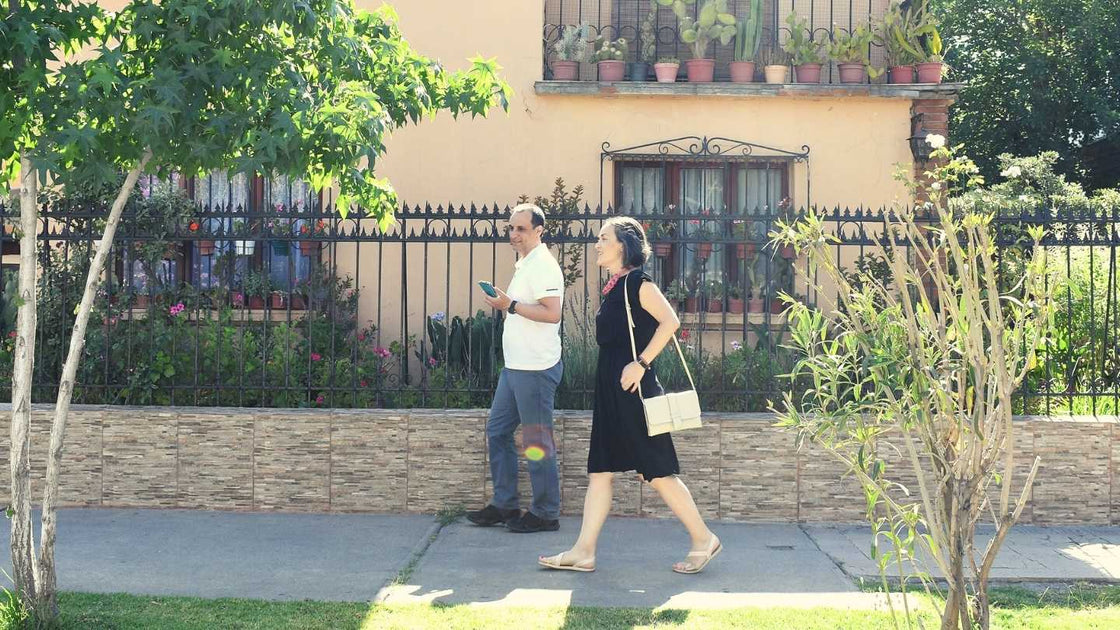
In the quest for more livable and sustainable cities, walking is an activity that goes beyond a simple pastime for millions of people; it can be the key to facing the challenges of modern life with better physical and mental health. Because walking to relax, exercise, and move from one place to another clearly contributes to our well-being, promotes greater social cohesion, and reduces the negative environmental impact of car dependency. This and more is what we will explore in this article. Let's begin!
The act of walking is a low-impact exercise accessible to a wide range of the population. You just need to put on comfortable shoes and go outside.
It has been proven to be an activity that:
- improves cardiovascular health,
- increases physical endurance,
- reduces the risk of chronic diseases, and
- helps mental health by reducing stress and anxiety.
Here, I'll share a bit of my experience to give you an example of the benefits of walking every day. Over the past 10 years, I've incorporated walking into my life. On workdays, I practice it immediately after turning off my computer.
When I worked for a company about four kilometers from my home, I walked the way back, and that helped me lose 26 kilos in less than a year, in addition to maintaining a balanced diet, of course.
Today, working from home, as soon as my workday ends, I go for a walk, trying to vary the route each day. I even take the opportunity to run some errands, like going to the supermarket (buying a shopping cart is an excellent investment).
On days when a personal problem is bothering me, honestly, walking helps me reduce anguish and anxiety. So I can tell you that it's true that walking has great power to improve our physical and mental health.
We could cite many scientific studies that have proven the benefits of walking, but to keep it brief, I will highlight one that caught our attention at FREED (I'll leave more studies in the references below). It is the study "The effect of acute treadmill walking on cognitive control and academic achievement in preadolescent children," conducted by Charles H. Hillman and collaborators.
They examined twenty preadolescents to test how a single session of moderate exercise on a treadmill affects behavioral and neuroelectric indicators of attentional cognitive control and aspects of cognition applied to academic performance.
The results indicated an improvement in response accuracy and better performance on the academic achievement test after aerobic exercise, compared to the rest session. These findings suggest that single, acute sessions of moderate aerobic exercise, such as walking, can improve attentional cognitive control in preadolescent children, supporting the use of moderate exercise to increase attention and academic performance.
In simple terms... this study suggests that walking for twenty minutes at a moderate pace can have immediate benefits on children's ability to control their attention and improve their performance in school tests. In other words, moderate and accessible physical activities, such as walking, could be an effective strategy to enhance attention and academic ability, highlighting the importance of regular physical exercise for cognitive development and academic success.
Try it yourself; I assure you it is also applicable to adults and the workplace, as we confirmed at FREED with walking meetings. We will see that next.
In short, it involves organizing a meeting that takes place while walking through the streets or a park. It fulfills the same objectives as a traditional meeting, but doing it on foot provides additional benefits such as:
- incorporating movement into the workplace,
- promoting healthy lifestyles,
- connecting people, and
- improving productivity.
And why does it improve productivity, you might be asking? Because walking increases energy levels and enhances overall well-being by incorporating regular movement and fresh air. Furthermore, the outdoor space activates brain functions, which can help to stimulate creativity, innovation, and memory.
In addition to fulfilling the goal of informing, making decisions, and resolving conflicts, a walking meeting can be a good time to socialize while concluding the session with a coffee or a drink.
In our article Walking meeting: an alternative to sedentary work, you will find some tips to start organizing yourself right away.
Modern urban life, with its high dependence on motorized vehicles, has led to an increase in pollution, congestion, and a sedentary lifestyle, raising obesity rates globally.
In this context, promoting walking directly addresses these problems by offering an alternative that contributes to greater urban livability and sustainability.
However, there is still a great challenge in implementing pedestrian-friendly infrastructure, because modern cities must contend with car-centric urban design, lack of safety and connectivity, and the need to shift mindsets towards more active forms of mobility.
This requires:
- City planning and design centered on people, taking into account the needs of pedestrians, ensuring safe, accessible, and pleasant routes.
-
A change in mindset through campaigns to motivate the population to adopt more active lifestyles.
-
Flexibility in planning to adapt to changing needs and leverage technology to improve the walking experience.
In this regard, we can mention the successful cases of Singapore with its "shared zones" and the Brisbane Riverwalk project in Australia. Both demonstrate that integrating pedestrian and cyclist spaces into urban design improves quality of life, facilitating active mobility and enriching the social and cultural fabric of cities.
The benefits of walking every day are evident. Therefore, promoting walking is a great help in facing the challenges of modern urban life. Of course, it requires a collective commitment to sustainable city planning and an investment in adequate infrastructure to prioritize people over vehicles. By doing so, cities can transform into healthier, more livable, and resilient spaces for present and future generations.
This is because active mobility not only has a positive impact on individual and community health but also offers economic advantages, reducing healthcare costs and fostering the local economy. Of course, it significantly contributes to climate change mitigation by reducing carbon emissions.
- Ungvári, Z., Fazekas-Pongor, V., Csiszár, A., & Kunutsor, S. K. (2023). The multifaceted benefits of walking for healthy aging: from Blue Zones to molecular mechanisms. GeroScience, 45(6), 3211-3239.
-
Walking for Exercise. (2023, October 26). The Nutrition Source.
-
Staying active. (2023, October 26). The Nutrition Source.
- Hillman, C. H., Pontifex, M. B., Raine, L. B., Castelli, D. M., Hall, E. E., & Kramer, A. F. (2009). The effect of acute treadmill walking on cognitive control and academic achievement in preadolescent children. Neuroscience, 159(3), 1044-1054.
-
Walking and cycling - Arup. (n.d.).
-
Encouraging city dwellers to walk more. (n.d.-b). Arup.
-
How to Host a Walking Meeting | ISU WellBeing | Iowa State University. (n.d.).