Assuming you've already read classics like Don't Make Me Think, The Elements of User Experience, Rocket Surgery Made Easy, or Designing Web Usability, we want to introduce you to some references that will turn your UX library into a goldmine.
By William Lidwell, Kritina Holden, and Jill Butler. Or, in its Spanish version, *Principios universales de diseño*.
A true "bible" for anyone interested in design in the broadest sense of the word: interface design, interaction design, products and services, etc.
The presentation makes the book easy to read and practical for quick reference.
The principles are presented in alphabetical order, with each description spanning two pages: the left side provides theoretical and contextual information, while the right side shows examples and practical applications.
You can also read them according to your learning objective.
For those who have the first edition, the second is worthwhile as it includes 25 additional principles.
By Bella Martin and Bruce Hanington.
Universal Methods of Design is a marvel from Blume editions, just like Universal Principles of Design.
The same presentation (two pages per methodology), but this time for 100 design methods.
The design methods are classified in 2 ways:
I. Alphabetical order
II. According to their use at each stage of a project: (1) Planning, (2) Exploration, (3) Concept generation and early prototyping, (4) Evaluation, (5) Launch and Monitoring.
By Jeff Johnson.
A book that all UI designers should read as an approach to cognitive science to understand – before designing – how the human brain works and how that affects our perceptions and behavior.
A book about vision, perceptions, reading, attention, memory, and learning.
Absolutely recommended.
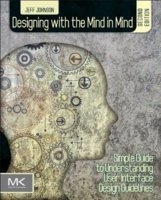
By Luke Wroblewski.
A poorly designed form can easily mean the death of an e-commerce sales funnel and a conversion rate close to zero.
If forms give you nightmares – you or your boss or client – you have to read this book.
It's easy to read and has many practical tips that will make your interface a better point of interaction with the user.
Where to find it? At Rosenfeld Media. And take the opportunity to buy the rest of Rosenfeld Media's books, as they are all very practical.
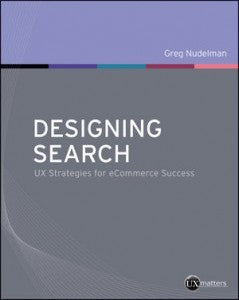
By Greg Nudelman.
No, it's not a book about search engines. It's a book about how users search and how to design interfaces that offer memorable navigation and search experiences, ultimately optimizing conversion.
Some of the concepts addressed are: filters, breadcrumbs, search results page, search as a multichannel experience, etc.
A book rich in good practices exemplified by e-commerce sites.
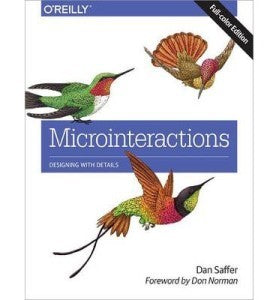
By Dan Saffer.
They say in English that "the Devil is in the details."
If so, then the UX Devil is in Saffer's book: compact, well-written, and probably one of the best interaction design books according to critics.
Most of the examples in the book come from the Little Big Details blog, a recommended read for a daily dose of UX.
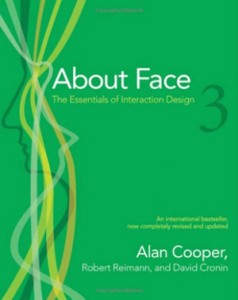
By Alan Cooper, Robert Reimann, and David Cronin.
One of the foundational books in interaction design, by one of the famous software creators: Alan Cooper, also known as "The Father of Visual Basic."
An excellent reference in the field of application, product, system, and service design, with a goal-oriented design perspective.
The authors' approach to why bad products exist is interesting: ignorance about users, conflict of interest between serving human needs and construction priorities, and the lack of a process to understand human needs as the basis for developing appropriate products and designing behaviors.
Extremely comprehensive, it also includes a brief history of interaction design.
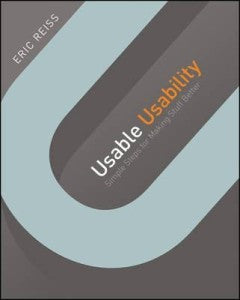
By Eric Reiss.
One of the essential books on usability, by an author with extensive experience in service design, product design, and user experience.
His perspective, which is still "technical" (the book is for UX professionals), is very business-oriented and focused on value generation.
If you still struggle to convince your bosses or clients that investing in UX design is worthwhile, Eric Reiss's book will be truly helpful.
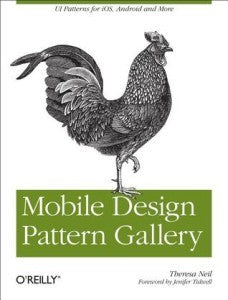
By Theresa Neil.
Whatever type of mobile device you're designing for, this collection of design patterns will help you stay on the safe path and avoid reinventing the wheel.
It includes over 90 mobile app design patterns, illustrated with 1000 screenshots from Android and iOS apps.
Undoubtedly, it's a guide for product managers, designers, and developers, who will find design patterns in 11 different categories.
By Chauncey Wilson.
A book about inspection techniques for interfaces.
What are inspection techniques? In the world of usability, there are three main types of website evaluation: inspection, inquiry, and testing methods.
In User Interface Inspection Methods, the author covers 5 inspection techniques:
-
heuristic evaluation, which consists of an analysis of the interface by several experts, based on recognized heuristics or principles;
-
individual expert review, which, as its name suggests, involves review by a single expert;
-
perspective-based user interface inspection, where the evaluator receives a prior description of the task to be performed (or the "perspective");
-
cognitive walkthrough, whose focus is to evaluate ease of learning;
-
plural usability walkthrough, which involves users, developers, and usability experts.
Recommended for those who want a theoretical and practical basis for evaluation methodologies.
These are some titles we have in our UX library, but we couldn't conclude this first summary without also leaving you two books in Spanish that are worth discovering:
By Jorge Frascara.
The first part of the book presents the world of information design, from Frascara's design process, to user-centered design, visual presentation, images, information as a guide for action, and finally the role of information design.
In addition, the book includes a collection of international case studies, such as redesigns of hospital forms in Italy, simplification of government letters in the United Kingdom, or development of visual information on drugs in Europe.
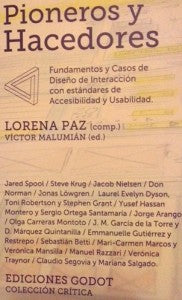
By various authors.
It is a compilation of texts by international authors, including translations of "famous" ones (Jared Spool, Steve Krug, Jacob Nielsen, Don Norman, etc.) and several Latin American researchers, under the supervision of Argentinians Lorena Paz and Víctor Malumián.
Do you have a favorite UX/AI/usability book? Tell us.

 By
By 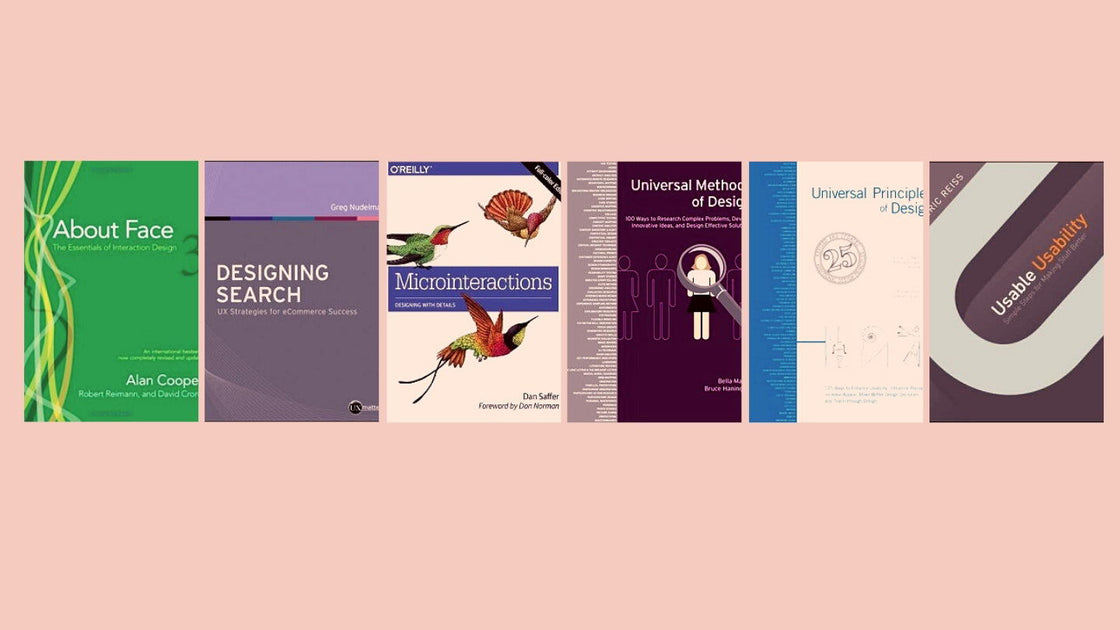





![How to Convince Your Boss to Invest in Usability and User Experience [Updated 2021]](/content-images/331a6776-invertir-usabilidad-ux.jpg)