Article written by Denise Sánchez. Edited by Rafael Baquedano.
We recently published a study based on keyword research that allowed us to get closer to the reality of digital consumers in Chile and understand the competitive context of a particular market: Home and Decoration products online. Here's how we designed and built this process.
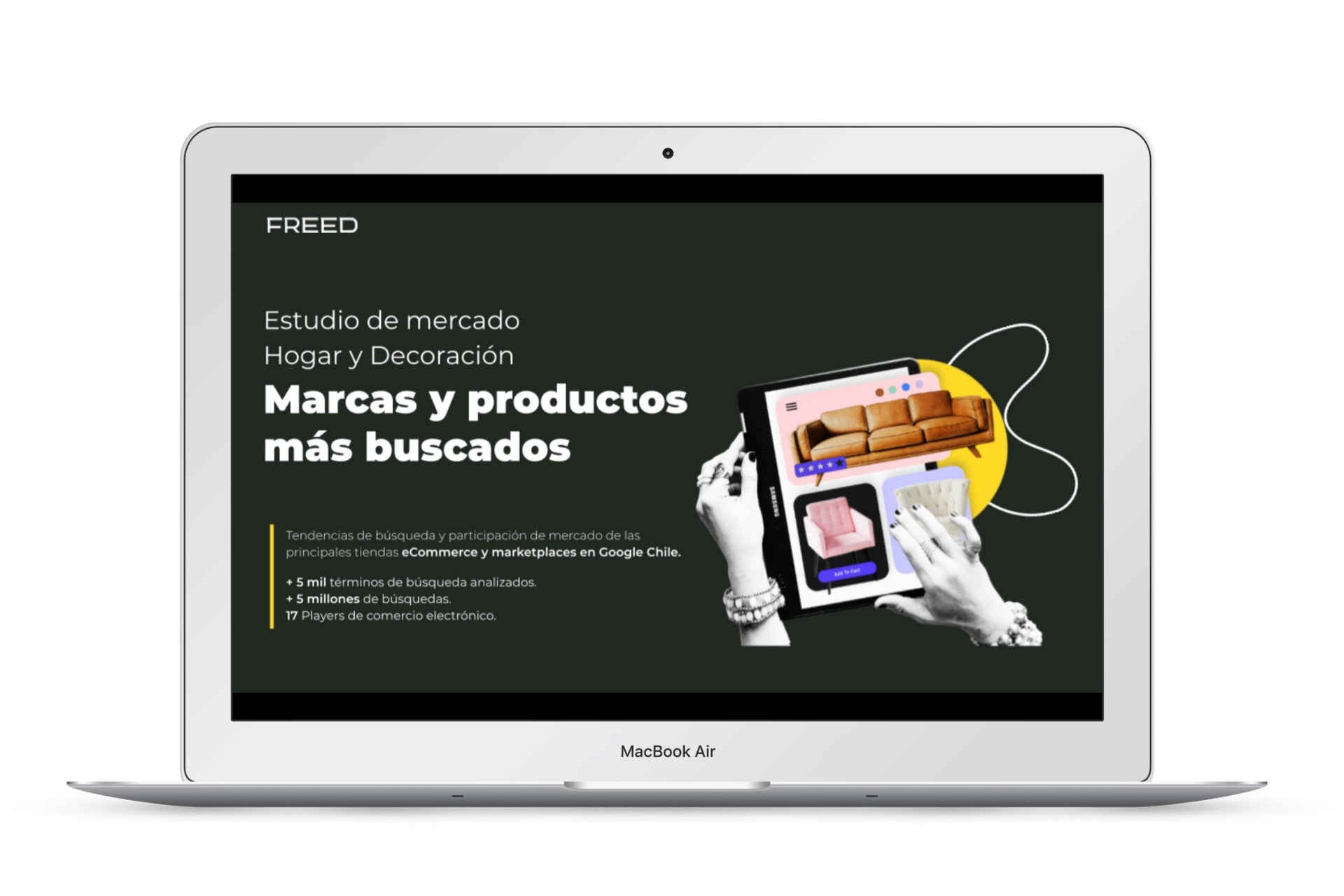
For the study, we worked with SEO tools like Semrush and Ubersuggest to capture and analyze over 5 million searches, nearly 6,000 keywords, and the participation of 17 local e-commerce players in Google Chile.
The tools and quantitative data are linked with qualitative methods, and between both approaches - quantitative and qualitative - we managed to transform data into valuable information for those interested in:
-
Understanding the behavior of digital consumers.
-
Differentiating themselves from competitors based on new trends and consumption behaviors.
-
Incorporating new products into e-commerce stores or marketplaces.
-
Opening new e-commerce channels and exploring potential market niches.
-
Understanding their organic positioning in the category.
-
Improving the growth of their online businesses through organic positioning in search engines like Google.
Before continuing with more details about the design of our Home and Decoration 2021 market study: most searched brands and products, we want to share some context regarding:
Market research is an objective and systematic process that allows understanding the environment of a product and its consumers through the application of techniques that collect information from a target market. Companies use this information to:
- design a product,
- improve their customers' experience,
- identify and define marketing opportunities or problems, and
- generate, refine, and evaluate marketing actions.
In the context of Marketing, the American Marketing Association (AMA) states that Marketing Research is "the function that links the consumer, customer, and public to the marketer through information."
Market research helps companies to:
- make more accurate decisions,
- plan a route with fewer risks and problems,
- be more competitive in their sector, and
- create or modify products and services that respond to real needs.
There are various qualitative and quantitative research methods for conducting market research and gathering information about consumer needs. This process is based on collecting and analyzing information through data sources, techniques, and tools.
In the case of keyword research, there are different tools available online. For example: social media, the brand's website we are analyzing, and trends from Facebook, Pinterest, and Google, among other publicly available and sometimes free sources.
There are also paid tools like the ones we used in our study. Here you can see a complete keyword research guide to find online market niches.
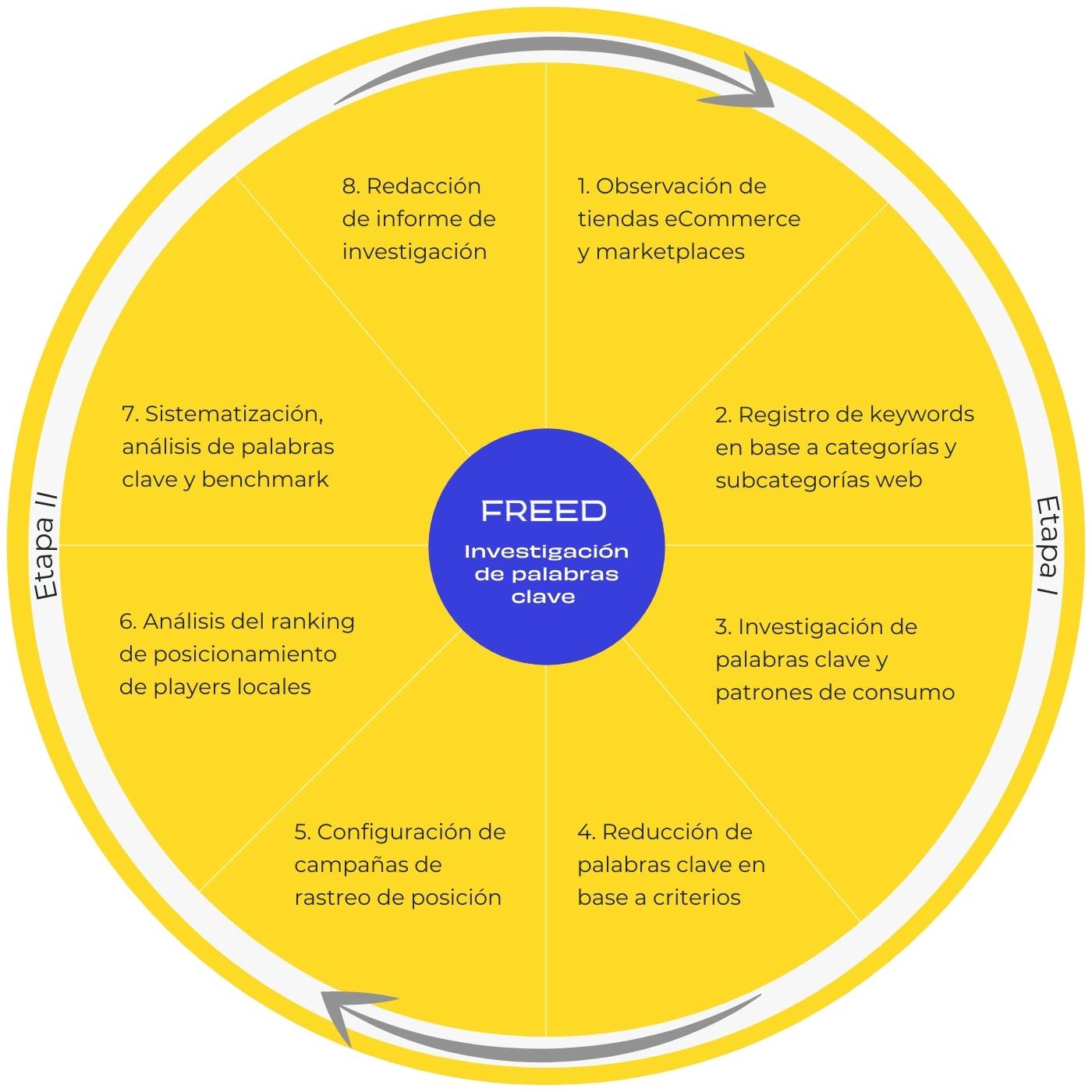
Below we share the stages and steps of our keyword research plan, designed to support brands in the Home and Decoration product category that seek to improve their Google positioning based on their customers' purchase intentions.
These are some of the questions we sought to answer in the research:
- What are the main search trends for the category online?
- What micro and macro consumption trends can we identify?
- What do searches tell us about consumer habits in Chile?
- Which brands have the best web positioning in the category?
- Who are the main competitors in the Home and Decoration category?
- What are the main niches we can identify? Or, in other words, what are the best keywords to gain organic visibility?
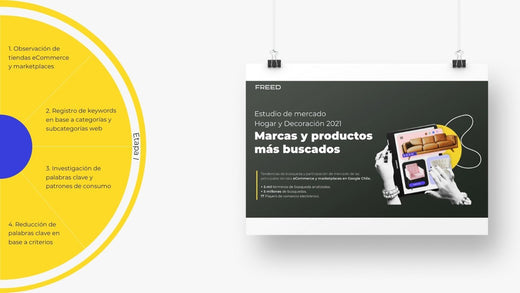
In this first step, we sought to understand the Home and Decoration product category online through various local websites, where we observed the products offered by stores, the main subcategories, the differences between generalist and specialist brands, among other inputs.
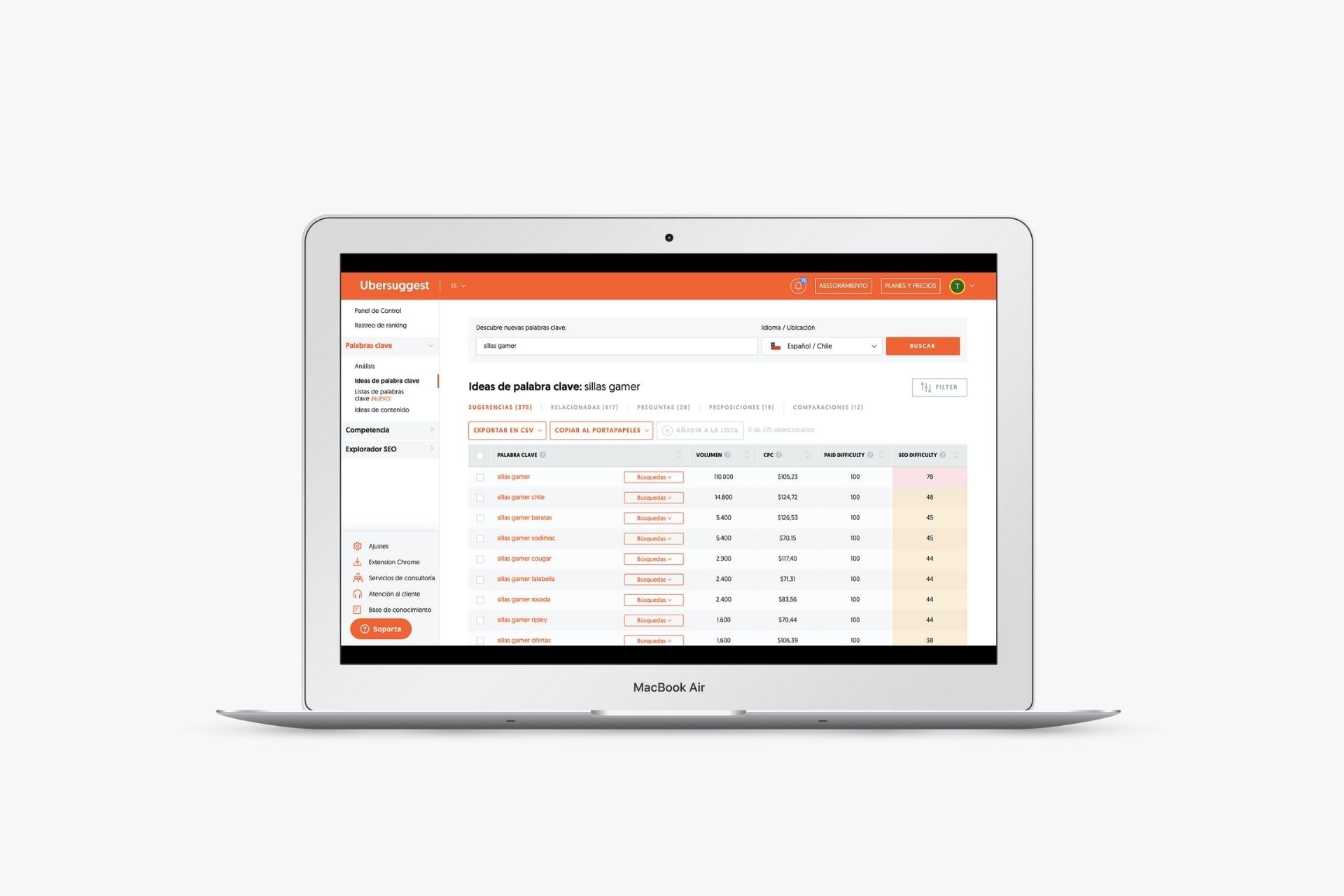
Based on public information about product subcategories in e-commerce stores and marketplaces, we performed queries in Ubersuggest - paid version - to obtain all the terms people use when searching for Home and Decoration products on Google Chile, via their desktop computers and mobile devices.
This way, we arrived at an initial sample of 35,983 keywords.
After obtaining the complete scenario and a large sample of keywords, we analyzed each search term or keyword, its average monthly search volume, its organic positioning difficulty, and most importantly, we analyzed the purchase intentions behind each search query.
To conclude the first stage of our research, we defined filter and keyword reduction criteria, such as: eliminating keywords with search volumes below 50 and terms by concordance that generate bias.
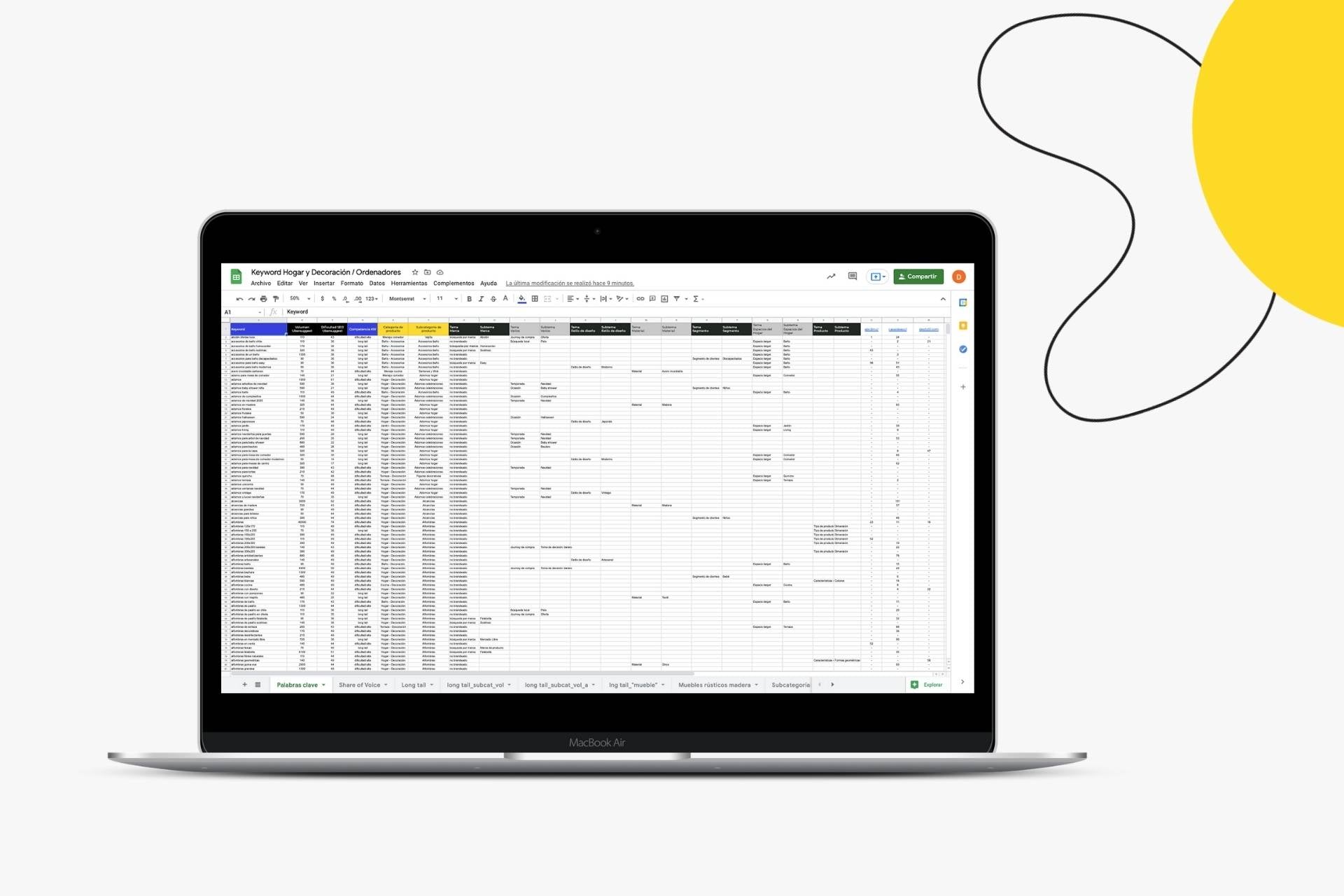
Finally, we were left with a sample of 5,830 keywords, equivalent to over 5 million searches.
We selected a sample of 17 leading players in the home and decoration category online. This sample also included Pinterest, considering that since 2014 there has been a sustained increase in Google searches related to this social network in Chile and Latin America in general.
With the sample of 17 e-commerce stores and 5,830 keywords, we set up position tracking campaigns in Semrush, paid version.
The objective of these campaigns was to check the search ranking of the 17 selected websites in Google's positions between January and April 2021.
The tracking allowed us to know the average position of websites, compare competitors, and their share of searches.
We also identified opportunities for brands looking to reach the top search results on Google Chile and attract consumers.
The data obtained in the previous steps went through a process of validation, data curation, and information systematization to obtain, among other things: consumption patterns of the category, product trends, organic visibility of each website in Google Chile, and to identify long-tail keywords.
The packaging of the study and the drafting of the report were tasks we carried out in parallel.
Throughout the research process, we systematized information, conceptualized findings, analyzed the questions posed within the framework of the keyword research design, and developed a narrative focused on our users.
Finally, we would like to emphasize that this process not only responds to the design of a market research with thousands of data points. This is a process that, if carried out continuously, allows discovering new opportunities and improving various aspects related to the growth of your online sales.
Conceptual visualization of the Design of the Home and Decoration Market Study 2021: Most searched brands and products.
If you want to know the results and conclusions of our study, download it for FREE and share it with your team and colleagues.
Have you done keyword research? Do you think our methodology can help you?