Imagine you've developed a product full of potential, but when it hits the market, it simply doesn't connect with people or doesn't sell enough. The reason? That's what you need to investigate. In the world of UX Research, recruiting the right users is a crucial step in conducting a research project. That's why in this article, part of our broader guide to UX research methods, we'll explore how to recruit the ideal participants for your research, ensuring that every insight counts and every design decision has a real impact.
If you've made it this far, it's because you're looking to recruit users for qualitative studies, using methodologies such as in-depth interviews or on-site observation. Or perhaps you want to conduct a usability test or user test of an app or digital product. And, you might even be looking for people who can answer a survey in a quantitative research study.
You've already designed your research, you have a methodological plan, and now you need to recruit users.
The importance of user recruitment
In UX research, when the object of study is people, user recruitment is a fundamental aspect. Furthermore, recruiting the right users is crucial for the success of any research project, because the quality of the insights obtained largely depends on selecting participants who accurately represent the target audience.
The execution of the research is as important as the methodological design, so users play a key role in the execution.
What would happen if recruitment is inadequate? If the recruited users are not representative of the target audience, the research results can be biased and inaccurate. This can lead to erroneous design decisions, which in turn can negatively affect the user experience and the success of the product or service.
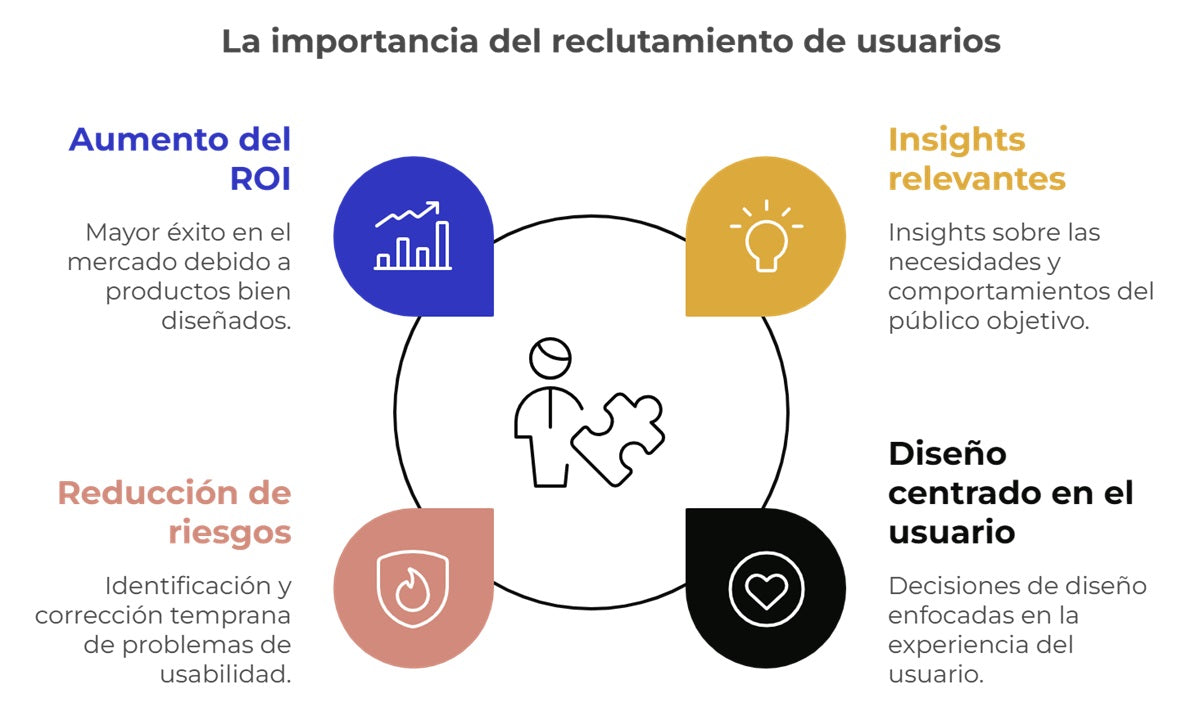
On the contrary, effective recruitment will allow for:
Obtaining relevant insights, because adequate recruitment helps gather valuable information about the needs, behaviors, and expectations of the target audience.
User-centered design, because the insights obtained allow for informed decisions, which translate into a better user experience.
Risk reduction, by identifying and correcting usability problems in early stages of product or service development, which can avoid costly later modifications.
Increased return on investment (ROI), because a well-designed product or service, based on user insights, has a higher probability of success in the market.
Get our analysis in your inbox
Subscribe to the FREED newsletter: applied research, trends and tools.
No spam. Unsubscribe anytime.
Key aspects for successful recruitment
It is essential to define clear recruitment criteria to ensure that users are representative of the target audience. At the same time, using a variety of recruitment methods can help. But let's go in order...
Define user inclusion and exclusion criteria
You should consider that the choice of recruitment criteria will depend on the specific objectives of the research and the target audience of the product or service. While it is important to be flexible and adapt the criteria as the research progresses, if the need to include or exclude any factor is identified, we also need to be rigorous and not change the criteria without considering the eventual impact on data quality and subsequent analysis.
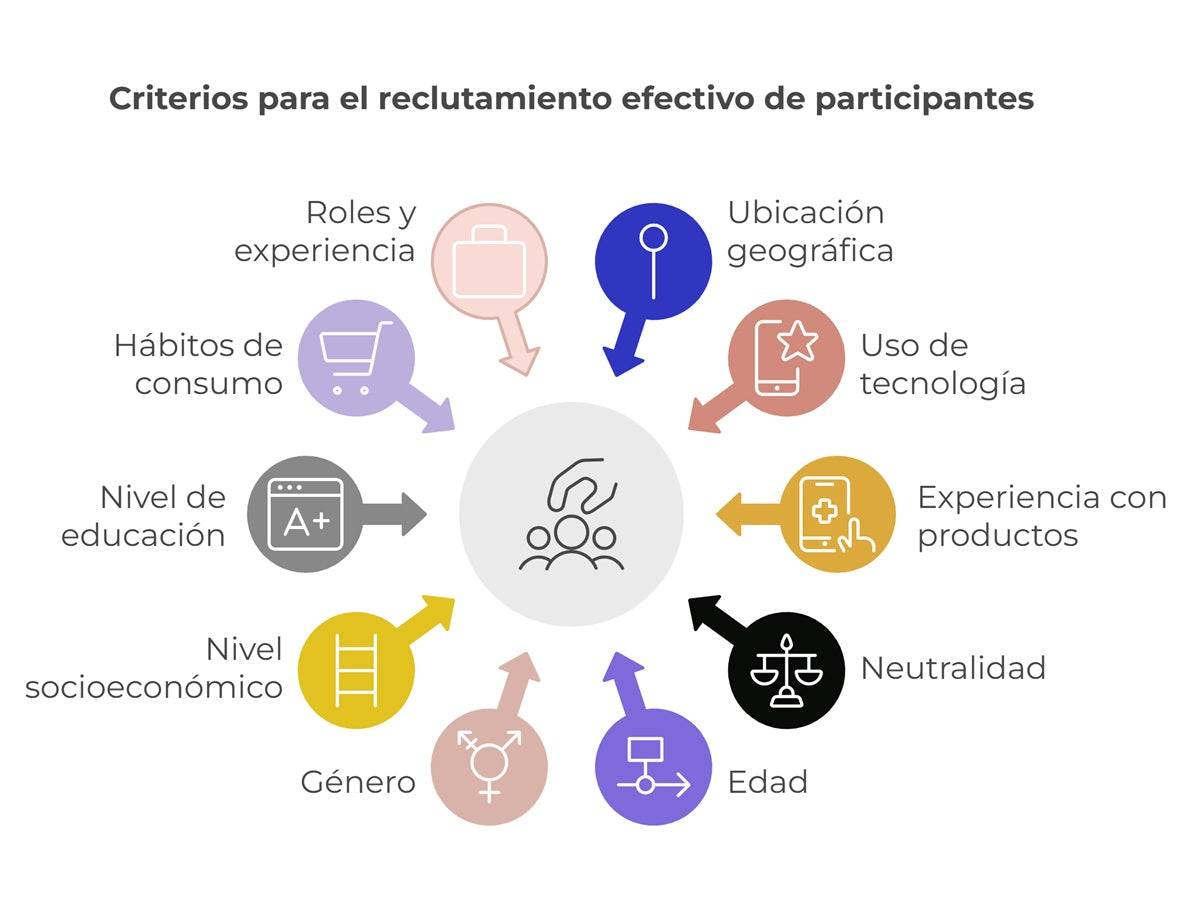
Let's look at the most common user recruitment criteria:
Geographic location: If the research focuses on a product or service offered in a specific geographic area, it is important to recruit users residing in that area. This ensures that the insights obtained are relevant to the target market.
Technology use: If the product or service is primarily used on mobile devices, it is essential that participants are regular users of smartphones or tablets, for example. Evaluating the level of familiarity with technology in general and with the specific operating system (iOS or Android) may also be important.
Experience with similar products or services: In some cases, it may be necessary to recruit users who have previous experience with the type of product or service being investigated. For example, if a new mobile banking application is being developed, it may be useful to recruit users who already use other banking applications.
Neutrality: For example, you should avoid recruiting employees of the organization developing the product or service, or related companies. This ensures the objectivity of the results. Prior knowledge and potential bias could affect the validity of the research.
Age: Depending on the target audience of the product or service, it may be necessary to establish a specific age range for users. In some cases, it may be necessary to segment further by age groups to obtain more specific insights.
Gender: In some cases, it may be important to recruit users of a specific gender or ensure equitable representation of genders.
Socioeconomic level: This factor may be relevant if the product or service is aimed at a specific segment of the population.
Education level: The level of education can influence the understanding of the product or service and the ability of users to provide constructive feedback.
Consumption habits: In some cases, it may be useful to recruit users who have specific consumption habits related to the product or service.
Roles and previous experience: Especially in the B2B world, inclusion criteria are related to the person's role, position, previous experience, or decision-making level. For example, if we are conducting a study for a SaaS platform aimed at marketing professionals, we need to recruit technology buyers in marketing roles.
Let's look at an example with a real case: at FREED, we conducted a mobile banking study in which we defined the following inclusion criteria:
Current account holders in at least one of the 12 banks within the scope of the study.
Digital banking users over 18 years old.
Residents in Chile.
People who conduct transactions online, regardless of the device (laptop, PC, smartphone, or tablet).
People who were not digital banking users, i.e., those who stated that they prefer to go to a branch to carry out transactions, were excluded from the study.
In that study, we used a convenience recruitment strategy, meaning we invited people from the consulting team's network of contacts, including the consulting firm's social media, to participate.
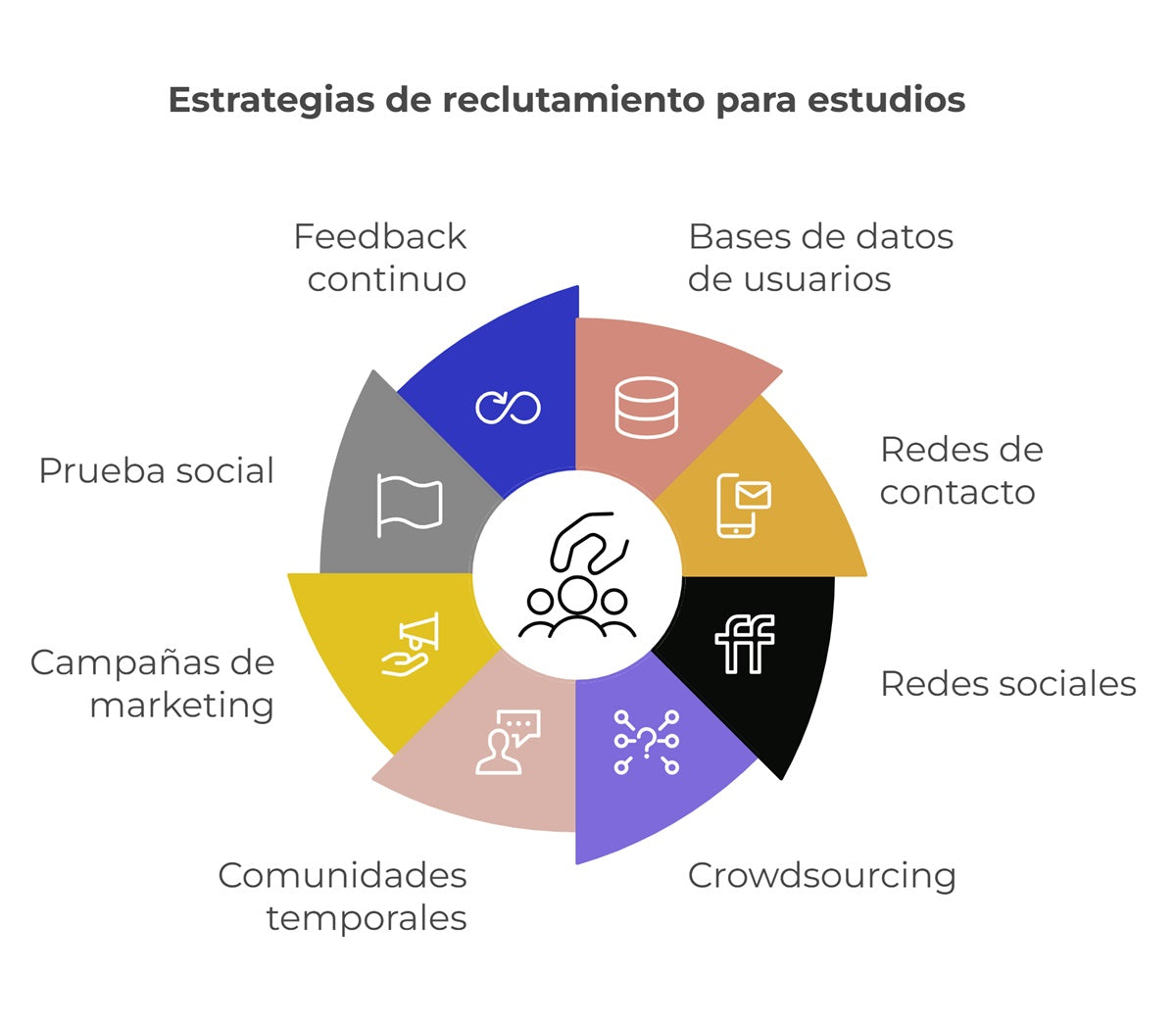
8 recruitment strategies
Depending on the type of study, strategies such as the following can be used:
1- User or customer database: This is the most common and simplest strategy. It involves obtaining a user or customer database, filtering by the already defined user recruitment criteria, and scheduling interviews with them. This strategy is the one we have applied most often at FREED, even in a research project with students and teachers of an entrepreneurship program for young people in Lima, Peru. The on-site interviews provided us with the necessary insights to create the user journey with the program, conduct a co-creation workshop with the team in charge of the program, and then completely redesign the course.
2- Contact networks: At FREED, we work extensively with B2B clients. We use our own contact network, the client's network, and LinkedIn to recruit participants. Unlike using a database (previous point), here the contacts are more personal: we have the person's email address or WhatsApp number. The approach is also more personal: it can be a one-on-one contact and not a mass email inviting people to join a study.
3- Social media: If you have a call for participation in a study, whether it's an interview session or a usability test, using social media will allow you to reach a large number of people. You can post the call for participation on your social media and your company's social media, as well as ask colleagues for help in spreading the word. Be sure to clearly state the conditions and inclusion criteria, so that people who meet the criteria can sign up. Be careful not to confuse using contact networks and social media to recruit people to participate in a study with openly asking for feedback about a product or service (the latter case is not a formal research project).
4. Crowdsourcing: This strategy can be useful for recruiting a large number of users. It can be implemented through permanent communities: For example, online platforms that bring together patients with various medical conditions, where they are invited to answer questions and participate in long-term research.
In the B2B world, a recruitment strategy can be to use a Slack channel to connect the community and use this medium to disseminate invitations to participate in studies and research. Moreover, interactions in the community can constitute the object of study in what we call digital ethnography or netnography. As an example, I am part of a professional network of people who do trendwatching, via a Slack community created and managed by TW Insight Network:
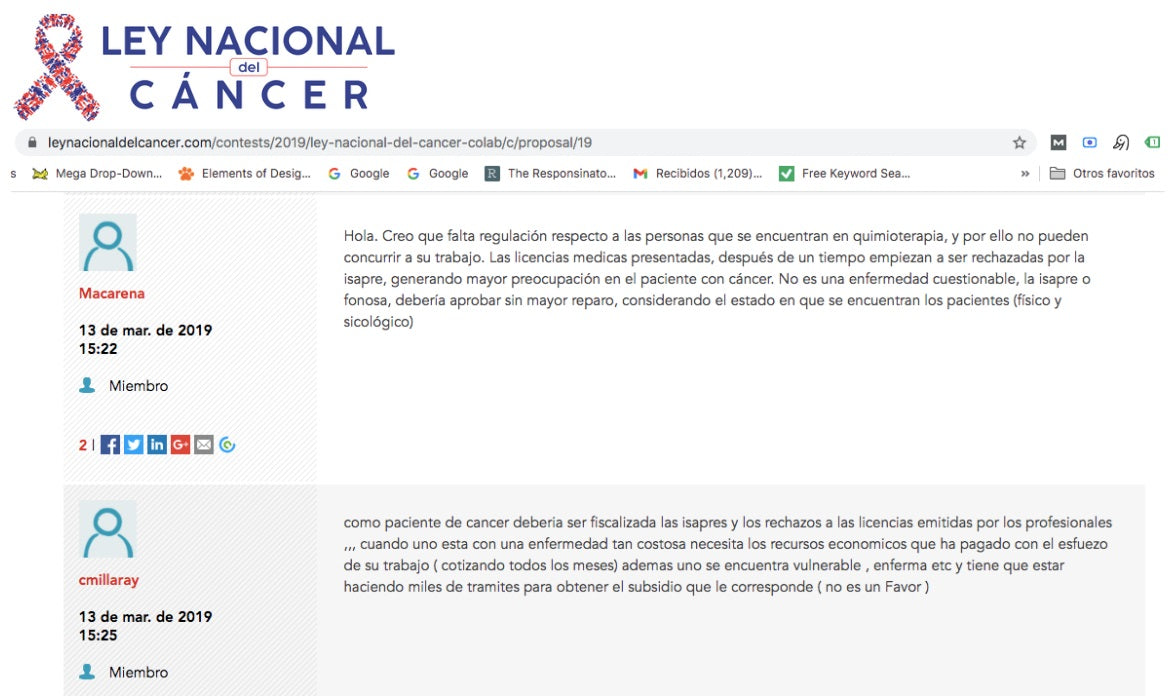
5. Temporary communities: These are online spaces dedicated to discussing specific topics for a determined period. An example in this regard is the National Cancer Law portal, which sought to collect the experiences of patients, caregivers, and healthcare professionals, in favor of designing the future National Cancer Law in Chile.
6. Marketing campaigns: This involves creating synergy with the marketing department to create campaigns that take the opportunity to learn about customers. An example of this could be a marketing campaign like the one by insurer SURA, which used an application to teach people how to save. We don't know what actually happened with the data, but a campaign like this definitely allows for collecting data about people, which can be used to learn about their consumption habits, beliefs, motivations, and obstacles to performing certain tasks.
7. Social proof: This involves integrating feedback requests at moments when the customer already trusts the brand, such as during the product or service evaluation stage, which can increase participation.
In an example like this, where the company uses a post-service survey to receive social proof or reviews of its services, it's a good opportunity to capture data on the vocabulary used to refer to the product or service, understand the difficulties encountered in its use, and identify opportunities to improve the service in general.
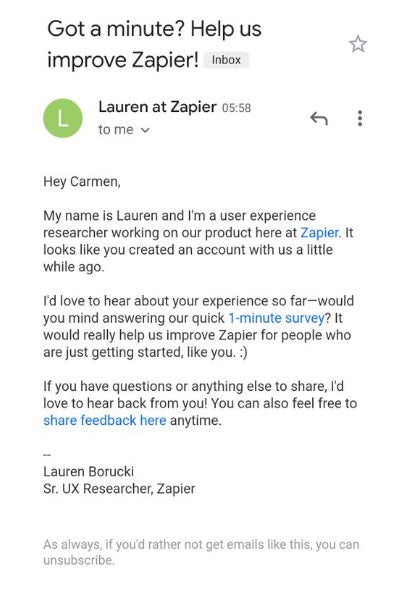
8. Continuous feedback: This involves continuously requesting feedback from users, for example, through short surveys or emails, which allows for obtaining valuable information regularly.
Below is an example of a survey received from the SaaS platform Zapier. If you work as a UX Researcher for a digital product, you might want to understand people's experience at different stages of their journey with the platform, from onboarding to recurring use, recommendation, or if someone is temporarily unsubscribing or wants to close their account.
Another example could be a mini-survey to evaluate a website: How useful did you find this content? Why did you look for this content?
...
Rewards
A somewhat controversial aspect is whether an incentive should be offered to recruit users for a UX Research project. At FREED, we haven't done it in all cases, because it depends on the budget, feasibility, and logistics of the study. On some occasions, we have announced in advance that, in gratitude for their time and effort, a gift card will be given at the end of the interview. In other projects, we have given a gift at the end of the interview, without the user knowing they would receive it.
The important thing is to offer appropriate incentives and not forget that they are to reward users, and to consider it as a factor that could help increase the response rate and the quality of the information obtained.
Some common options are:
Monetary incentives: A payment for each hour of interaction with the user or for participation.
Gifts such as a gift card, a box of chocolates, a bottle of wine, a notebook, or a good quality pen. It could also be a product from the brand itself, which would reduce costs.
Raffles for gift cards or other prizes.
At FREED, we are fans of gift cards because they are very practical for accounting, they are inexpensive, and they are also convenient for the user; for example, they can be used for grocery shopping. We have also given out pens with the brand of the company that commissioned the research and artisanal chocolates.
However, in some cases, the incentive model could be counterproductive for the following reasons:
The risk of recruiting non-genuine users, as gifts can attract people motivated solely by the incentive and not by meeting the recruitment criteria. This can bias the results if participants are not representative of the target audience.
Lack of commitment to the study, because people motivated by a gift who are not committed to the research process might participate, which could lead to less thoughtful responses or behaviors that do not reflect their true experience.
Deviation from the desired profile, because incentives, especially if they are attractive, can cause people outside the target profile to try to qualify for the study, altering the representativeness of the data obtained.
Perception of low professionalism: Depending on the type of incentive, participants might perceive the study as less professional. This could reduce the seriousness with which they approach their participation and, consequently, the quality of the insights collected.
Ethical dilemmas, because offering gifts can be perceived as a form of manipulation, especially if it is not clear how the information obtained will be used. This could generate distrust towards the research team or the brand.
At FREED, we have had this discussion more than once, and there have been projects where we have decided, together with the contracting company, not to offer incentives. For example, in a project where we conducted online interviews with clients of a printing company, it was not difficult to recruit users, who were clients and contacts, because they wanted to express their opinions openly, without expecting a reward. In addition, we had very little time to carry out the process.
It must be considered that the more specific the profile of the people we need to recruit, the more delicate and, in turn, more relevant the issue of reward can be. Imagine you are conducting a study with B2B professionals who buy forestry machinery in Latin America. There are few people who meet this profile, therefore, participation in the study must be attractive to them, and an adequate reward should be considered.
It doesn't necessarily have to be monetary, but it should be sufficient to convince the person to make time in their day, and not change the interview time three times, to talk about their specific experience in an industry. In this case, the reward could be that they gain some benefit, such as being informed of the study's results, learning something along the way, or having the satisfaction of having contributed to generating knowledge and advances in the industry.
Other aspects you shouldn't forget
Define a significant sample in relation to the research objectives. For example, for tests with a mobile application for personal well-being, we set it at 5 to 7 users, as it would be a quick test. In contrast, when we carried out a UX Research project with a large insurance company, the target audience was insurance brokers who sold different types of products; there, the sample exceeded 50 users, and the interviews took more than two months to conduct. In this latter case, we finished when a saturation point was reached, and we were no longer collecting new data.
Communicate clearly and transparently: This means explaining to participants the objectives of the study, the duration of their participation, and how the collected information will be used.
Conclusions
The success of any UX or CX Research lies not only in the tools or methods used but also in the people who participate in it. Accurate user recruitment is a critical necessity that determines the quality of insights and, ultimately, the success of the product or service.
A well-structured process allows for a deep understanding of users, designing experiences that resonate with their real needs, as well as reducing risks and costs.
Remember that every design decision must be anchored in the reality of users, and that reality can only be fully understood when we work with the right people from the beginning. The future of your product or service begins the moment you decide who will be the voice of your users.
You can also watch and listen to this article in podcast format
Discover the researcher's role and ethical stance, what they need to learn, and how they should communicate findings to healthcare system stakeholders.

 By
By