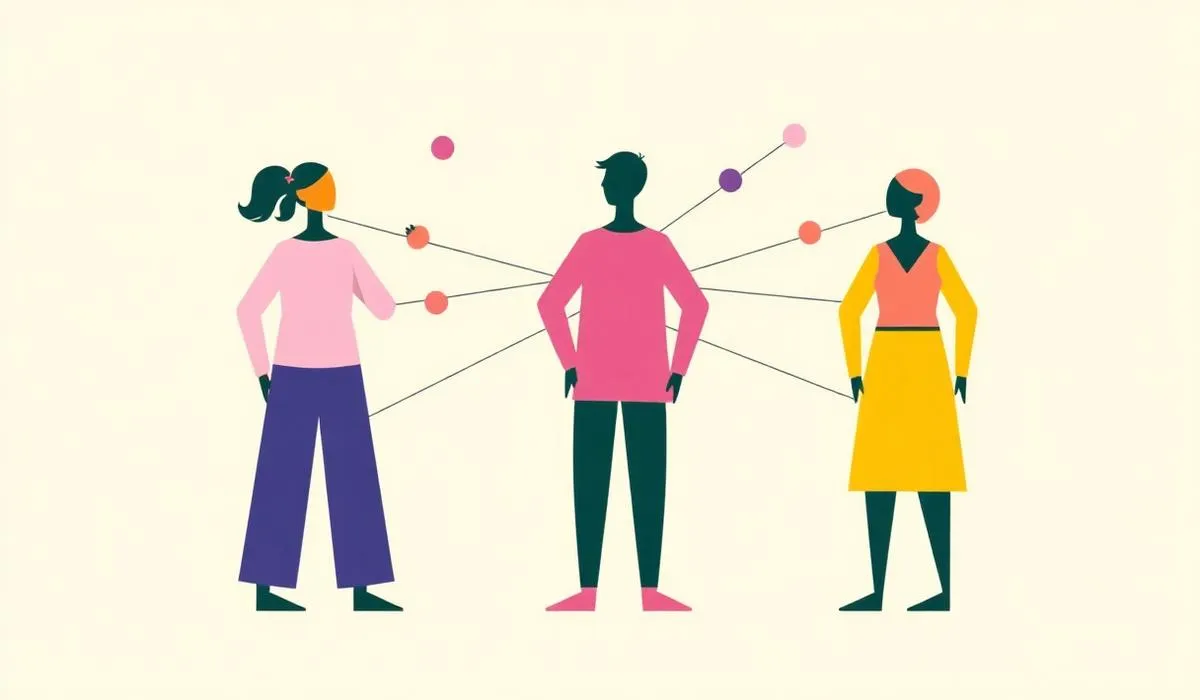
Co-design is a method that brings together the creativity of people with different roles and specialties to work together on the design of a product or service. It serves to gather ideas in a collective dynamic, incorporating the experience of stakeholders who were previously only observed from the outside.
Unlike traditional design, where work is often individual and personal visions are not always shared, co-design sets a common goal among profiles that previously participated only as external agents in the process: the researcher, the customer service executive, and, above all, the end-user. In a co-design session, these people become experts in their own experience and contribute direct value elements to the solution.
Co-design serves to gather new ideas in a collective dynamic, drawing on the experience of various stakeholders in the system being designed. It is a good method when the team needs to step out of its own point of view—that of the designer or the business—and incorporate the perspective of the actual service user, without intermediaries interpreting for them.
- Accept that all people are creative and will participate if they are motivated and given the right tools.
- Cultivate diversity as a guiding principle: if the entire group shares the same background and perspective, the results will be predictable and limited.
- Foster dialogue, with a common space and shared language among members who do not usually work together.
In addition to the facilitator and the recorder, it is advisable to designate someone to explicitly manage time, giving a five-minute warning before closing each block, because in practice, rich conversations tend to extend beyond what is planned, and without that warning, the exercise loses pace.
In our workshops, we usually convene groups of 3 to 6 people per table, intentionally mixing designers, those who execute the service daily, and end-users. A facilitator guides the dynamic and manages time; a second role, the recorder, systematizes what is generated on post-its so that nothing is lost when the session ends. It is crucial that no single profile dominates the conversation: the facilitator must actively invite those less accustomed to participating in design processes to speak.
Another variant we frequently use is to divide the session into two moments: one for open idea generation and another, separated by a short break, dedicated solely to combining and refining the proposals already on the table, thus preventing early criticism from stifling creativity in the first moment.
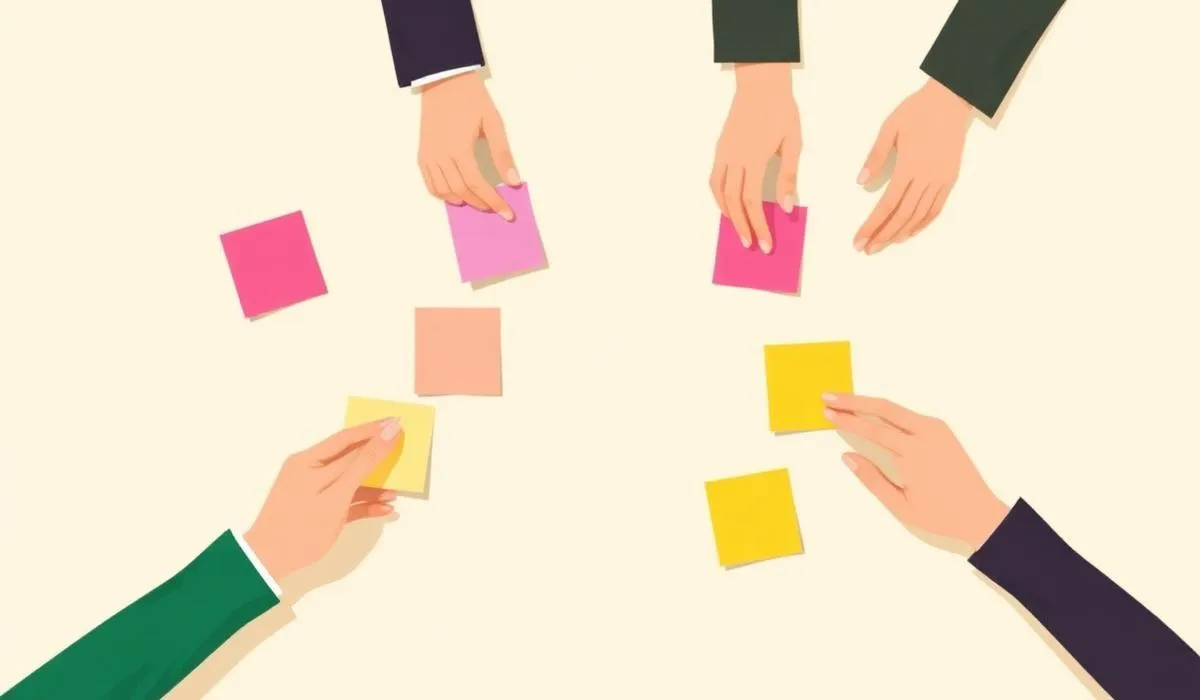
The simplest format starts with a predefined design challenge, written in a short, visible sentence for the entire group. From there, each participant individually generates ideas on post-its for a few minutes, and then the group clusters and combines them at the table. It also works well to link co-design with a desktop walkthrough, where the same participants act out the journey of the solution they just proposed, or to close with a simple prioritization round by voting with stickers.
A common risk of co-design is that the session turns into a disorganized brainstorm, where each participant defends their own proposal without listening to others. To avoid this, it is advisable to set simple rules from the beginning: each person presents their idea in less than one minute, no one interrupts while someone is speaking, and criticisms are formulated as questions ("what if...?") instead of direct judgments. In workshops with very different profiles—for example, an executive and an end-user with no experience in design processes—it also helps to give concrete examples of what is expected before starting, because the technical language of the design team can intimidate first-time participants.
- Paper and post-its of different colors
- Pencils or Sharpies
- Stickers for voting or marking priorities
Before the session, the design challenge must be identified, and the participating profiles carefully selected, ensuring real diversity in the group. Afterward, the findings must be systematized, and the ideas to be prototyped selected.
Co-design is sometimes confused with a simple brainstorming session, but the difference lies in who participates and with what objective. A traditional brainstorming session usually brings together only the internal design or product team; co-design deliberately incorporates external stakeholders—customers, suppliers, frontline staff—because their tacit knowledge of the problem cannot be replaced by the design team's creativity alone. This difference in composition explains why co-design produces ideas that rarely emerge in an internal session, although it also requires more prior coordination time to convene the correct profiles.
Co-design does not replace prior research: if the team does not have data from field observation or in-depth interviews, it runs the risk of designing based on assumptions shared by the group, not on evidence. It also does not work well with very large groups—more than six people per table makes it difficult for everyone to contribute—or when the invited profiles do not have real time to get involved, because the method requires active presence, not a one-off consultation. And it is worth remembering that "designing with" does not mean that every idea from every participant must be implemented as is: the design team remains responsible for translating these contributions into a coherent solution.
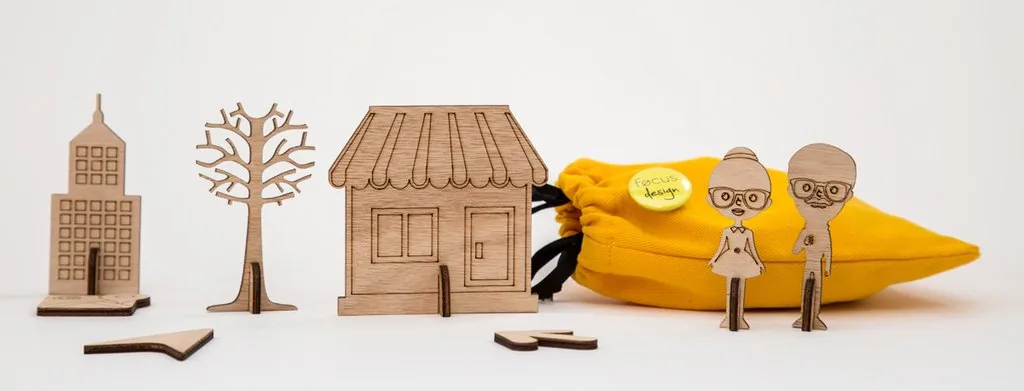
With the findings systematized, the natural next step is to build a prototype of the selected ideas and test it with the same profiles that participated in the co-design, closing the cycle of "designing with" instead of "designing for." If your organization is just setting up these types of dynamics, the lean design kit provides ready-to-use templates to organize the session.

 By
By