Finding a market niche will help you focus your marketing efforts on a specific customer segment, allowing you to respond more precisely to their needs and gain organic positioning for your brand, products, and services. Discover how to find a market niche and orient your SEO strategy.
Within a large market, there are different customer segments with their own needs and preferences. For example, in the market for clothing accessories, you will find many different segments or niches, such as leather products, natural fabrics, synthetic fabrics, etc.
Knowing this, you must first validate that there is an audience willing to pay for your product before launching into the market with just a hypothesis and verifying that there are consumers who will value your bags made from recycled plastic fabrics, for example, and that there is sufficient demand to scale those products.
Otherwise, it might be too late when you discover that natural leather items actually sell more.
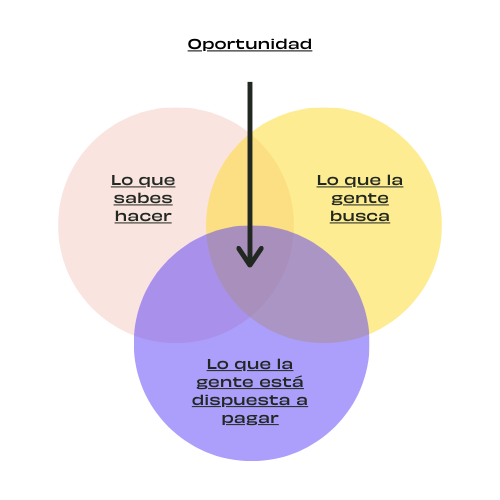
The idea is to find the sweet spot between what you can create or sell, what people search for online, and what they are willing to pay for. It might be something you don't have or aren't offering, but that you can design or create.
From a content perspective, we know that the web is oversaturated with products, services, and data. More than 328 million terabytes of data are published on the internet every day. And what is the impact of that on your business and digital content? Your brand's content cannot be just another drop in an ocean of information. That's why the invitation is to look for a market niche in which to position yourself.
Now, how can SEO help you with that?
The first thing to understand is that you must perform keyword research to find a market niche, which will give you statistics on the organic positioning difficulty of the term and its search volume. That is, the number of times internet users have entered a search for that term in a period.
You might be tempted to use keywords with the highest search volume, but if your brand is not recognized, it will be difficult to appear in the first results of search engines, as the level of competition is high for more generic terms. That's why you need to find a more specific market niche where you can compete.
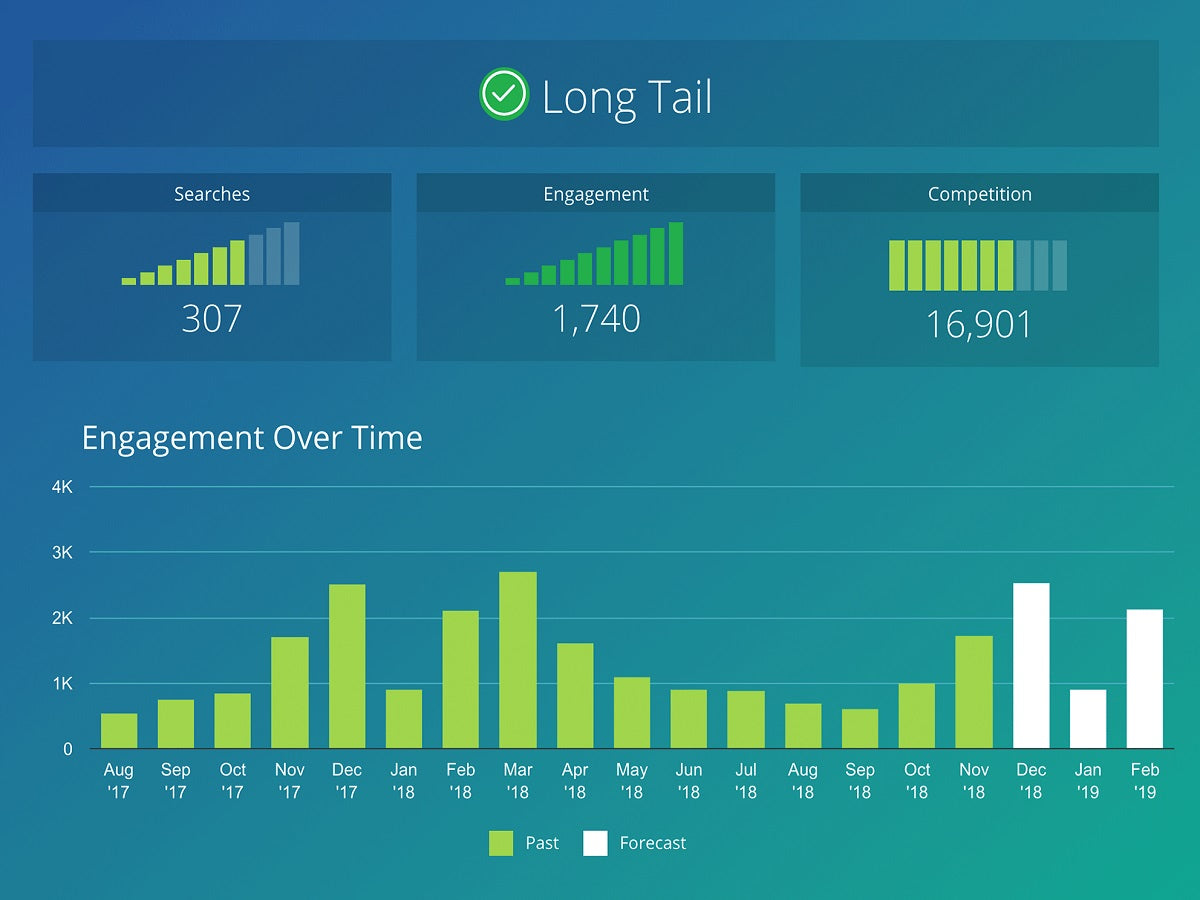
The solution is to look for long-tail terms, which have a lower search volume but also lower competition. By implementing them in organic positioning work, you can capture opportunities in the short and medium term.
Therefore, you must ensure that the SEO difficulty is low and that the search volume is interesting. This way, you can choose the best words to compete for organic positioning, with an SEO strategy that considers several long-tail terms to capture those niches.
As we said, you should start by doing keyword research related to the product or service you are offering. These terms show what and how people search, providing essential information to improve your online visibility.
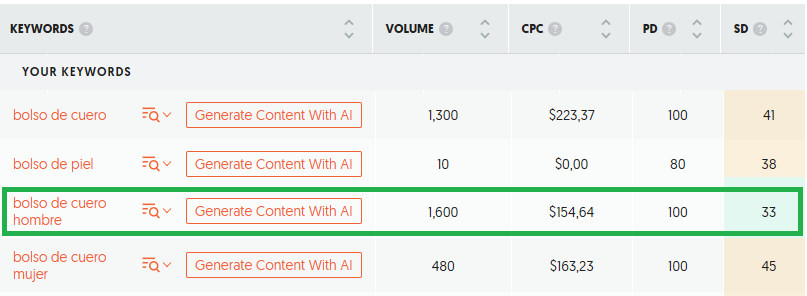
To choose the most convenient keywords, you should consider long-tail keywords, as they ensure you select an unsaturated market niche where the competition for organic positioning is lower. Long-tail terms will have low or medium search volume and competition, but be careful if the searches are very few (10 or 15) because they are not convenient.
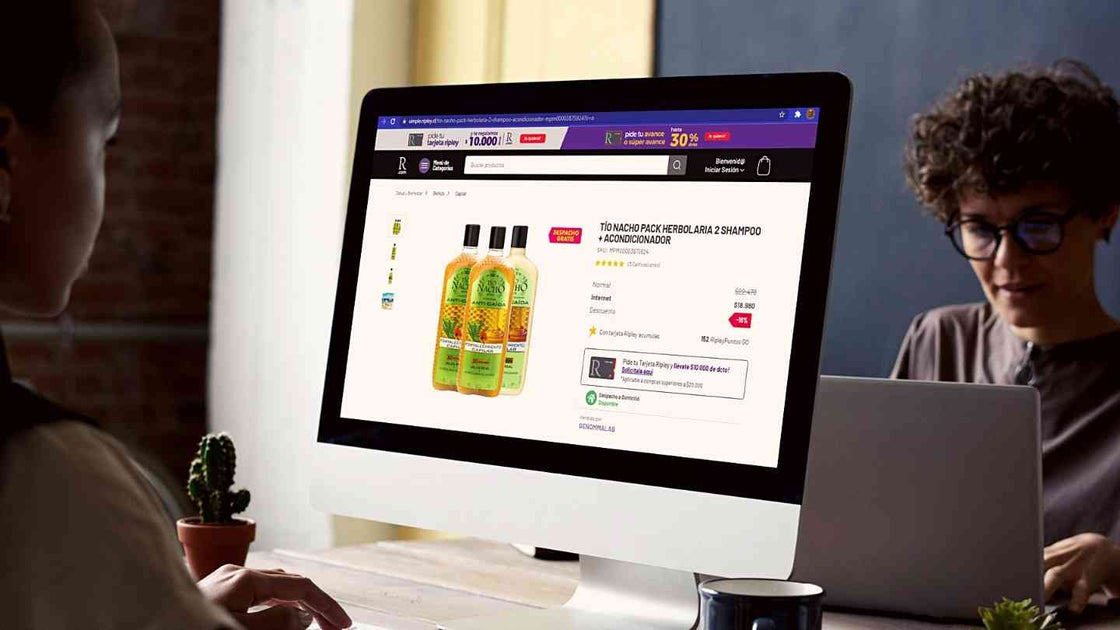
To perform your keyword research, you must start by choosing a tool that adapts to the channel you are using to sell your products or services. For example, if you need to optimize your store on a marketplace like Amazon or Etsy, each will have its own algorithm.
On the other hand, you should know that there are oversaturated product categories where there is very high competition, and you may have to fight with big brands to gain a space.
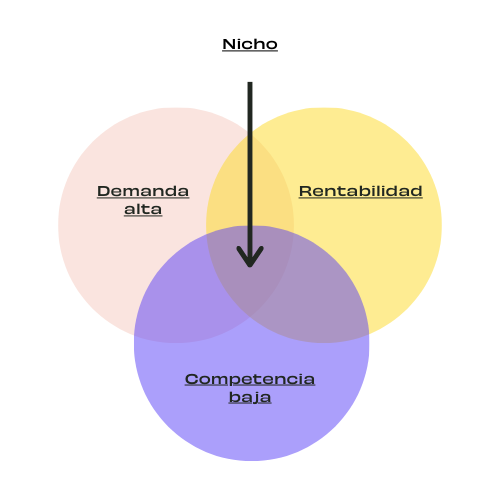
So, graphically explained, you will find your niche in the space where:
- high demand,
- profitability, and
- low competition converge.
There are several SEO tools that will give you important information to climb to the top positions in Google's organic search results and marketplaces. Here are some of them.
How does it work?
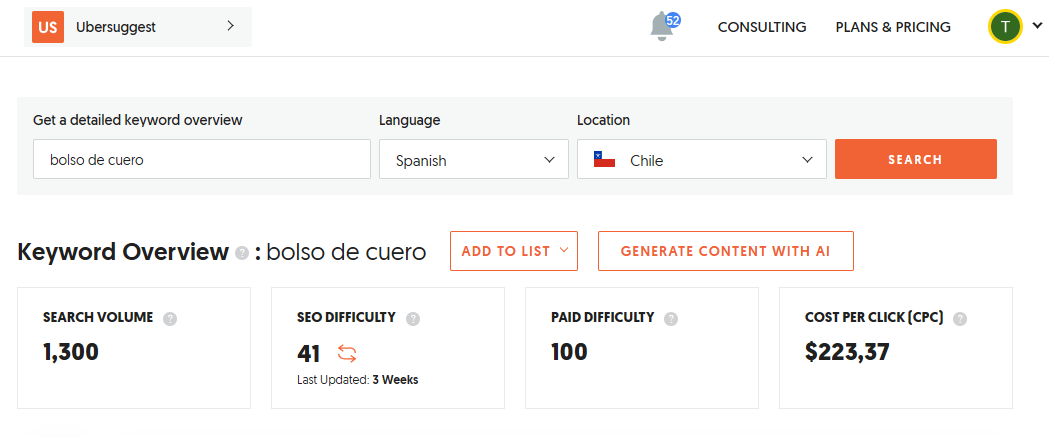
First, you must change to the language and country for which you want to perform the search. After entering the keyword you are researching, you should look at the search volume result and the SEO difficulty (ideally, it should be below 35).
Next, you can scroll down and see the keyword ideas that the tool provides, which will show you other related or more specific terms.
You can select the most interesting keywords, export them to work in an Excel or Google Drive spreadsheet, and then filter to get the best ones.
This tool, unlike Ubersuggest, does not have the country specification for your searches. It is recommended to use it for searches in English because Etsy is a platform mainly used in the United States.
You must type the keyword you are researching into the search engine, and it will show you the results for search volume, engagement, and difficulty. Then you can add these terms to a list by clicking on "Add to list."
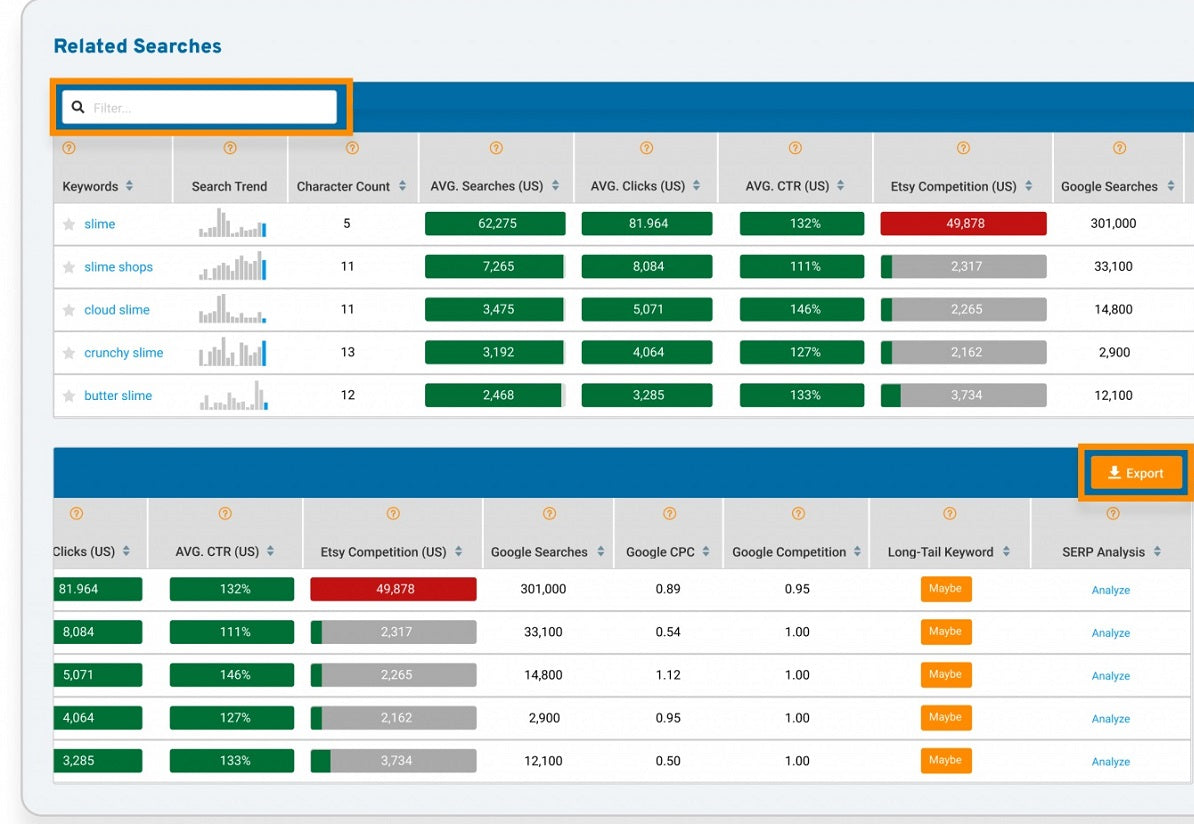
By scrolling down, you will find suggestions for related keywords. You must filter the ones you are interested in, adding them to your list of terms.
The term selection procedure is the same: a good number of searches and difficulty below 40. To export the terms from the list, you must select them with the cursor and paste them into a spreadsheet to work with them comfortably.
This tool has several functionalities, including keyword research, but also a specific one for niche search.
For keywords, you must go to "Keywords scout" and type the keyword you are researching into the search engine. It will immediately provide suggestions for other related terms, and again you must select them to create a list. In addition, it will specify whether they are long-tail or not.
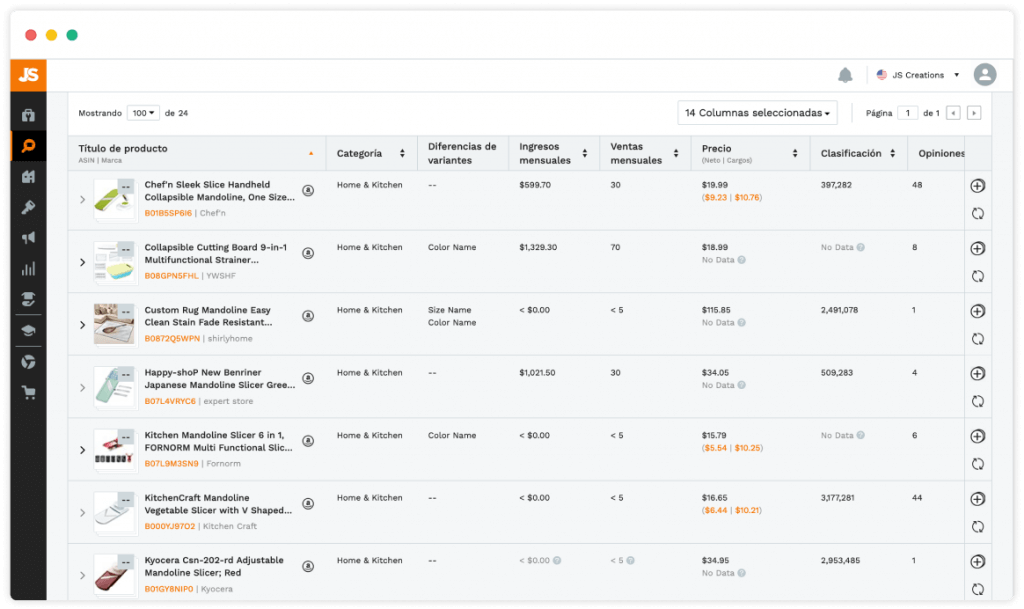
To use the niche search, you must click "Find products" and then "Niche Hunter." You must choose the country for which you want to do the research. It also has the option to select search filters, such as the competition level.
You type the keyword in "Include keywords," and it will show the results of related terms with the amount of sales it generates, the difficulty of competition, and a score it gives as a niche.
If you click on one of the keywords, it will show you the products in the niche, with their prices and images. If your product is not within the price category, you should continue investigating.
This tool works well in English and is recommended for use in this language. In "Get Keyword Ideas," you must enter the keyword to research, and it will show search volume results specific to each search engine. You can review them by clicking on the name of each platform.
Like the other tools, further down it suggests related terms with their respective data, even specifying if it is a long-tail. To work with this data, you will need to export it.
We recommend following this procedure:
- After selecting the keywords, you must transfer them all to an Excel spreadsheet to organize them.
-
Filter according to your interests. Ideally, you should consider their relevance to your products or services, their difficulty considering the level of competition, and the search volume. Remember that choosing long-tail terms will be the most appropriate.
-
Select the most interesting ones.
-
Adapt your content by including the most suitable keywords.

 By
By