First, let's clarify the concept because today, every new venture is often labeled as a startup.
First, a startup is a term referring to emerging companies, but this isn't enough. A startup is founded to develop a unique product or service that aims to disrupt the market, be rapidly adopted by customers, and make the business scalable for accelerated growth.
In this context, an SEO strategy for startups must consider that these are companies just beginning to grow, and we must help them make their business model scalable through organic positioning.
So, if you're looking for your brand to gain authority online and for your potential customers to find your website in Google and other search engine searches, you need to work on specific SEO for your startup.
Now, before we even delve into the topic of organic positioning and what that means in practice, we need to ask a fundamental question:
Perhaps it's an uncomfortable question, but it's the first thing we ask when a team of founders contacts us at FREED to work on their startup's SEO: is SEO the right path or not?
In this regard, and based on our experience, what conditions must a startup or a new brand meet for SEO to eventually be a profitable option for its growth?
1. Commercial validation must exist
This means that there must be customers who are already paying for your product or service. If no one is paying yet, creating content can be interesting for organic growth but won't be the most profitable in the short and medium term. For a startup looking for prospects, customers, and growth, the commercial aspect is important.
Alternatively, it may also be interesting for product-market fit validation to come through subscribers, leads, freemium users, or another indicator that the founding team has selected. In an exclusive SEO project, our job as consultants is not to question commercial validation, but to ensure that the entrepreneurial team has it.
2. Dedicated resources must be available
Designing and implementing an SEO strategy is a process that requires an investment of time in human, financial, and technological resources to carry it out. So, if there is no real commitment or dedicated resources, SEO is not for that startup either.
Because a successful SEO strategy not only demands the most from talent, but also requires knowing how to manage available resources.
If, after analyzing the above, you think that organic search engine positioning is an option for your startup, keep reading.
To work on the organic positioning of a website, you must invest resources and time, as well as patience. SEO is a constant effort that will yield medium to long-term results, and if you keep reinforcing it, that optimization will last.
Unlike paid traffic, where your trace will immediately disappear from the internet once you stop paying for ads, SEO will keep you competing in the search results of people who need a product or service like yours.
If you start with an SEO strategy from day one, you can give your startup visibility on the internet, climb to the top results, and stay in that position.
This depends on:
- the market niche related to your products or services,
- the keywords you choose to rank for, and above all,
- your constant work in content creation, and
- designing a meaningful search experience.
We want to emphasize the second point: it is essential to conduct keyword research. And why is it so important? Because:
- It will help you understand what people are searching for online, and thus you will better know your potential customers and their real needs.
- You will also understand how they search online and know which are the best keywords to help those people find your product or service.
- You will identify your main competitors in each market you research and the brands that are references for consumers.
- You will be able to find and choose the market niches where you can start competing.
- You will obtain valuable information to design your content strategy.
All this data allows for the design and execution of an SEO strategy that will enable the brand's website to appear among the top Google search results, and your startup will:
- attract potential customers,
- generate sales,
- maintain valuable traffic, and
- earn user trust.
If the plan is for your startup to soon be profitable by selling your product or service, organic positioning is a smart investment.
Now let's look at the work that every SEO strategy must establish.
It is the process of optimizing a website that will allow you to improve your startup's organic positioning. You must consider that it is a constant work of improvements both at a technical level and in content, understanding how search engines work and responding to the needs of the web user.
The first step will always be to understand what and how people search on Google or other search engines. This research will give you valuable information to develop content that will bring your brand closer to the target audience.
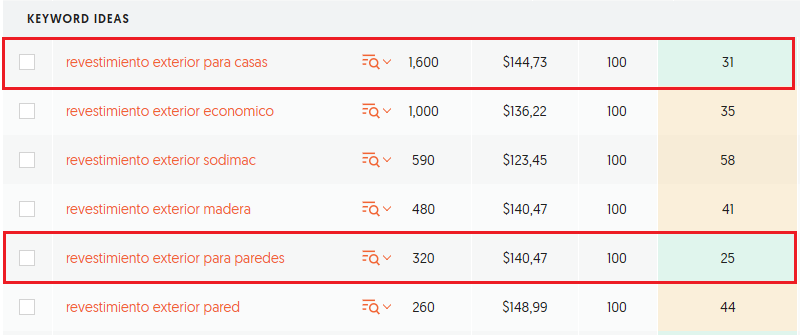
For this, you must find the keywords or terms that are most entered related to your product or service.
If your website has strong competition in the organic positioning of the most searched words, you should opt for using long-tail terms. Their monthly search volume is lower, but their SEO difficulty is very low: with these keywords, you can compete in a specific niche where people are looking for your product or service.
To find the most suitable keywords, you need to use SEO tools that will allow you to conduct research by choosing the geographical location where you want to rank.
2. Create relevant content
The content you upload to your website should aim to meet users' needs and search intentions. That's why it's important that it's written naturally and provides new or more complete information than your competitors.
In addition, you must ensure consistency in publishing and updating your web pages so that Google considers them among the best search results.
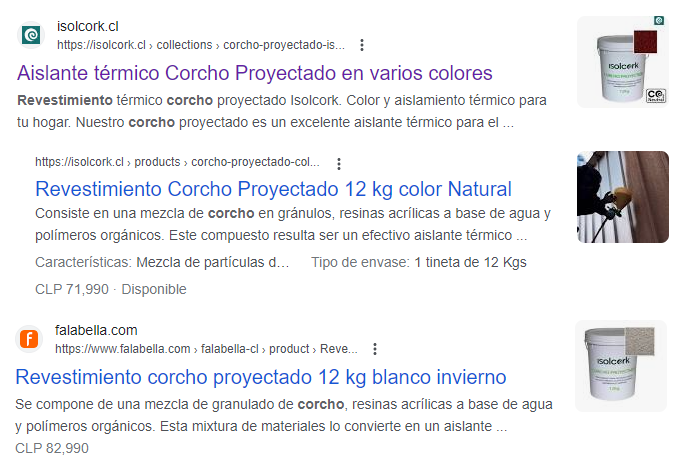
The SERP is how your web pages appear in search results, before potential customers click to enter them. You must optimize the Title, Meta Description, and URL of the page:
a) Title or page metatitle: appears at the top of the search result and is different from the page title, which you must adjust so that it can be read completely in the search result.
It should be a brief description that explains the content of the page, using the main keyword as early as possible and at the end a vertical bar followed by your brand name.
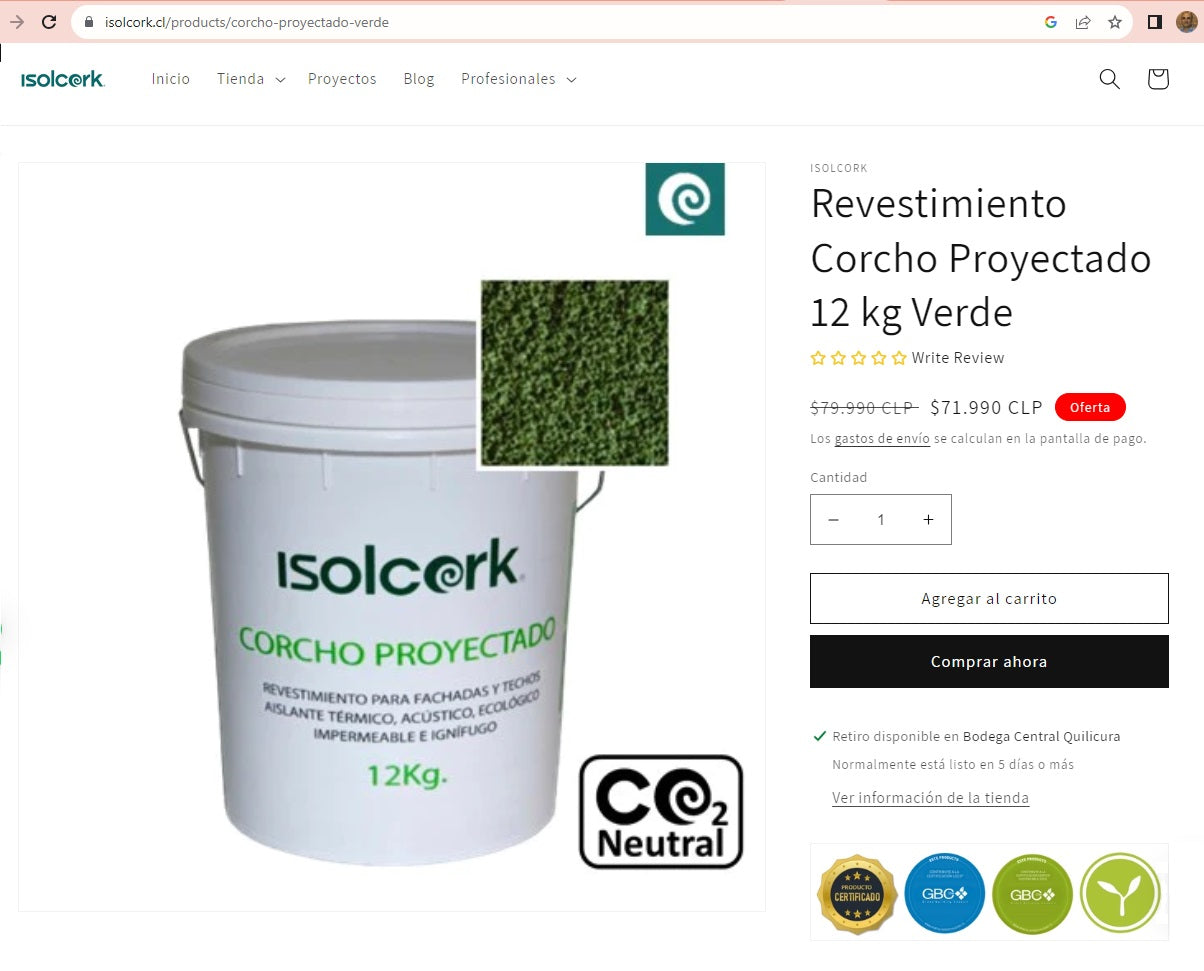
Example: Green Sprayed Cork Coating | Isolcork
b) Meta Description: should be a more detailed but also brief complement about the content that people will find when clicking and be convincing to capture the attention of potential customers.
In addition, it must be unique for each page, have a length that allows it to be read completely in the search result, and also contain the main keyword. For organic positioning in Google, it is important that what is described matches the content of the web page.
Example: Exterior and interior coating for facades, roofs, and walls. Acts as thermal and acoustic insulation, and is waterproof. Online store.
c) URL: it is important that it is unique for each page, that it also contains the main keyword, and that it is as short as possible. You have to separate each word with a hyphen (-) and never use prepositions like "la", "el", "en", "para", "y", "de", etc.
Example: https://isolcork.cl/products/corcho-proyectado-verde
To measure the pixels of the Title, Meta Description, and URL, and visualize how the SERP would look, use this Google SERP Snippet Optimization Tool.
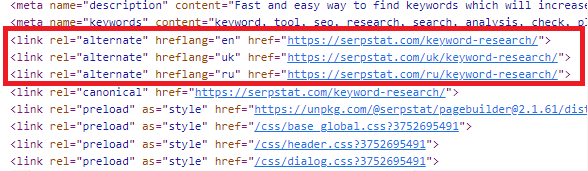
HTML of a page we optimized for Isolcork showing the Title, Meta description, and URL.
It is important that both the title and subtitles are properly tagged with H1, H2, H3, H4, etc., as appropriate. The H1 tag only corresponds to the page title and should not be used in any other text. Remember that this title must contain the main keyword.
Then you must apply the other tags according to their importance. H2 is used for a subtitle derived from the main one, H3 for another derived from an H2, and so on. They must be well-tagged so that Google can understand the content of your website and give you a position in the search results.
Subtitles can also contain keywords and are very useful when they correspond to questions people ask in search engines: "what is 4k video", for example.
It is important that each title and subtitle is useful, provides information about what comes next, is relevant, and makes sense.
It is increasingly important to care about the organic positioning of images within the content we upload to the web. Image search has become popular on mobile devices, and Google has given it a significant place in search results.
The organic positioning of images or photographs has fewer competitors than content and is more attractive to people. Therefore, you must work on it carefully, paying attention to the appearance of the visual content and ensuring it provides product details.
Furthermore, it is well-regarded for your site's images to be shared. To encourage this action, we recommend creating original, eye-catching, and well-contented infographics that bear your brand name.
Some of the actions you should take for Google to position your images are:
- Before publishing the image, give the file a relevant name with appropriate keywords: "3-seater-brown-sofa.jpg".
- Add a descriptive ALT attribute or alternative text that truly helps people with visual impairments who use programs that read this content: "3-seater brown sofa with 3 cushions in the same color and textured fabric". An accessible website for everyone will be more valued.
- Dimension and reduce the image's weight before publishing it, so that it looks good quality and does not slow down the web page loading.
- Seek to have it shared by giving you credit on other websites or social media.
- Prioritize your own images that are only found on your website.
- Protect your images against uncredited use or theft.
Inserting links within your site's content is important because it provides relevant information that complements the topic you are discussing. These can be external links or links to other pages on your own website.
To choose which links to insert, you must consider that they lead to pages whose content provides related and complementary information. If you use external links, make sure they are to websites with good authority.
Currently, it is vital that everything we publish online functions and looks perfect on mobile devices, as their use has increased so much that most searches are performed from smartphones.
If the content is cut off or distorted, if functionalities do not work correctly, or if the website is not comfortable to navigate, it is very likely that you will lose potential customers.
Don't rely on standard templates available on website platforms and always verify that everything looks perfect after publishing, at least from a mobile and a desktop device.
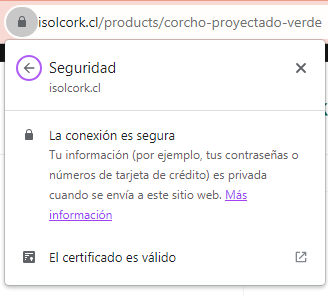
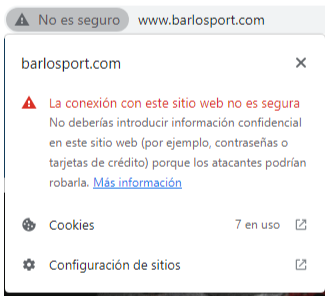
It is essential that your website has a valid security certificate, which is reflected at the beginning of the URL with "https". This signal guarantees the user that they can carry out secure transactions and that their personal information will be protected, generating the necessary trust to buy a product or service online.
Furthermore, Google considers it an organic ranking factor. And if you don't have a security certificate, potential customers will receive a warning when they enter your website that will likely make them give up browsing it.
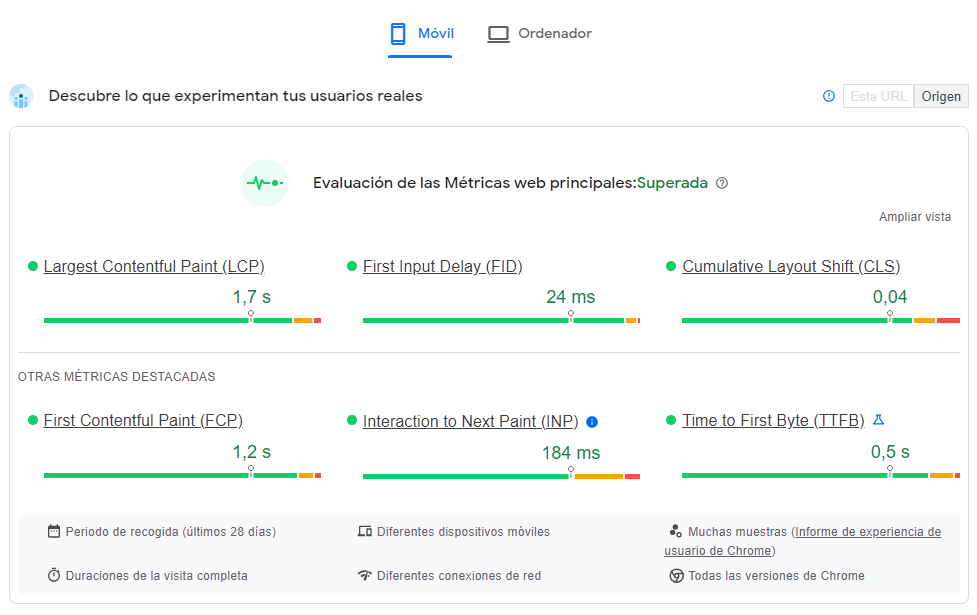
Your goal should always be to keep potential customers on your website as long as possible and to encourage them to return. For this, it is important that it is easy to navigate and loads quickly, so the user has a good experience.
If your images are not optimized, you have too many plugins installed, a slow hosting, very heavy pages, or if your website is not well adapted to different devices, it is possible that loading will be slower.
With PageSpeed Insights, you can analyze your website and it will suggest changes to improve it, detailing the actual loading time and the range within which it should be for each type of device.
The external actions to your website that you should improve are mainly focused on generating external links (link building), meaning that other authoritative websites direct users to your own site. Quality references will improve your startup's organic positioning and recognition.
You should prioritize websites that have good authority, are secure, and of high quality. There are many ways to get links from other sites:
- Register in directories for entrepreneurs, new businesses, and public and private entities that support startups.
- Generate collaborations with business association websites.
- Do public relations to appear in news or reports related to your sector.
- Seek to have your startup mentioned on social media or in content by influential people.
- Use your company's social media to generate organic traffic by adding your website's URL to your profile and promoting its content in posts.
It is important that the links to your website's pages are natural and include the appropriate keywords. Good link building will give you greater visibility and organic traffic.
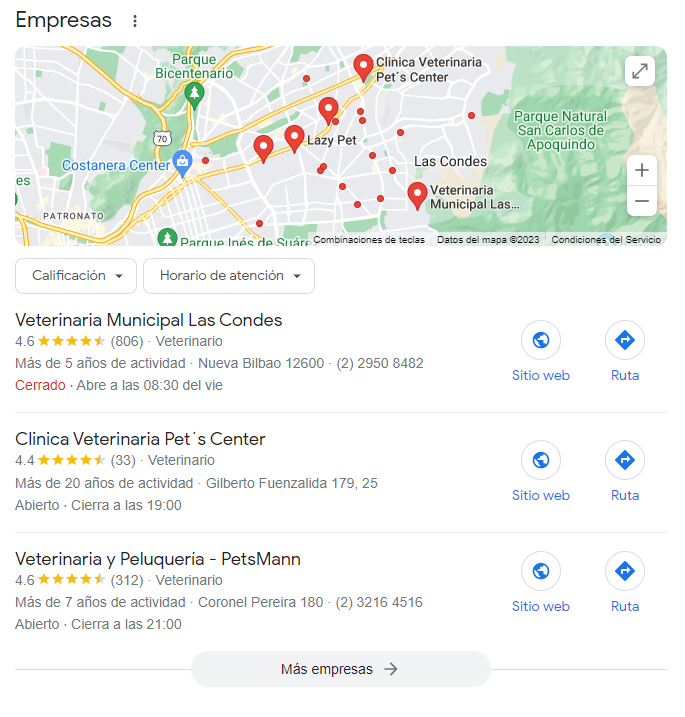
To work on local SEO, you must create an account in Google Business Profile. This way, potential customers can find relevant information about your company more easily and quickly.
This tool is especially useful if you have a physical location, as it will show the address, hours, website, and even customer reviews.

 By
By