Before we dive in, you need to know that there's a preliminary step: to design an SEO strategy that helps your website's organic positioning, you must conduct keyword research. And that research will help you identify four types of keywords.
Keywords are terms that reflect what people search for on the internet. Understanding the types of keywords that exist will help you focus your content and work on organic positioning according to the stage of the buyer's journey you want to capture to drive traffic to your website.
We can identify keywords because they respond to the search intent of people who make their queries in a search engine like Google, and they can be:
- Commercial
- Informational
- Navigational
- Transactional
So, to understand the needs of people who are looking for information, a product, or a service, you must think about the context they are in, the factors influencing their need, and the stage of the buyer's journey they are in. For example:
- just identifying their need,
- considering alternatives, or
- already decided to make a purchase.
When we refer to context, we are talking about factors such as:
- where the person is located,
- what device they are using,
- whether they need something in the short term or later, among other aspects.
For example, a person looking for a nearby coffee shop open at 7 AM may have different search criteria than someone planning to work at a coffee shop one afternoon in the coming days.
With all introductions made, let's get to the point to learn about the types of keywords that respond to different types of searches.
Users are looking for an answer to a specific or general need. In other words, it's the first approach, with no intention to buy yet, because the person is only seeking information after having detected a need and wants to know more about the topic.
The style of queries made at this stage are questions, comparisons, or very general. For example, if a person needs to paint their living room, their first searches will probably use keywords like the following:
- “how to paint with a roller”
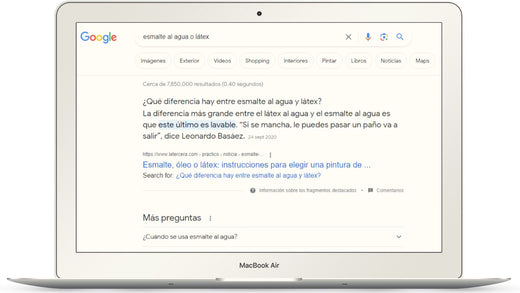
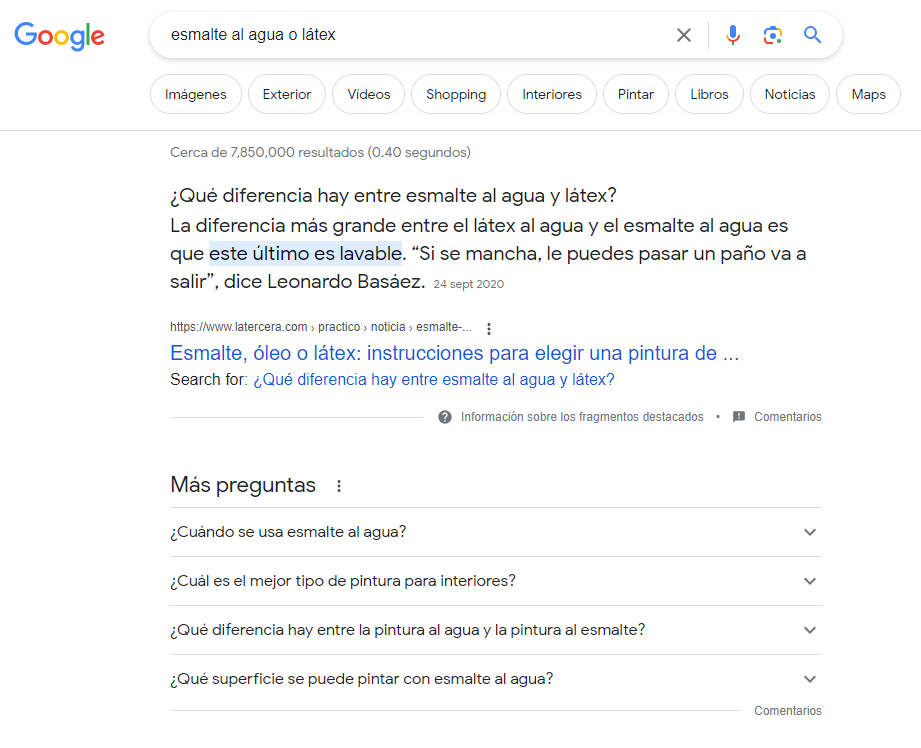
- “water-based enamel or latex”
- “how to choose interior paint”
To capture these potential customers, you must generate content on a specific topic and answer the common questions people have when they are just trying to understand what it's about or how to do it, and use the keywords that correspond to these types of searches.
Then, within the article, you can indirectly promote your related services or products.
At this stage, the user already has knowledge about how to satisfy their need, so their search is now more specific and concrete to inquire about brands or investigate more technical data, entering the name of an online store or the product they are interested in into the search engine. For example, with keywords like these:
- “Construmart latex paint”
- “Sipa latex”
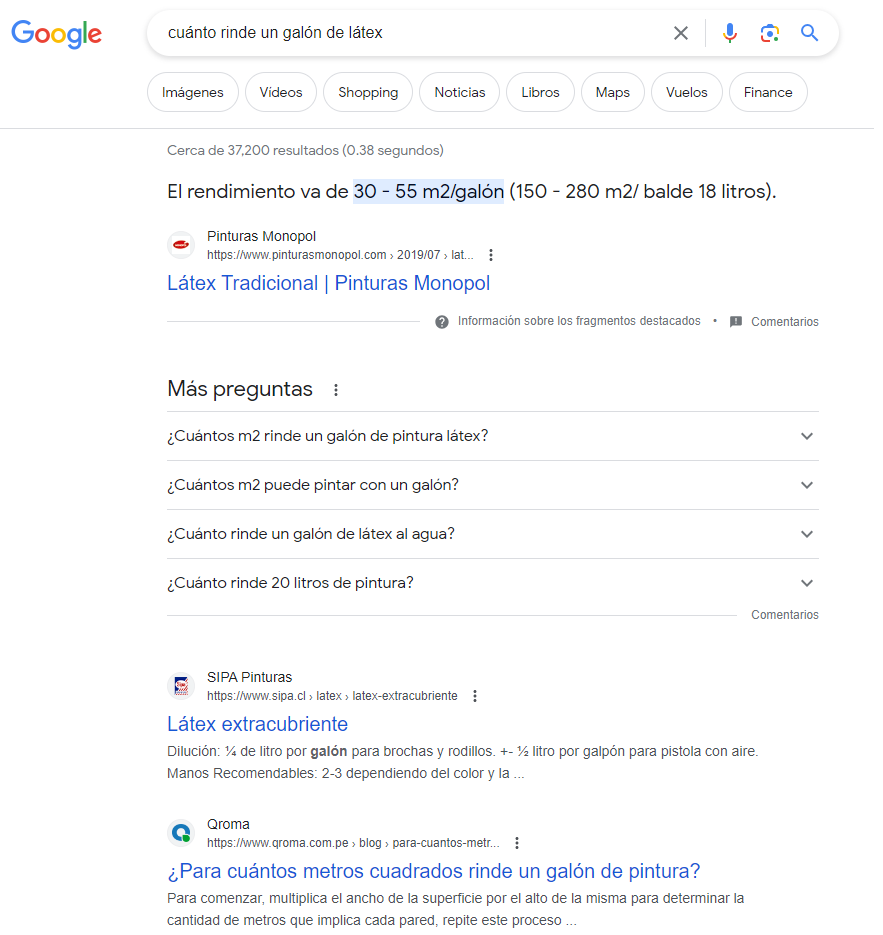
- “how much does a gallon of latex cover”
The results of these searches will show websites that provide a clear description of the product and/or brand, offering a clearer sales proposition. These searches can also occur in the relationship, loyalty, and recommendation stages.
These keywords can be used in your content to consolidate your brand or website with the idea of capturing traffic from people who are interested in your products or services and are likely to stay on your website.
At this point in their buyer's journey, the person is clear about the options that best suit them to cover their need, which is why they want to know more specific characteristics such as their pros and cons.
Here they will look for recommendations or evaluations from other people who have purchased the product or service. The person already shows a clearer interest in buying.
Queries will use keywords like:
- “Sipa vs Ceresita paints”
- “the best exterior paint”
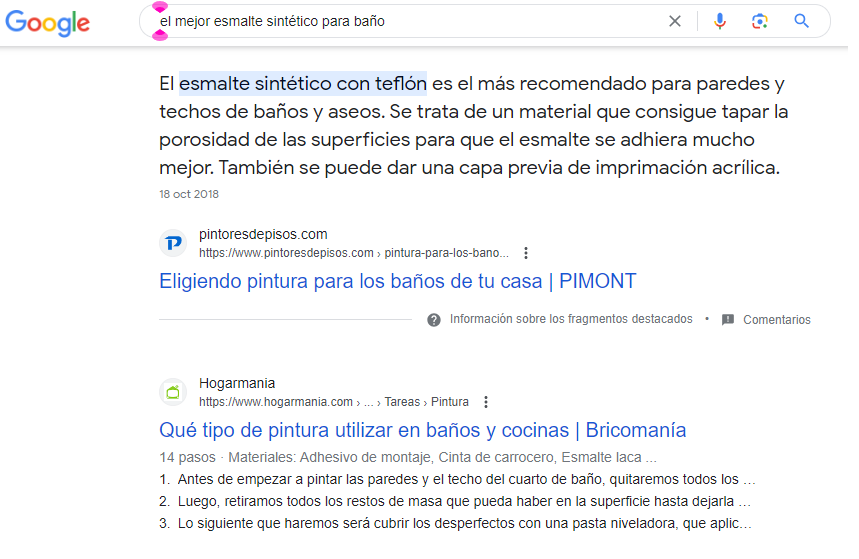
- “the best synthetic enamel for bathrooms”
The content that responds to this type of search includes studies, tests, and comparisons of products or services, highlighting their characteristics, advantages, weaknesses, and usage recommendations.
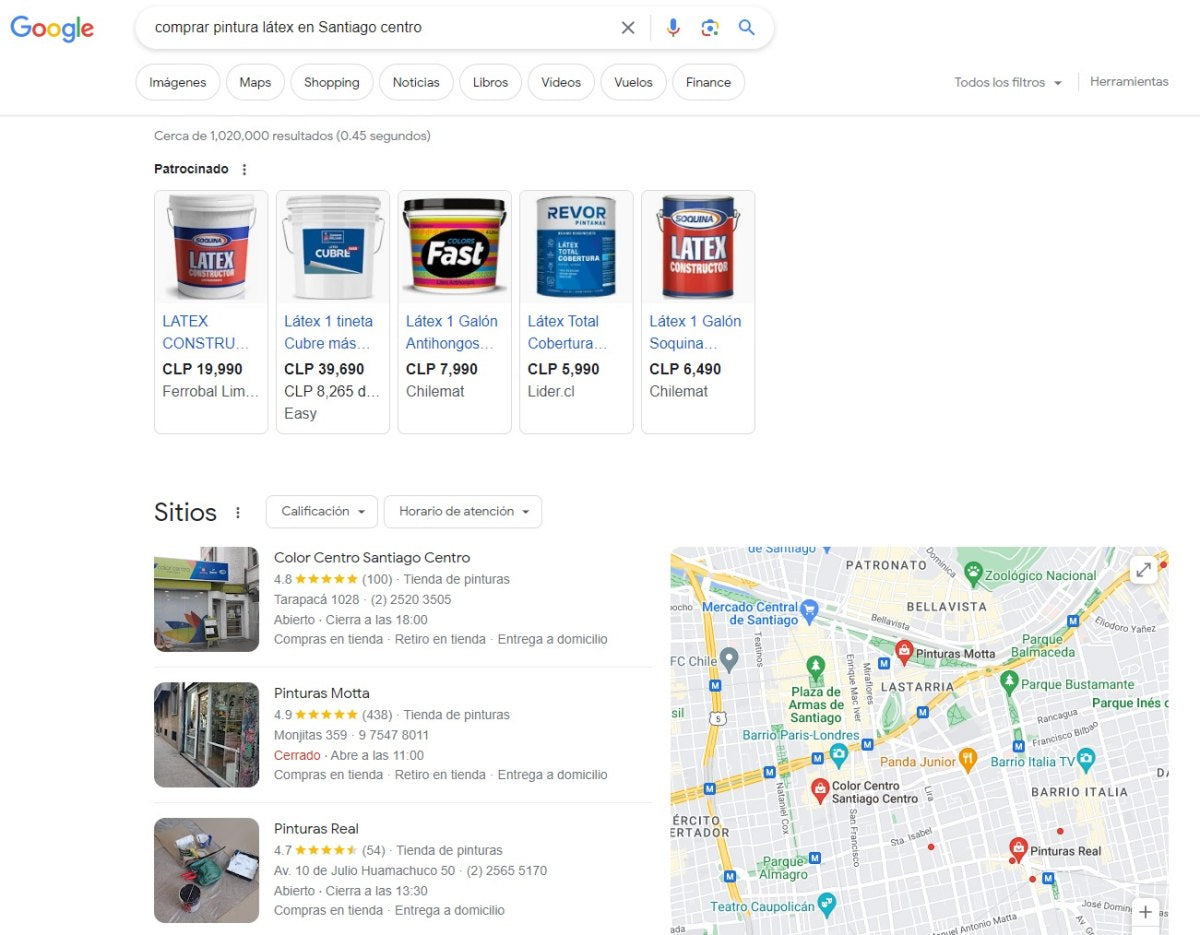
Transactional searches clearly aim to buy a product or service, using keywords that demonstrate such acquisition interest. Brands, models, prices, and locations may be mentioned, for example:
- “latex paint sale”
- “Construmart water-based enamel”
- “buy latex paint in downtown Santiago”
After these searches, the results will show e-commerce sites or brands with better Google positioning that have the desired product. These keywords can be the most important for a business, but it must be clear that they are the most competitive and the most used in paid ads.

 By
By