It's important to understand the main keys on how to publish on a marketplace so that your brand reaches its potential customers and gains recognition within a beneficial niche market. Here, we will teach you how to develop a continuous optimization discipline that keeps you at the top of search results, complementing our guide to selling on marketplaces.
Marketplaces have particular characteristics with their pros and cons that you should review before starting your sales in these online markets. But, both international ones like Amazon, Etsy, or eBay, and Chilean marketplaces like MercadoLibre, Linio, or Mercado Ripley, agree on some methodologies to organically optimize your store.
-
Research what and how potential customers search on Google and on the marketplace you use, reviewing trends related to your products and what keywords they use to find them.
-
Understand the online market algorithm's selection. Global online markets usually provide this data to product sellers, but this information is scarcer in local ones. If they don't provide it, you can simulate by doing your own searches and analyzing the products or stores that their criteria prioritize.
-
Create an optimization plan by selecting the criteria that are most feasible for you to implement. Consider your resources, knowledge, and other factors that may affect the time you expect to spend on implementation.
-
Implement the changes. You need to work on the criteria selected in the previous step.
-
Measure your results. Consider that the algorithm will vary over time, so you must research and make continuous improvements, returning to step 1 periodically. To know if the changes you implement are effective, you must pay attention and regularly track your statistics to compare them.
-
The brand: some online markets have their own brands and prioritize them in the results.
-
Paid campaigns: paid ads are very likely to be prioritized in results if the marketplace has access to pay-per-click (PPC) campaigns.
-
Free shipping: it's a good idea to find a way to include the shipping cost in the product price, because a product that apparently has zero shipping cost is more attractive to people and will give you a better position in searches.
-
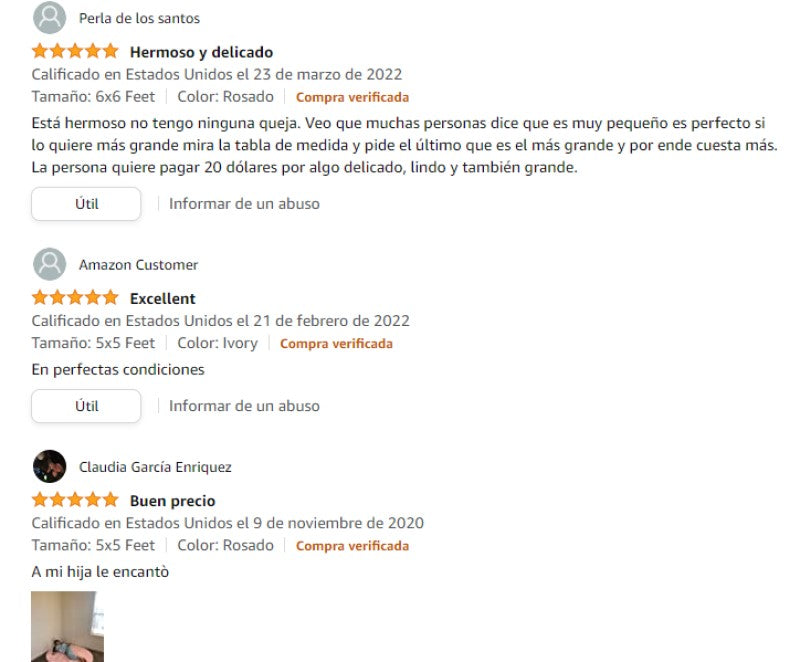
Real reviews or evaluations from people who have purchased your products build trust and prestige to attract other potential customers.
-
Keywords: research your niche market to select the most searched words related to your products. Use them in the product title, description, and tags field.
-
Number of photos: a product with more reference images showing its details will be more valuable to potential customers.
-
Service performance: good and fast customer service, as well as compliance with the estimated preparation and shipping time, will help you get good reviews. Online markets are attentive to complaints and apply penalties for Order Dissatisfaction Rate (ODR).
As we said before, if the marketplace you use does not provide information about its algorithm, you can do search simulations to analyze the products and stores it prioritizes in the results.
We will show you examples of the procedure based on our own experience with clients who have opened a store on a marketplace. Remember that you must do this for each product in your catalog.
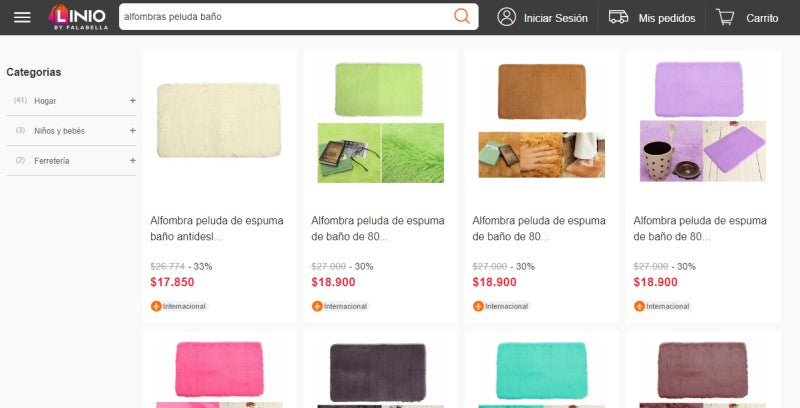
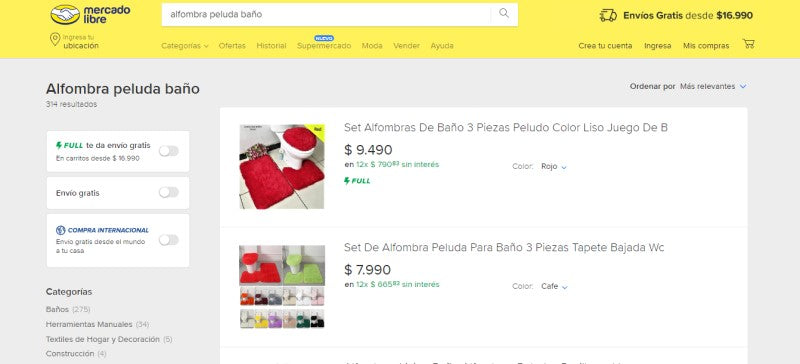
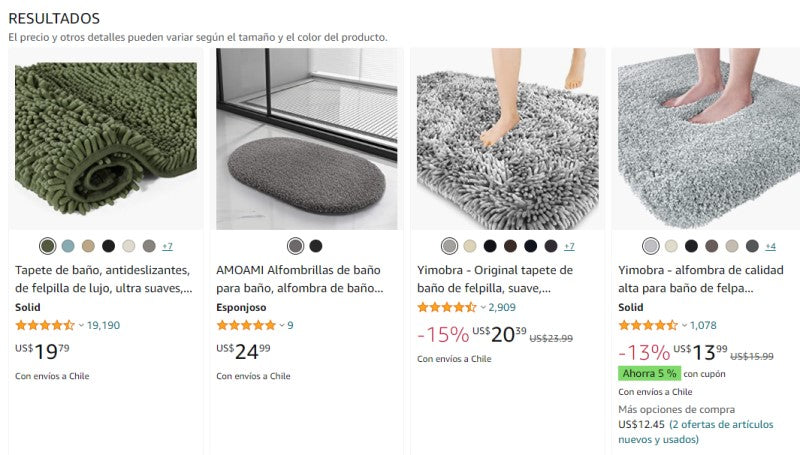
- The first step is to search for terms related to your product in the marketplace. For example, "shaggy bath rug."
-
Analyze the results by looking at the content of the products that appear, for example, how and where keywords are used, or the quantity and quality of the photographs. It is important that you review the results that appear organically in the first places, not those that are paid ads.
- In general, the first results will have the main keyword in the product title, but it can improve your results if it is at the beginning of the name. You must decide this according to the relationship and priority of the keywords with the product.
- Observe if any recommended products are shown by default and analyze their content.
Remember that algorithms can change over time, so you must repeat this procedure if you notice a drop when measuring your results.
-
Find a niche market related to your products. We recommend looking for less saturated niches, which we can find by highlighting particularities of our items. For example, "shaggy rugs," instead of just rugs.
-
Publish several products for the chosen niche. But, choose and organize well what you will publish; it is not advisable to upload all your products at the same time to the marketplace, nor as variants among them. Upload them all separately, trying to promote the lesser-known items in your catalog.
- Choose a good title:
- Research the maximum number of characters allowed by the marketplace so that it is always fully readable and use that margin to write your titles.
- Remember to use keywords and long tail within the first words.
- Make sure everything is in the same language; if not, adapt it.
-
Experiment with different titles, always following the previous recommendations.
-
Use tags in your product content. Find the maximum number of tags recommended for the chosen marketplace (on Etsy it's 13) and then:
- Integrate long-tail terms into the tags.
- Do not mix languages.
- They must be related to the product title and description.
-
Describe the product attributes and materials. These characteristics function as keywords and help more potential customers find them. It has positive results to describe the object well, its texture, color, and everything you can highlight so that people can imagine it.
We recommend using new descriptions for the marketplace, because copying content from your website or other places where you have published your products can be detrimental to your SEO.
-
Better and more photographs. It is important for potential customers' purchasing decisions to see product images, so use real and original photographs, capturing different angles, details, textures, dimensions, and usage context.
If your products have identical packaging, make sure the images contain a differentiating element, such as color or another relevant attribute.
You can also use them to display relevant information such as data on use, care, how to choose sizes, or warranties. For this, you need to find out if the marketplace accepts images with text.
-
Leverage video to show more. This is another novel option to capture the attention of potential customers; you can use them to give usage tips about your products or show reviews from real customers.
-
Publish more products to get more sales, because this way you capture more search needs, give customers more options to choose from, and project yourself as a brand with experience in the field.
-
Do your translations manually. Automatic translations offered by platforms can fail or be inaccurate.
-
Get authentic recommendations from your customers. Positive reviews will be rewarded by online markets, but since you cannot easily access customer data through the platform, you will have to use other techniques such as thank you cards with the product shipment that explain how to rate the purchase. It is important to invite reviews, but not to "buy" reviews if the marketplace prohibits it, or the algorithm could penalize you.
-
Optimize the page for Google. You can review more about this topic on our website. It will be beneficial for your marketplace pages to also rank on Google. Although your store is on a marketplace, you still need to optimize your content with Google ranking in mind. This way, your pages will also appear in search results when potential customers search for products like yours.
-
Experiment with different formats or prices. For example, you can sell your product in packages with more or less content to have accessible prices for more people. You can also offer discounts on less popular variants of the same product, such as the color that sells less.
-
Try offering free shipping. For example, on Etsy, zero-cost shipping to the United States gives priority in searches. As we mentioned before, this will also attract more potential customers.
-
Choose promotions wisely. There are periods of massive offers and discounts online, such as "CyberDay," in which it is recommended to participate to avoid losing positioning, but if our products are constantly discounted, customers will never want to buy at the normal price. We advise that promotions be specific novelties, which we can complement with other promotional strategies such as discounts for providing an email or WhatsApp number.
-
Use the store banner and add a description. It helps project your brand's image and give it a visual identity to begin its recognition by the public. The tool Canva.com will help you create a banner that highlights your brand's characteristics and attracts potential customers. But be careful, you must convey the essentials, not overload with information.
-
Add photos and a video of the brand and the team. This will help create closeness with people and reinforce the brand's identity. The customer will get to know the people behind that brand.
-
Integrate your store with social media. For example, on Etsy, it is possible to link to your Pinterest account to promote your store. It is beneficial to show your products published on online markets on social media, because you capture traffic and your brand gains more recognition. On Instagram and Facebook, you can use tags related to the marketplace so that more people find you. It is also recommended to mention your marketplace store in your posts.
-
Take care of the customer experience. As explained before, it will be beneficial to always keep dissatisfaction metrics low by providing quick responses and efficiently shipping products. Amazon argues that if you respond within 24 hours, you will have 50% fewer negative reviews.
-
Pay attention to trends in social media and online markets that are always changing, and with them, you can anticipate new business opportunities.
-
Learn to observe what your competition is doing to attract their customers. Some brands are opting to create a sense of urgency by showing messages that some of their products are about to run out. This helps convince potential customers to decide to buy immediately, but do not overdo it; if many of your products show these labels, it will be less credible.
-
Participate in seller communities. Use the spaces provided by online markets to meet your peers and learn what they are doing. You can also do this through Facebook groups to share experiences. On this social network, you will also find trends and suggestions from potential customers.
-
Develop your sales channel by dedicating yourself, experimenting, and making continuous improvements. Identify opportunities, plan, execute, and do not forget discipline.
- Never stop exploring new product categories or testing different marketing and sales techniques.