Divergent thinking is the ability to generate a large number of distinct ideas when faced with a problem, while convergent thinking is the process of analyzing, grouping, and filtering those ideas to select the best ones. A well-designed innovation process deliberately alternates between both, and confusing them is one reason why many ideation workshops fail to produce concrete results.
Divergent thinking means seeking the greatest possible number of ideas for the same problem, without yet worrying about their feasibility. The goal at this stage is not to find the best idea, but to produce a large volume of options that will later go through a process of selection, definition, prototyping, and testing before implementation. In our workshops, we insist on completely separating this stage from the evaluation stage: when someone starts criticizing an idea as soon as it's voiced, the rest of the group stops proposing.
Convergent thinking happens afterward: it's the moment to group, compare, and prioritize the generated ideas to keep those with the most potential. Here, it is appropriate to discuss feasibility, cost, impact, and effort. A team that jumps directly to this phase without having gone through broad divergence often ends up prioritizing the first reasonable idea that appeared, instead of comparing several real alternatives.
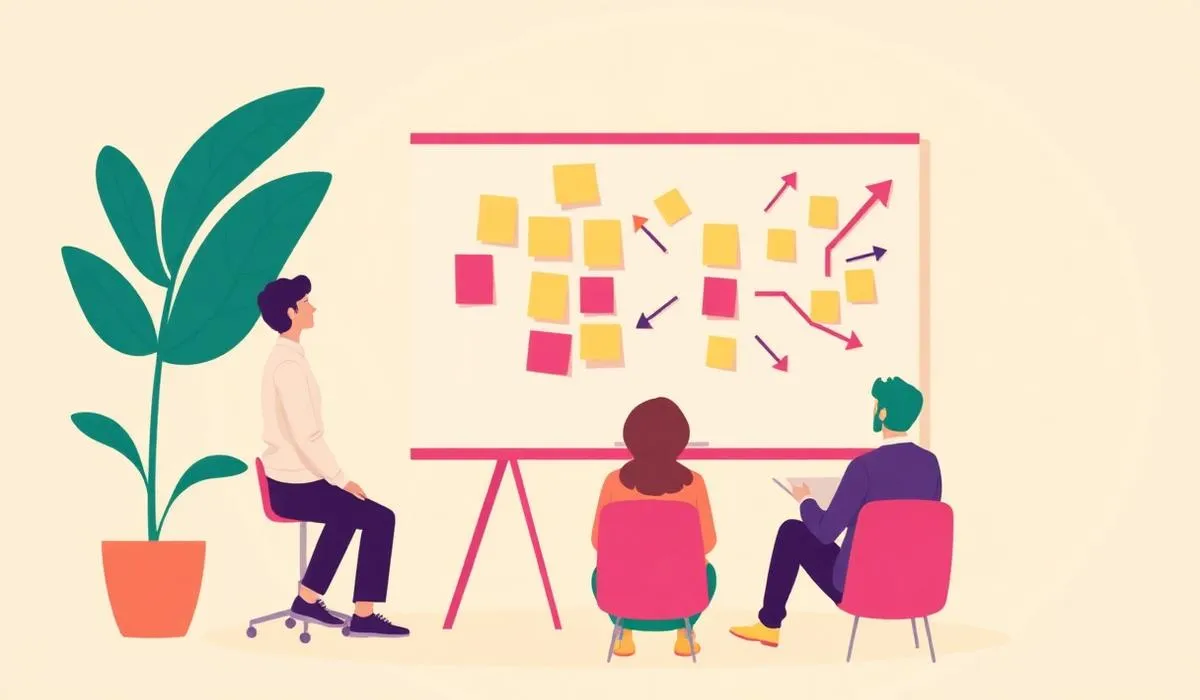
The most frequent mistake we see when facilitating two-day workshops is that the team mixes both phases in the same conversation: someone proposes an idea, and immediately another person responds "that can't be done" or "we already tried that." This mix kills divergence before it even begins. That's why we physically separate both moments: different rounds, different materials (post-its for diverging, prioritization boards for converging), and, when possible, different time blocks within the same workshop.
- Brainwriting: each participant writes ideas silently, reducing the effect of dominant voices.
- SCAMPER: seven trigger questions that force variations on an existing service or process.
- Nominal group brainstorming: combines individual generation with structured sharing.
All share the same principle: separate idea generation from evaluation, and let each person contribute before the group starts giving opinions.
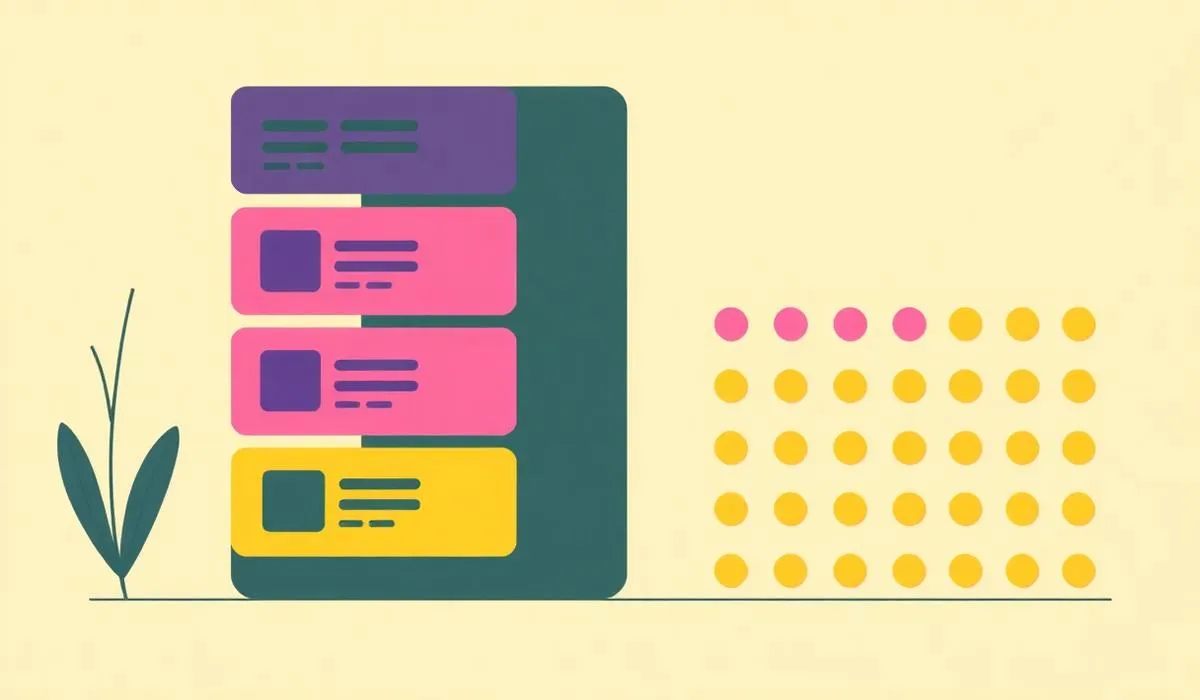
- Dot voting: each person distributes a fixed number of votes (e.g., 3 sticky dots) among the ideas they find most promising, which creates a quick visual ranking.
- Impact and effort prioritization matrix: ideas are placed on a two-axis plane to distinguish "quick wins" from those requiring more investment.
- Affinity grouping: before voting, similar ideas are grouped to prevent a repeated proposal from "winning" solely by volume.
In workshops with teams of 4 to 6 people, dot voting usually takes between 10 and 15 minutes and leaves the group with a clear top 3 ideas to continue working on.
The complete innovation process goes through six steps: identifying a problem, generating ideas, selecting the best ones, prototyping, testing, and implementing. Divergence dominates the idea generation step; convergence appears in the selection step, but also reappears—in miniature—within each of the following steps, whenever a decision needs to be made about which version of a prototype to test first.
The most common mistake we correct in workshops is closing the divergent stage too early, as soon as two or three "good" ideas emerge. Divergence truly pays off when the group goes through a moment of apparent stagnation: the first ideas are usually the most obvious, and the most original ones only appear after that slump, when the evident answers are exhausted.
If you want to continue exploring these dynamics with examples from real workshops, subscribe to the FREED YouTube channel.

 By
By