One of the fundamental pillars of the Omnichannel Customer Experience Management Maturity Model is Technology. Now, technology can be present in many areas, both customer-facing and in processes and as a work tool for employees.
From a customer perspective, the Technology dimension includes several criteria, among which we find the following:
Customer-centric technology: we have the digital technology solutions to provide relevant information and experience to customers when they need it. Our technology is oriented to customer needs, fostering digital elements for the consumer, avoiding "gadgetization".
<p>
In an era where everyone develops apps for everything,
virtual reality or the Metaverse entice more than one manager, and the time we spend exposed to screens grows vertiginously,
avoiding "gadgetization" is not so trivial.
<p>
The concept comes from the word "gadget". Typically, it's a simple object that makes something easier but which we could perfectly do without. An example of this is an egg separator: it might make your life easier, but honestly, if you like to cook, you already know how to separate the yolk from the white.
Image source: micheile dot com on Unsplash.
Who doesn't have a bunch of unused gadgets, technological or otherwise, at home or in the office?
For one reason or another, there are professionals and managers who think that everything can be solved with more technology: more mobile applications, more channels, more touchpoints, more gadgets.
Today I bring you the case of a festival held in a post-pandemic era. This is UNTOLD, the fifth largest electronic music festival in the world, in its 2022 edition held in Cluj, Romania.
My perspective is that of a first-time attendee (with no prior references to the event) and, obviously, as a marketer disguised as a UX Researcher, I couldn't help but observe and record the use of technology as part of the festival experience.
Do you happen to work in tourism, event production, or are you designing phygital experiences? If you've wondered how to improve the experience of attendees at mass events and festivals, then this business case is for you.
I will go in chronological order to zoom in on the experience during the festival.
But first, let's talk about an ingredient without which experiences and technology would be like a great existential void: content. That's right, I find it hard to see how we could design for a desired experience without content.
I guarantee this is very interesting, so you might want to grab a coffee or a soft drink to accompany your reading. Let's break it down.
From the content and pre-festival interaction perspective, for me everything started with following UNTOLD on Instagram and purchasing a ticket online.
There was also a TikTok movement, a topic I followed from a distance. In short, the following happened: users were invited to make a video dancing to their favorite song, and those who posted the clip on TikTok had the chance to appear on the festival's main stage. In addition, fans could use the filter dedicated to this year's edition, UNTOLD Crush.
5 days before the festival, videos with the hashtag #untoldfestival had over 84.9 million views.
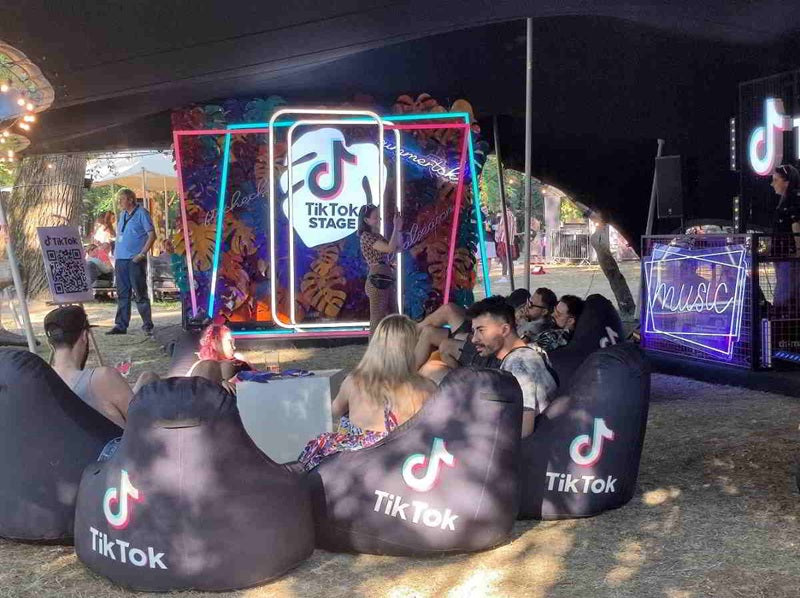
For content creators, in addition to professional cameramen and drones flying around everywhere during the event, there was a TikTok corner.
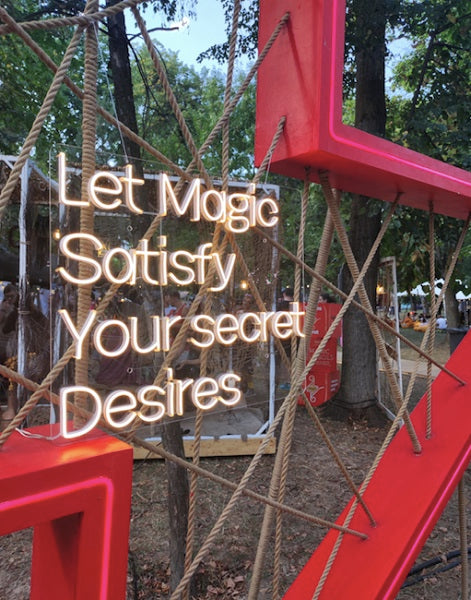
Speaking of content, there were many "Instagrammable" spots:
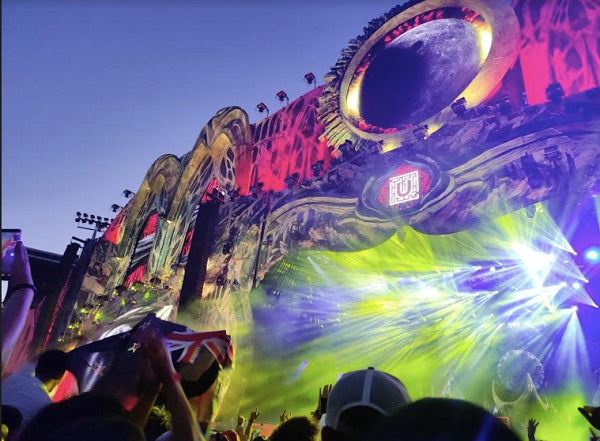
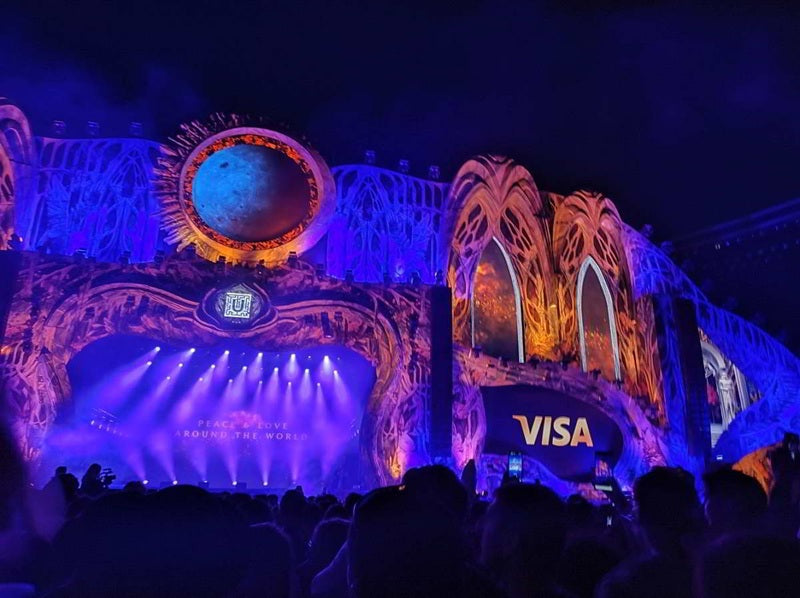
And the stages were amazing:
As a participant, you could record everything, except with drones (forbidden).
Another very interesting point is that there were official and unofficial (fan-made) playlists on Spotify. A good way to discover new artists and connect musically before the event.
And speaking of connection…
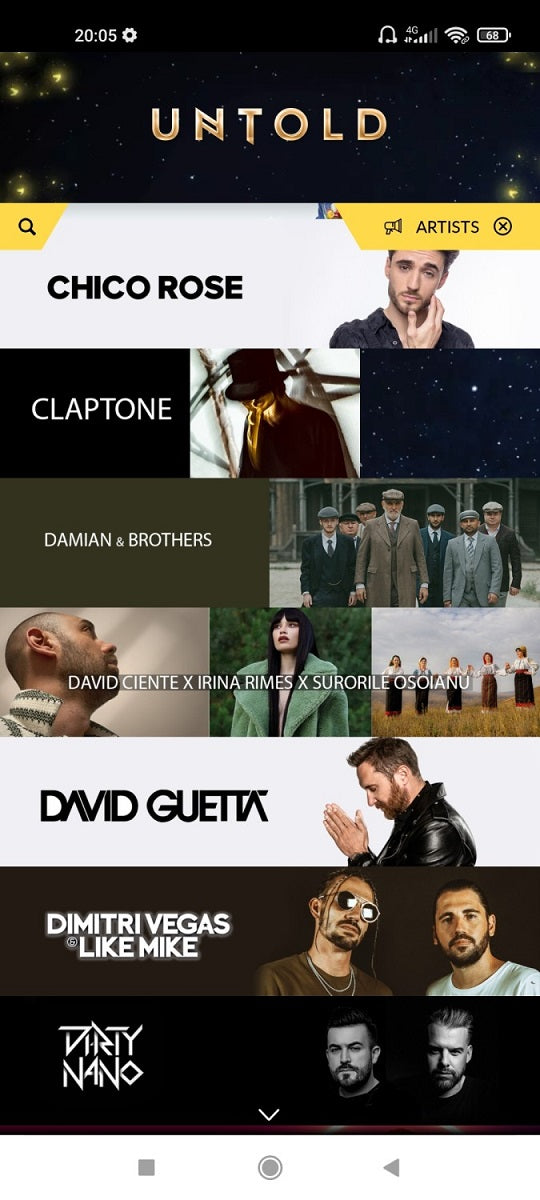
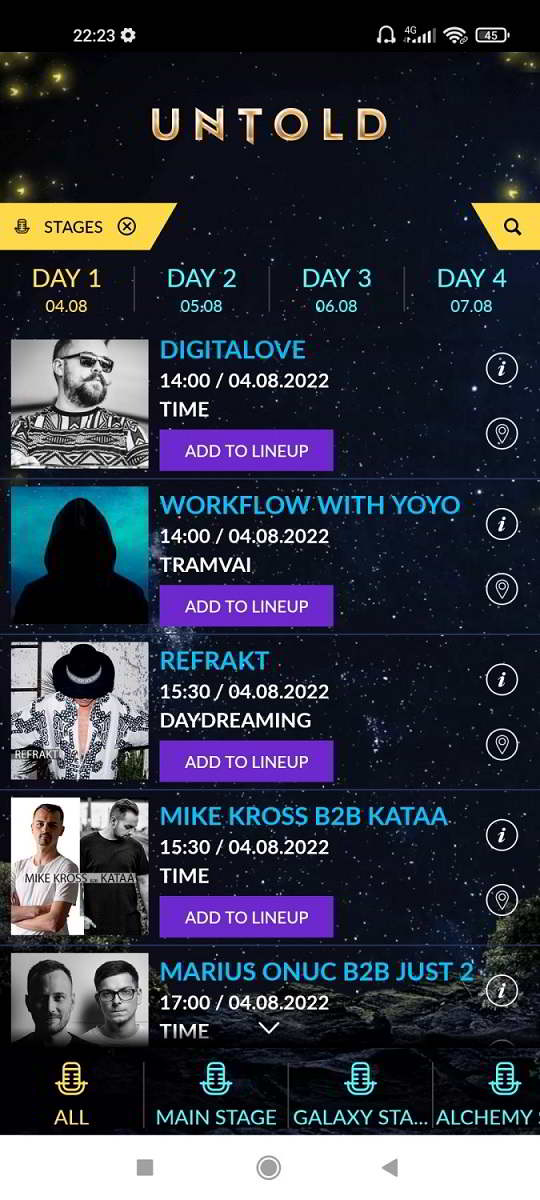
The festival has an official app that allows you to create your own daily schedule based on the artist lineup, as well as receive notifications.
- Observation 1: Seamless integration of channels and touchpoints does not exist or is not always necessary. However, here the website did what it had to do (sell tickets, check top-up balance - we'll see that later) just like the app (schedule, lineup, artist details, among others).
- Observation 2: The perfect is the enemy of the good. If I think like a head of digital channels (one of my previous roles in the corporate world), more than once it would have been a tragedy not to have perfect integration. In fact, can you be omnichannel without being perfectly integrated? Absolutely yes. As long as the experience made sense, I didn't see anyone despairing during the festival because they weren't logged in and didn't have all the details in the app.
An interesting aspect of a festival app is that you can quickly access your personalized schedule and interact with the brand in a way that adds value, meaning it facilitates your experience. Even without logging in.
Why is that relevant? Because there were 8 stages and over 200 artists during the 4 days of the festival. That means a lot of details to check.
While I'm not a big fan of developing an app for everything, in this case it was more than pertinent and (pardon the cliché) technology added value.
All content was available in English at least, if not in Romanian and English.
The festival started on a Thursday. Days before, you could pick up your wristband with your passport or ID card and the QR code that arrived in your email when you purchased the ticket.
Registering and getting my wristband probably took me no more than 5 minutes, including finding a location in the park I had never been to before, which was full of staff and volunteers.
Once again, technology at the service of people.
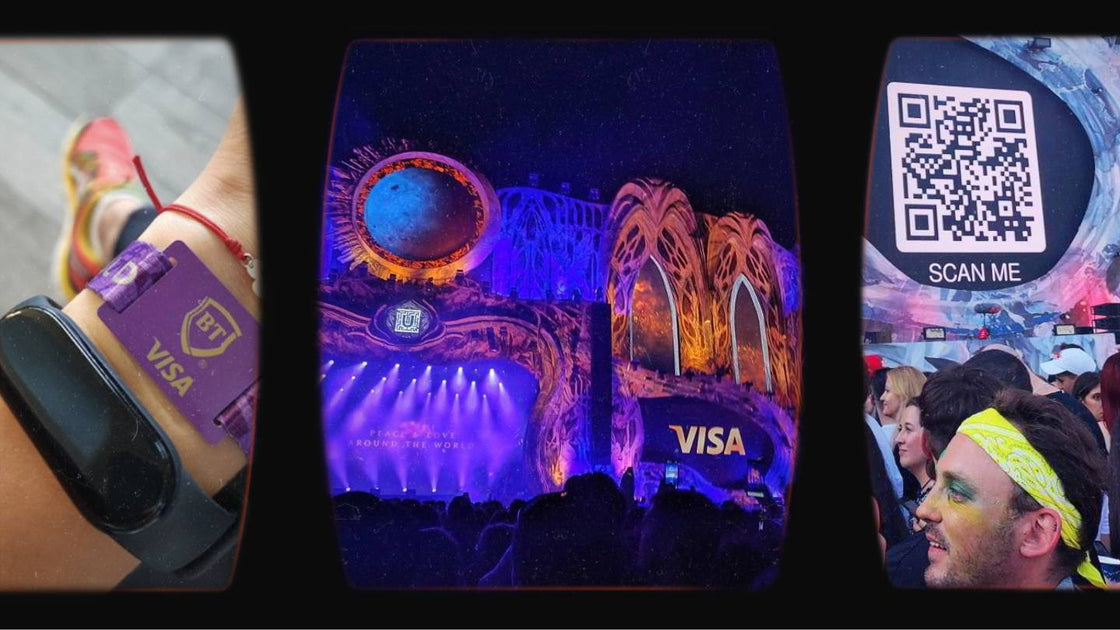
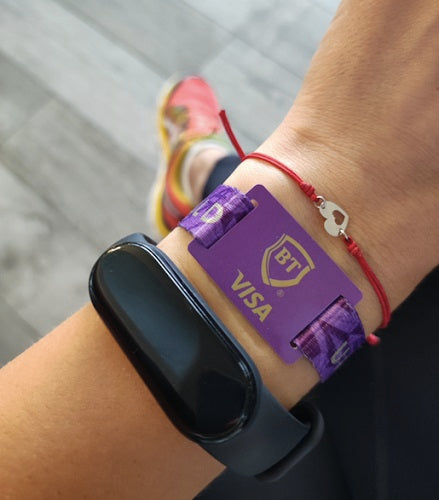
The festival had an agreement with Visa, and the only way to buy anything (drinks, food, merchandise, etc.) was through a mobile payment: the wristband's mini-card.
Literally, you couldn't buy ANYTHING with traditional credit or debit cards or cash. You could top up your Visa mini-card at specific points during the festival. No merchant accepted any other payment method.
Therefore, no one had to handle cash, and you didn't have to fumble for cards in your wallet, which made lines super-fast.
This has to be frictionless and practically go unnoticed. Of course, you walk around all day with a branded wristband, which is also projected on the main stage during the intermission between two concerts.
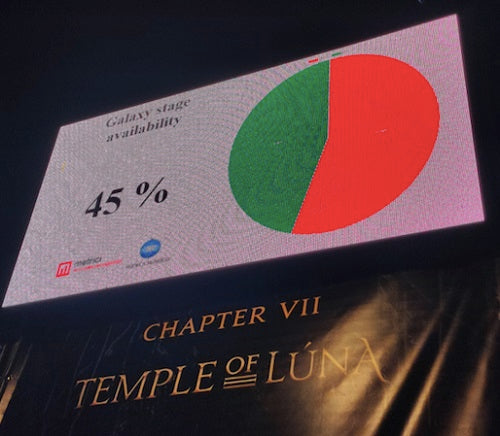
Several screens showed the percentage of occupancy of each stage's capacity. For context, at that time Romania had no COVID restrictions. Regardless, and almost forgetting the pandemic, I found it interesting because the screens told me whether I needed to hurry or not to be in a place with more or less crowd.
From the main stage to digital art via NFT
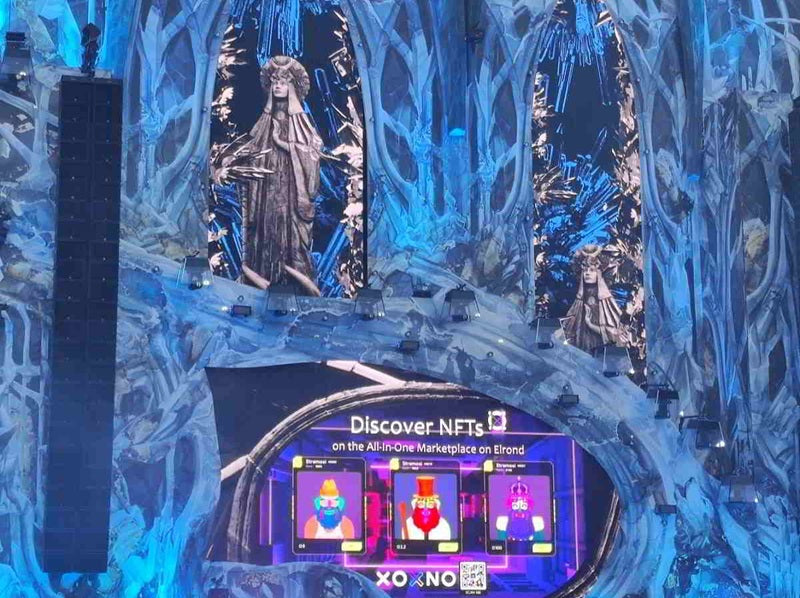
During some concerts, images with illustrations of traditional characters represented in NFT format were projected on the main stage. I confess I loved them, from the illustration to the national identity and the link with music.
At the time, I thought I had finally found the moment to dive into understanding more about this technology, but unfortunately, I couldn't complete the purchase due to available payment methods. My Chilean card didn't work in the Elrond wallet, and I got tired of trying.
I don't know if other attendees bought any NFTs, but I found the link and timing more than interesting.
Wait, we're not done with the applications. There's more.
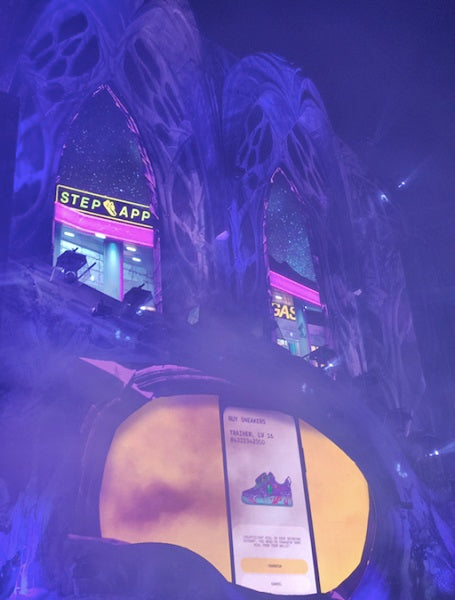
UNTOLD and step.app, the first company to adopt its own fitness finance (FitFi) platform, joined forces to create a unique experience for music and dance lovers. I didn't try Step App during the festival but I will soon.
And at least the presence on the main stage served to generate visibility for the brand and the concept.
To conclude this foray into the world of festival technology, let's return to a simpler, more earthly topic: the micro-moment of purchase.
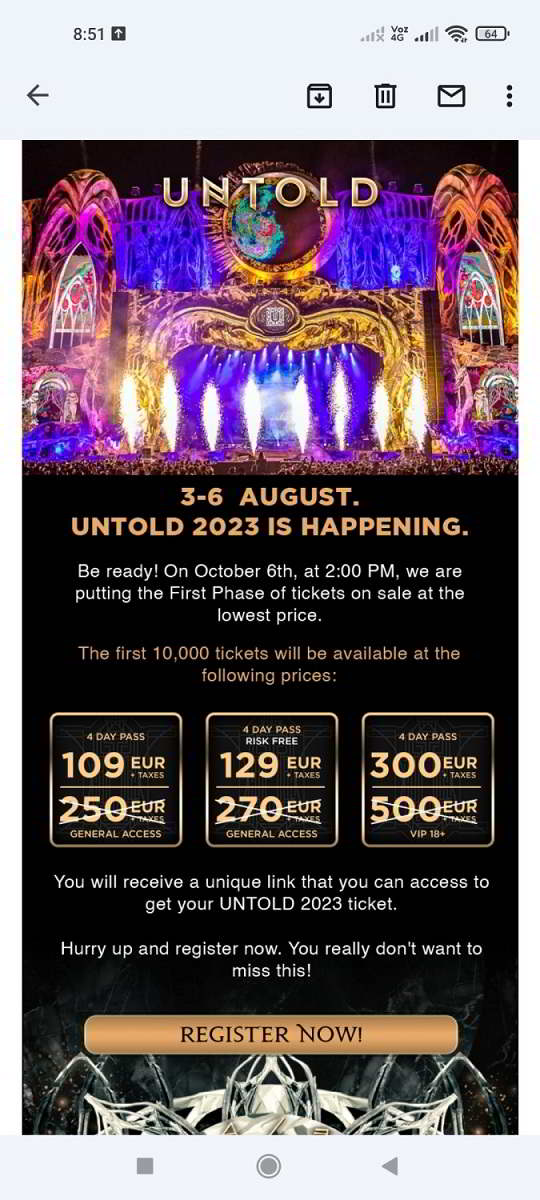
There was a pre-sale of tickets for the next festival at an excellent price. They sold over 11,000 tickets in one minute. The sale started at 2:00 PM local time, 8:00 AM in Chile. No virtual queue, no useless waiting, and no crashed website. Nor the typical form asking for useless data. Short and sweet. A pleasure.
Once again, everything available in English.
All this festival experience was possible thanks to technology. Even so, I never felt it was forced.
Oh! Important detail: despite the large number of attendees (over 300,000), there were no problems with phone signal or mobile networks at the venue.
That's what I call people-centric technology, without gadgets.
Of course, not everything is for everyone. It's more of a range of possibilities, with some technologies more than proven, such as mobile payment with the Visa mini-card or the official app for programming; while other technologies like fitness finance are in beta.
If I had to classify all that, I would say there are several types of technology:
-
Functional technology, which plays a limited role, allowing everything to flow simply, easily, and quickly. These are the cases of Visa payment, online ticket purchase, emailing during the process, and screens to view capacity occupancy (I wouldn't expect that to be amazing, but rather to fulfill its role).
-
Technology for a phygital experience, which connects the physical space with the digital. This is the case of a simple QR code.
-
That which is part of the fundamental experience: experiencing music and dance through the app's programming. If you don't listen to music, don't dance, or miss your favorite artist, what are you doing at a festival?
-
All thanks to the mobile devices people already have and excellent connectivity at the venue (go to the National Stadium in Santiago for a concert and tell me how that part went for you!).
-
All amplified on social media, where not everything is identical and participants are the main protagonists.
If you've made it this far, it's because you're interested in omnichannel customer experience management. So, you can learn about our online maturity model and be among the first people to use it to assess how your company is doing in this area.
The original version of this article was published on LinkedIn for the Omnicanalidad newsletter in Spanish. You know, you can also follow me on that platform.
Event image source: personal record.

 By
By