What does the Customer Experience (CX) dimension of our Omnichannel CX Management Maturity Model do?
The third dimension is Customer Experience (this is a blog about omnichannel in Spanish, right?) It evaluates a company's capabilities to design a desired experience (a benchmark) and deliver it seamlessly throughout the customer lifecycle via appropriate channels that customers can choose.
So, if you use our Omnichannel CX Management Maturity Model, the criteria you will need to evaluate in this dimension are the following:
-
Appropriate channels: We recognize the strengths of each channel according to product types, so the services we provide through each channel are appropriate and our customers are aware of them.
-
Personalized experience: Based on what we observe in our customers' behavioral data, we understand their needs and provide a personalized experience.
-
Desired experience: In our company, we have designed a desired customer experience (i.e., a benchmark).
-
Channel choice: We do not force our customers to use a specific channel for a specific purpose, meaning our customers can choose the channel that best suits their needs.
-
Customer lifecycle: We think and design beyond the purchase process, seeking to add value throughout the entire customer lifecycle.
-
Micromoments: Our goal is to identify relevant experience moments in time and deliver lifelong value to our customers.
-
Customer preferences: Our company understands our customers' preferences regarding services such as shipping, privacy concerns, preferred contact channel, and the benefits of our products/services they value most.
-
Word-of-mouth: Our company understands how word-of-mouth affects our consumers' decisions in both traditional and digital environments.
-
Targeting: Our company can target each segment with specific products/services or marketing strategies.
-
Seamless experience: We can provide an easy, pleasant, and seamless experience across all touchpoints of the customer journey.
If you have studied the fundamentals of service marketing, you probably just remembered SERVQUAL, that service quality model proposed by Zeithaml, Parasuraman, and Berry in the late 1980s, which has obviously evolved over time.
Well, the CX dimension of the Omnichannel Customer Experience Management Maturity Model is entirely consistent with SERVQUAL and also with other recent approaches to customer experience, which I will return to soon.
Basically, if you work in CX today, you shouldn't be reinventing the wheel. Obviously, on the one hand, people's behavior has changed - mainly as a result of the omnipresence of technology and the use of mobile devices - and, on the other hand, companies have many more possibilities to design products and services for a relevant experience.
But that doesn't mean we're starting from scratch. As CX, marketing, management, and ultimately, professionals in any area we work in, we must know the basics of the discipline ("discipline" in the sense of a field of knowledge).
I want to take a moment to show you a counterintuitive case about one of the aspects (criteria) mentioned above.
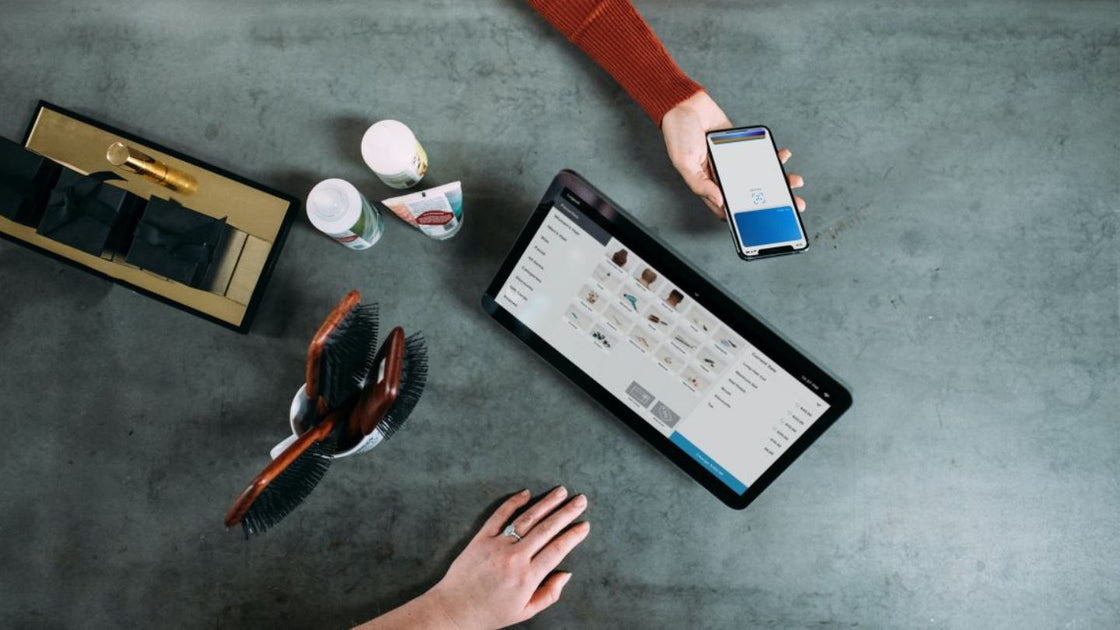
A team of researchers (Wetzlinger et al., 2017) studied the impact of personalization on privacy concerns and the intention to adopt services in physical stores and online stores in retail. They used "virtual shelves" and NFC payments (mobile payments).
What did they find? Among other things, they saw that privacy concerns have a negative effect on the intention to adopt services in both an online and a retail context.
How do I interpret this? While personalization is an excellent practice, there is no absolute truth, and nuances can exist. One of these nuances has to do with how people perceive the fact that brands know too much about us.
Therefore, hyper-personalization has its pros and cons, as well as its sinister side (here's an interesting article on the creepy side of personalization).
If you've made it this far, it means you're interested in learning more about omnichannel customer experience management. So, you can also follow me on LinkedIn.
The original version of this article was published on LinkedIn for the Omnicanalidad en español Newsletter.
- Parasuraman, A., Zeithaml, V. & Berry, LL. (1988). SERVQUAL: A multiple- Item Scale for measuring consumer perceptions of service quality. Journal of Retailing, 62(1), 12-40.
- Wetzlinger, W., Auinger, A., Kindermann, H. & Schönberger, W. (2017). Acceptance of Personalization in Omnichannel Retailing. Lecture Notes in Computer Science, 114-129.

 By
By