Among the habit changes that occurred with the COVID pandemic, we can highlight a greater concern for health and, consequently, the start of practicing some sport. Among them, running is experiencing a boom, and since then, marathons worldwide have been breaking registration records, which, obviously, draws sports brands to these events.
This is how the running industry went from a duopoly of Nike and Adidas to the entry of other brands that have gained significant ground, such as New Balance, Puma, Saucony, Under Armour, On, Hoka, and Asics. Even Lululemon, a Canadian brand that positioned itself in the yoga market, is now entering the running market to compete for market share.
Undoubtedly, what has changed most in recent decades is that today we have hyperconnected consumers, and digital marketing, as well as direct-to-consumer distribution, have helped break down barriers to entry into this market. According to Custom Marketing Insights figures, the running shoe market in the United States is expected to register a Compound Annual Growth Rate (CAGR) of 3.4% between 2024 and 2032.
Given this, brands will have to seek the best strategies to compete for a significant market share, and I could see some of this since I started preparing for my participation in the Chicago Marathon 2024, especially from Nike.
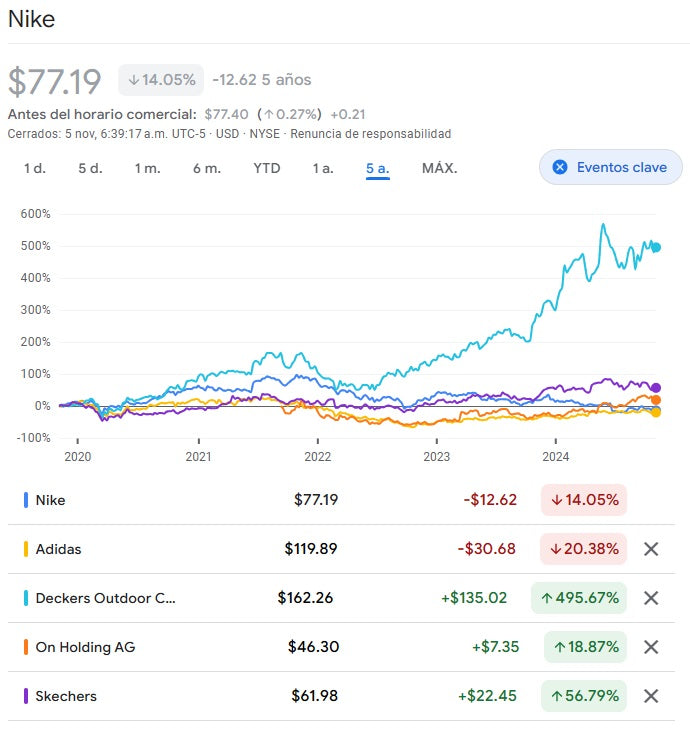
To provide some context on the current situation… The two sports giants are not having happy days with the collapse of their stock value, while other brands are rising:
Get our analysis in your inbox
Subscribe to the FREED newsletter: applied research, trends and tools.
No spam. Unsubscribe anytime.
Nike is making its presence felt
After stealing the spotlight from Adidas at the Mexico City Marathon, Nike also shined with a tremendous campaign at the Chicago Marathon on October 13 and then on November 3 at the New York Marathon, where the main sponsor of the competition was another brand, New Balance.
Let's see what Nike did at all stages of the purchase journey, from marathon preparation, the days leading up to it, the event day, and afterward. How omnichannel is the orchestration of this journey with the brand?
Preparation and promotion before the marathon
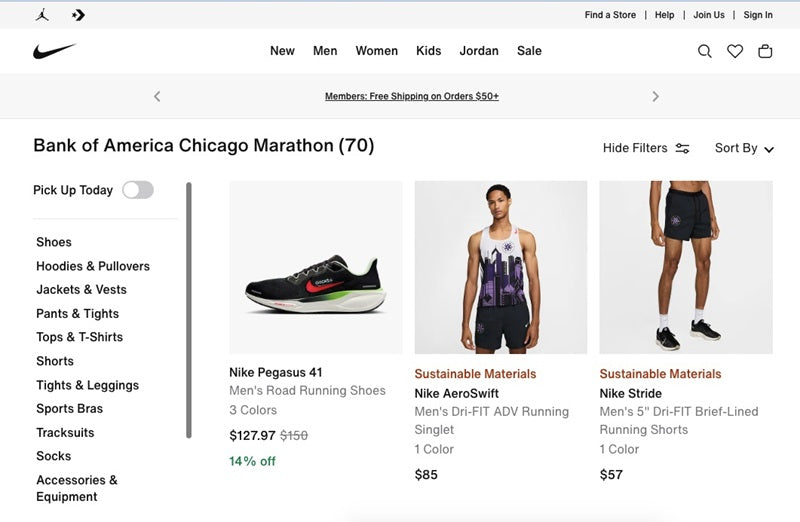
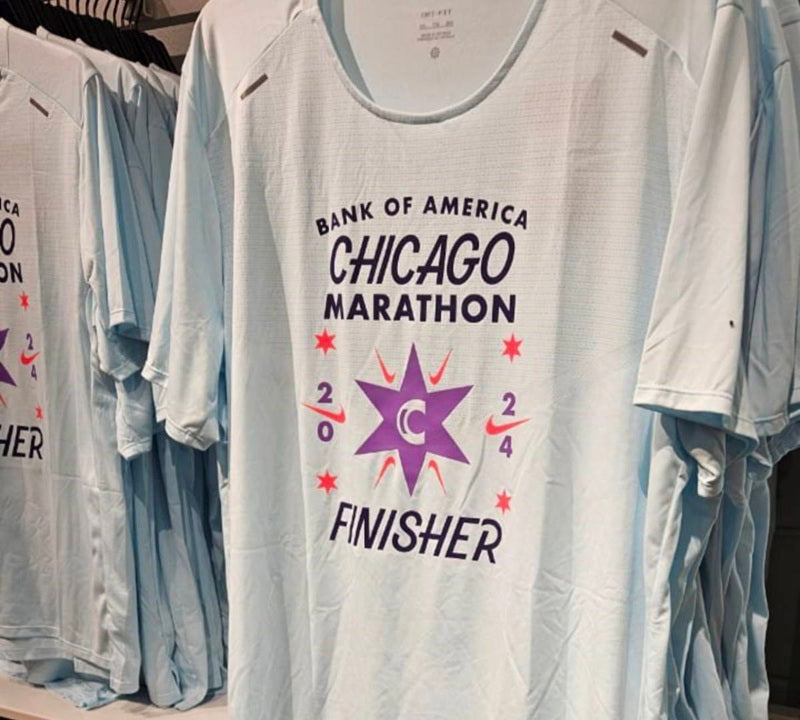
1- Weeks before, a promotion was launched on Nike.com with products branded "Chicago Marathon" and "Finisher." The same products were available at the expo where runners pick up their kits and bib numbers. In runner WhatsApp groups, there was already a sense of scarcity, as sizes were running out:
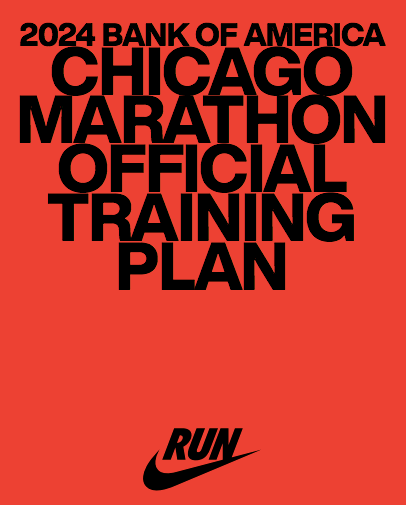
2- Nike also created a preparation guide for the Chicago Marathon:
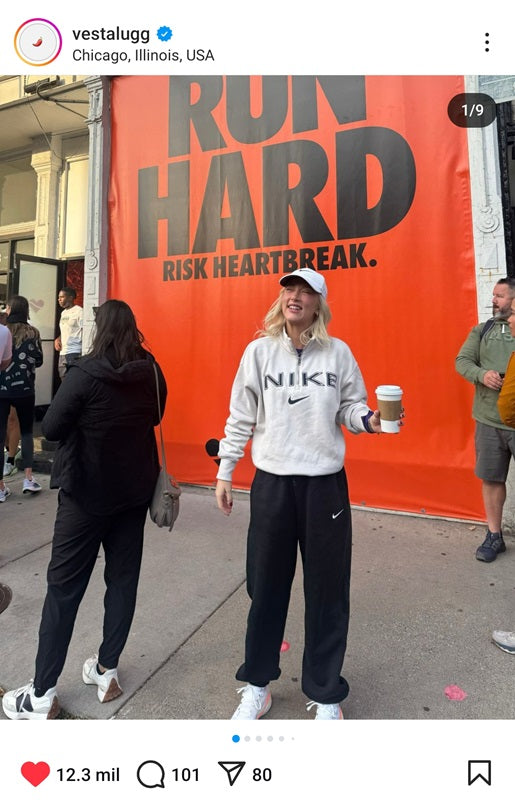
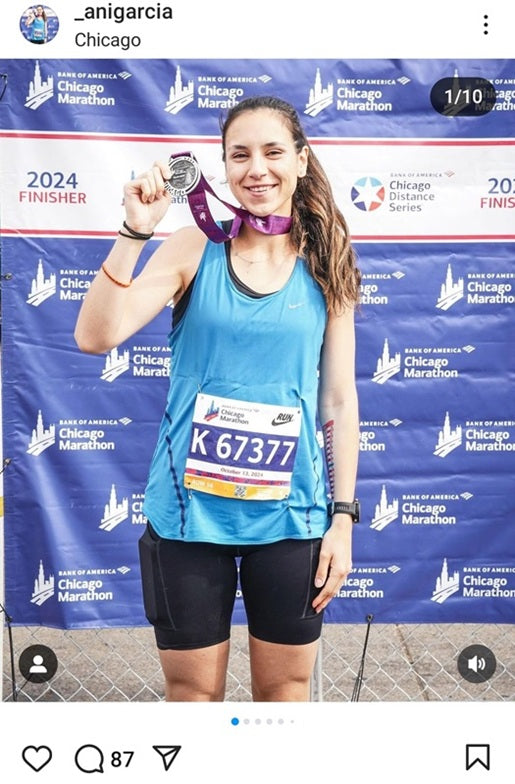
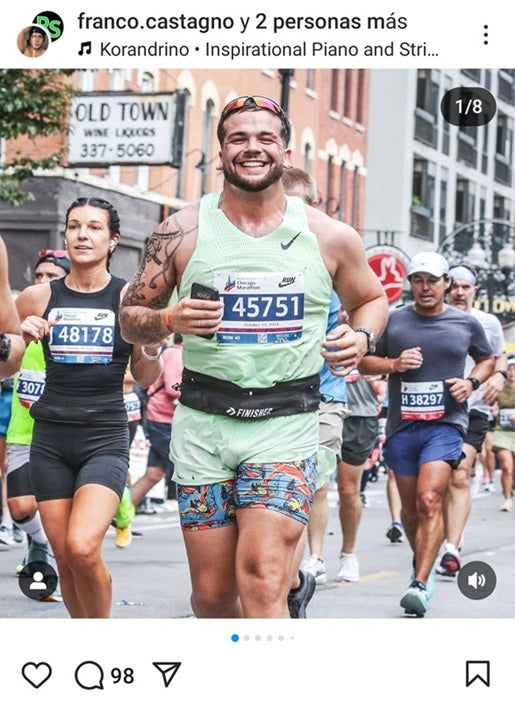
3- In Chile, Nike invited some influencers to Chicago, such as Vesta Lugg, Anita García, and Franco Castagno, to run their first marathon. This might have been a specific action at the country level, as my small investigation suggests it wasn't widespread globally. But they weren't chosen at random, as they are young influencers who perfectly resonate with the brand's "Just do it" slogan. That is, they didn't choose well-known names in the running world like great amateur athletes with impressive times, but rather people who had never run a marathon; however, they had the attitude and motivation to take on the challenge (all had run at least a 21k and are embracing running as a lifestyle). The three I followed had excellent results, and I take this opportunity to congratulate them.
During the marathon
Let's continue with what we witnessed in Chicago…
4- The official shirt was a Nike, of course. However, other shirt models were available for purchase online and in-store. From my point of view, the quality of some shirts left much to be desired, but other products, like windbreakers, looked good and sold like hotcakes:
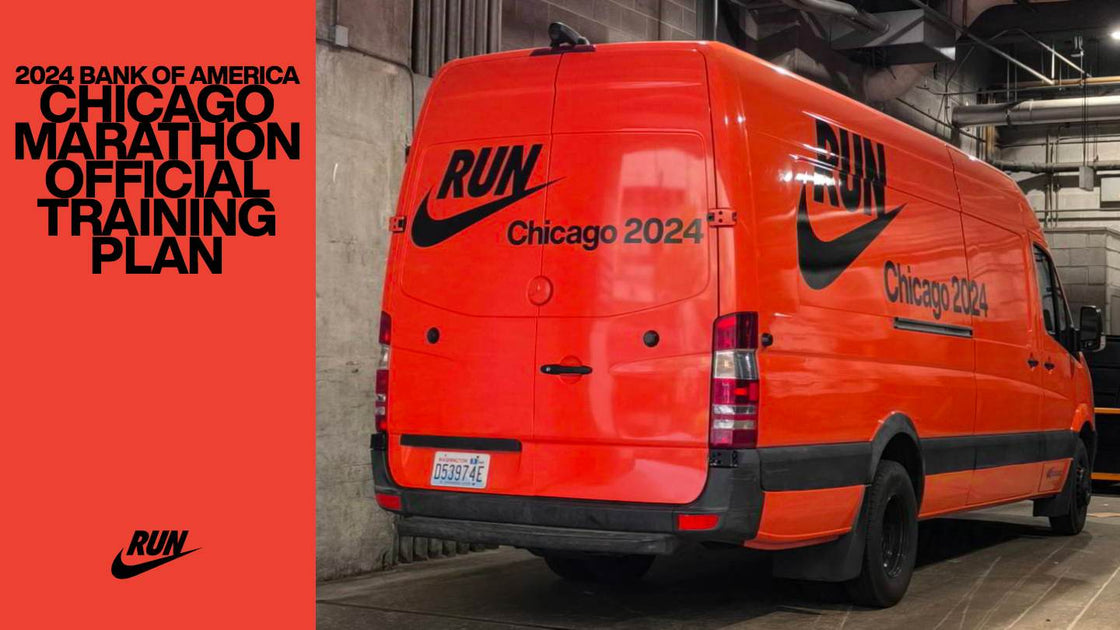
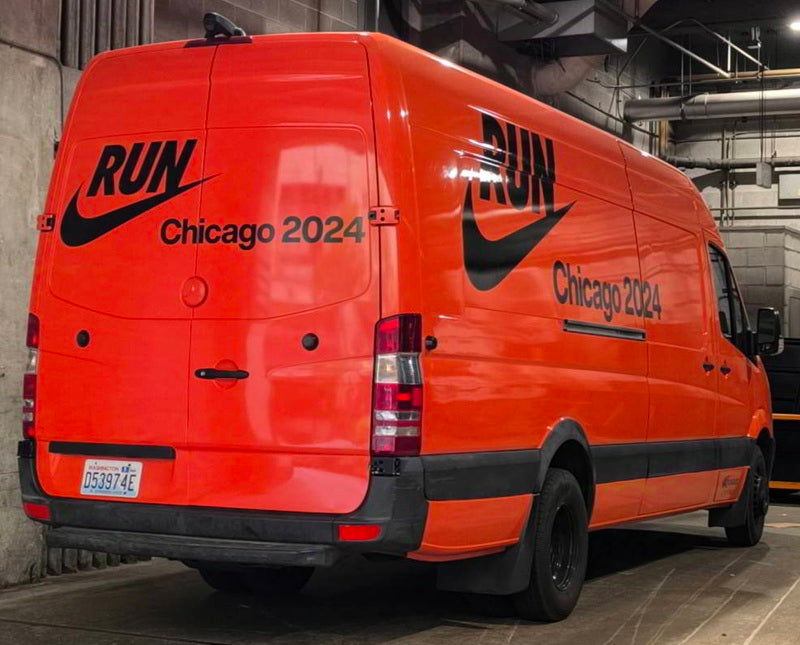
5- The days before the marathon, when Chicago was already filling up with runners and their families, Nike vans began to surprise people by giving away shoes in exchange for any other sports footwear of any brand; only urban shoes were excluded. This generated such a level of euphoria that I saw people giving away their almost new shoes to get Nikes.
6- The lines were endless, both at the marathon expo and at the Nike store in downtown Chicago. It was hard not to be influenced by fellow runners and the world dressed in purple – the color of the 2024 Chicago Marathon edition – that took over the city, so many ended up buying the "Finisher" jacket and sweatshirt at the Nike store downtown. It was a crazy line and crowd, although we didn't take long to get in.
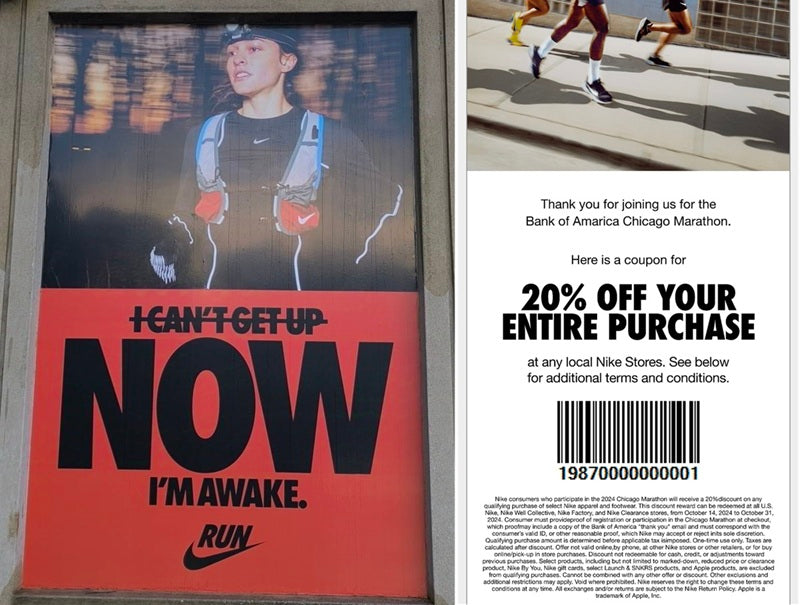
However, when I got to the checkout, I found out that the 20% discount advertised in the email I received did not apply to "Finisher" products. To smooth things over, the cashier asked for my email address and gave me a 15% discount on one of the two products, a first-time member benefit. Although I had read the fine print of the email, nowhere did it mention that "Finisher" products were not included in the promotion. Well... The sad story of the lack of communication between marketing and customer experience.
Post-marathon and activation in New York
7- After the marathon,Nike also released its now famous video "Winning doesn't always feel like winning"with the classic song "Love Hurts" in the background. The commercial was built around the insight of physical pain and difficulty walking in the days following a marathon. There was no need to mention what it was about because anyone who has run a marathon understood it immediately.
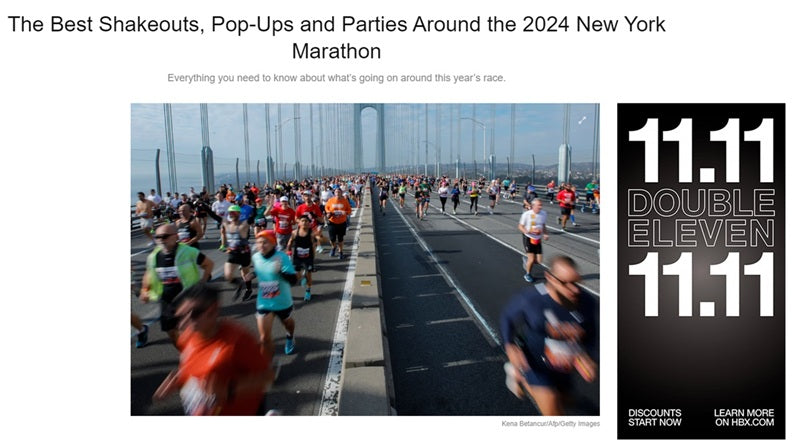
8- And for the New York Marathon, Nike was already doing pre-activations (like other brands such as Brooks…) and organized its own after-party:
What we take away
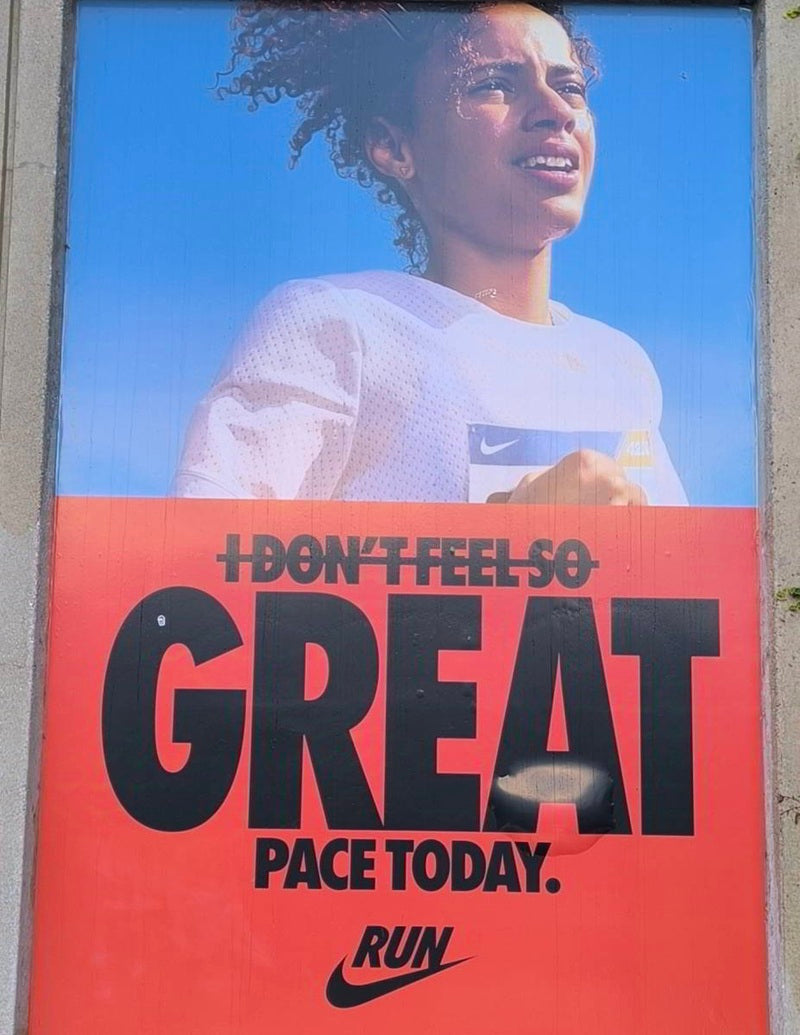
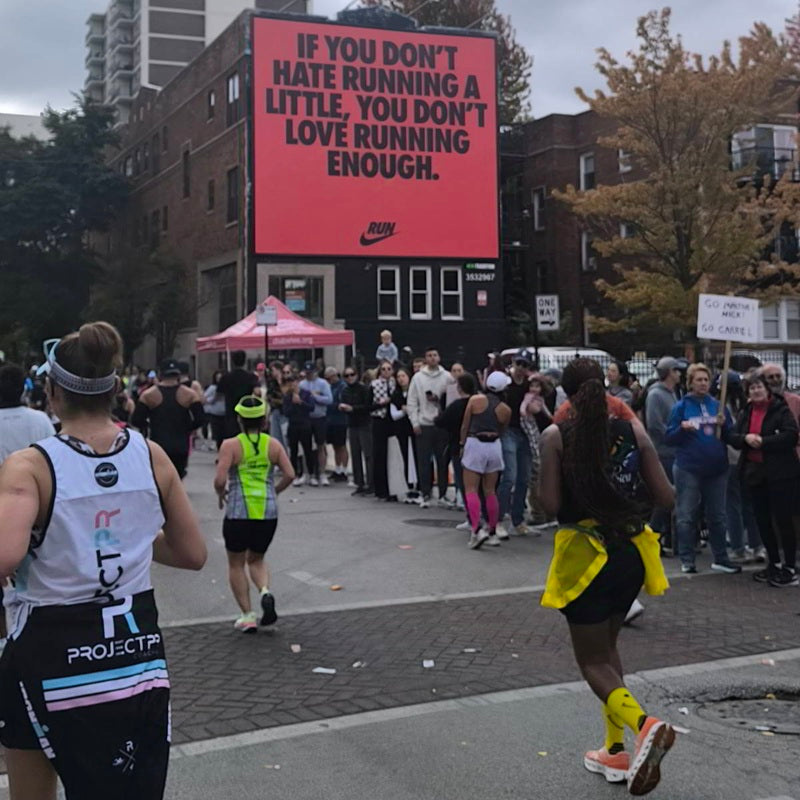
1- Brilliant campaign to plaster the city with motivational and some very funny messages:
2- Great attempt by Nike to recover what was lost in recent years, always in tune with its "Just do it," because it speaks to an audience whose mental state resonates with its slogan. When I speak of "lost," I refer to having set aside the running shoe subcategory to focus on other lines such as urban shoes. Likewise, it began to design the famous elite shoes with carbon plates which, although they seek to increase performance, have low durability and speak little to the slower runner (not to say average, in terms of sports performance), as well as to Nike's long-time loyal customers, those who have had the same pair of shoes for years - that no longer exists today. In fact, there are people who have dedicated themselves to showing the low durability of Nike shoes in recent years, and not only in running, but also in soccer.
All of this affected the brand, with a slowdown in global demand, which was reflected in sales that grew by only 1% in fiscal year 2023, and now the new approach is expected to improve its outlook in the coming months, in order to maintain or expand its 40% market share.
3- The marketing push must sustain a consistent and coherent customer experience, from the in-store experience to the final product. Here, Nike is failing because:
The promotion that arrived via email was not truly customer-centric, and
it seems that the product does not always deliver, as is the case with the shirts. For the price, I expected better quality and consistency (the windbreakers were impeccable, although it would have been terrible if they weren't, considering their price!).
4- In a hyperconnected world, analog experiences are more powerful than ever: from vans giving away shoes to giant billboards with motivational messages; Nike stole the show.
5- Here we have an example of a campaign where attribution would be difficult to measure. To what can we attribute the e-commerce sales of "Finisher" products? And in-store sales? Does it matter to attribute them to any of the actions taken?
6- Finally, from the point of view of brand presence and the creative campaign itself: a 7 out of 7!
How to put omnichannel into practice: an analysis of the ASICS brand case study. We review their business strategy and the measures that bring it to life.
Rebranding: What it is and how to know if your brand needs it. Here, we answer these questions with real-world examples and by sharing our own experience.

 By
By