At FREED, our mission is to help entrepreneurs and companies grow in e-commerce. That's why we've talked so many times on this blog about how you can better manage your business if it's hosted on your own website, as in 7 Usability Errors You Should Avoid on Your e-commerce Site. Now we want to share our experience with clients who came to us for advice on giving their stores a boost on a third-party marketplace.
Now we want to share our experience with clients who have sought advice to boost their stores on an e-commerce portal or marketplace. Because thousands of entrepreneurs compete to offer their solutions on these platforms that we identify with big global brands like Amazon, eBay, or Etsy, although there are also local brands like Sodimac, Mercado Ripley, and Linio in Chile, or Mercadolibre with a presence in Latin America, among others.
Working with these clients, we have identified all the advantages and deficiencies of these services, which has allowed us to develop strategies to navigate this world. But it is also true that on the internet there are many blogs, forums, and specialized websites that reveal the secrets of the most popular global marketplaces.
Therefore, this article is based on what we have discovered in the local marketplace business in Chile and which can be extended to other Latin American countries. We found obstacles that are difficult to imagine in the 21st century and that can make them inhospitable places to thrive. And the worst part: many of these deficiencies entrepreneurs discover when their store is already up and running and they start to complicate the development of their e-commerce.
But let's look at this from the positive side and take advantage of these findings, sharing with you the aspects you should weigh before entering a local marketplace, so that you investigate in advance how things work within the platform and don't encounter surprises after setting up your store.
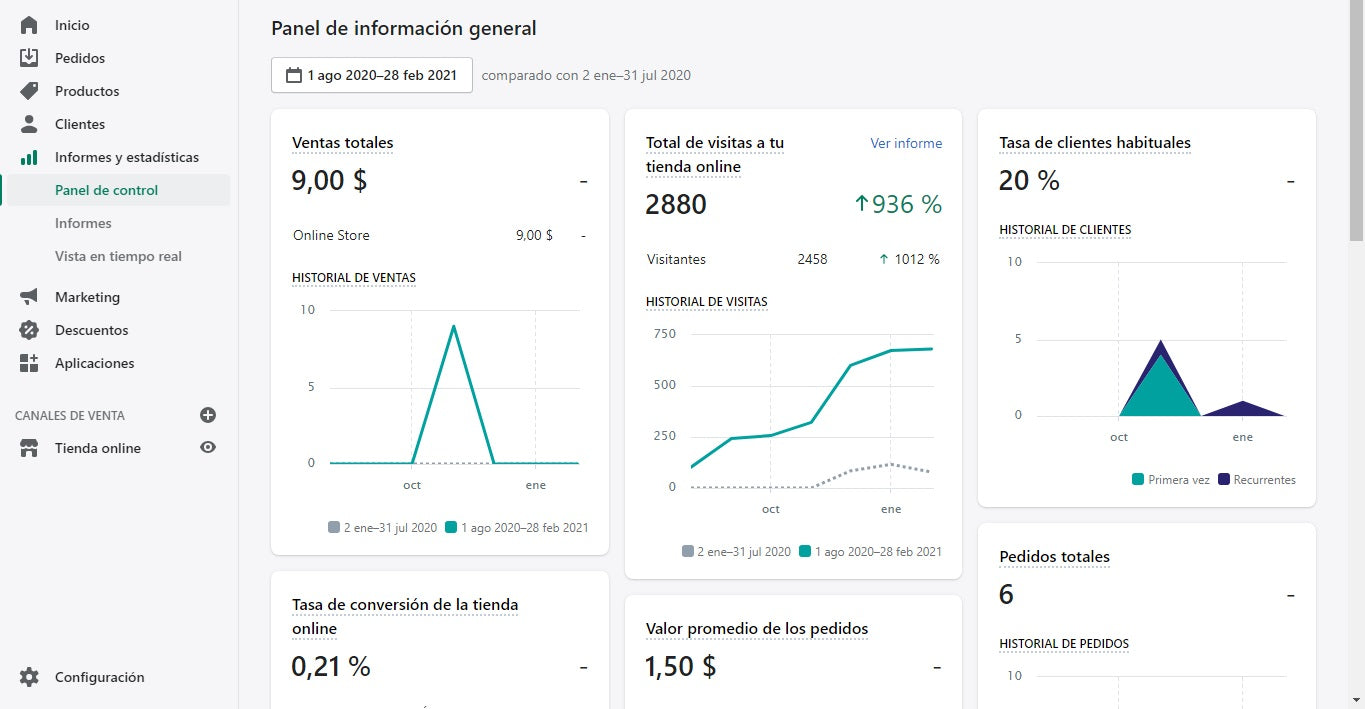
Knowing your store's numbers helps you control the management of your presence in the marketplace. Having metrics at hand reveals many aspects that help you to:
- Understand your store's traffic and where that traffic comes from.
- Visualize how much of this traffic comes from your effort and from the marketplace.
- Clearly see the conversion and performance of each product.
- Understand how people search and how your customers found you.
- Develop sales, SEO, and marketing strategies to reach more customers and identify which actions help you improve.
- Understand which factors are important in the platform's operation and work on them to have an impact on conversion and sales.
It is more common than expected in the Chilean marketplace world for platforms not to give you access to your business performance metrics. This will impact your ability to run tests to find out which actions work best or which product has the most potential. Will you select one or make changes with your new ideas across all products? When making several changes at once, it is difficult to attribute an increase or decrease in sales to one or more of the changes made, and it would also be difficult to identify a statistically significant change. That is, without metrics, it will be more complex to attribute a higher conversion to a specific factor. For this reason, you should find out in advance if your store will have a metrics panel and what it shows to sellers.
2. Publishing and editing content and products
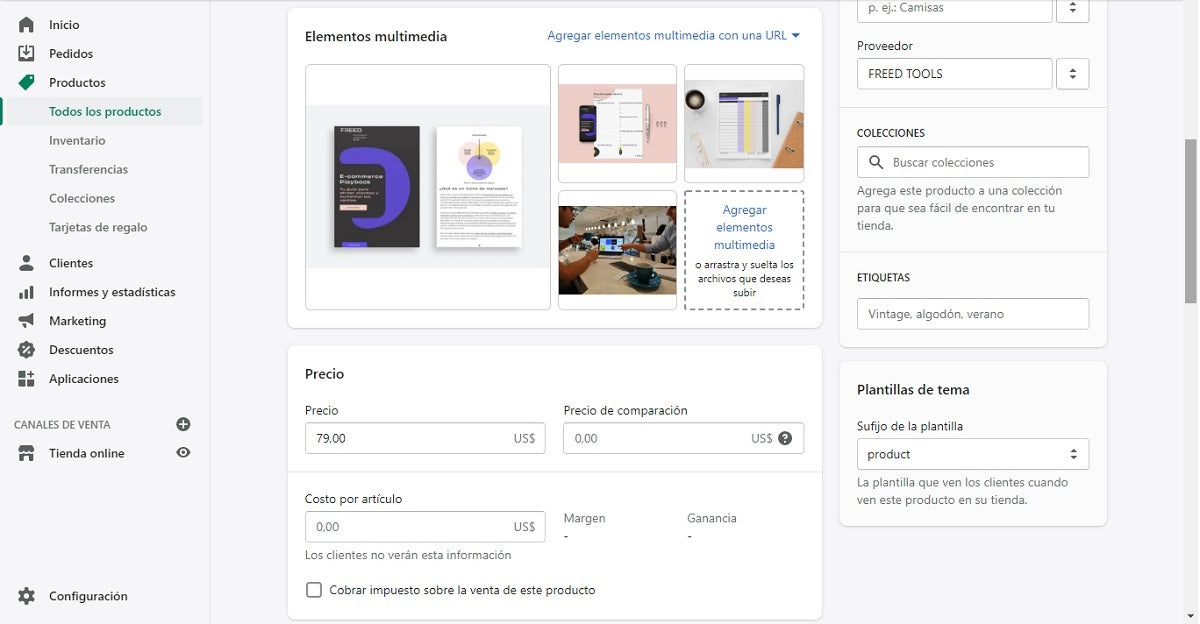
Can you imagine what would happen if during Black Friday season you had to send your new product publications to the platform's content team and wait a week for them to go live? The bottleneck would be terrible at a time when thousands of sellers would be desperate to see their products published promptly. Well, in the Chilean marketplace, we have encountered that level of bureaucracy for uploading or editing content and products. We advise you to investigate the publication conditions to look for a standard like this:
- That your new content and products can be online immediately or, at most, go through a prior review that does not take more than a few hours.
- That every time you edit content or a product sheet (specifications, photographs, prices, etc.), this update is online as soon as possible.
- That the pages have fields to enter SEO parameters: Title and Meta description.
- That product pages have tags to highlight them with keywords.
Let's be honest, it's not just about publishing a product to have a presence in search results and platform promotions. Many criteria make the work more complex, especially if you expect to position yourself organically. There are marketplace platforms in Chile that do not publish their criteria, so we advise you again to investigate because there are blogs and specialized websites that reveal their secrets. As a preview, we can tell you that these are the most common criteria used by every local and global marketplace:
-
Own brand: some prioritize their brand's products in search results.
-
Paid campaigns: if they allow pay-per-click (PPC) campaigns, they usually prioritize these ads.
-
Free shipping: if you include it in your offer, it could be a good hook to gain visibility.
-
Ratings or reviews. The more comments your customers leave, the more authority the store will gain. Encourage those who have bought from you to share their experience again. Most likely, you won't have access to the customer's email, so put a tag on the package with an invitation to leave comments on the product page.
-
Use of keywords in the product title. Research which words have the most volume, and for that, you can do your own searches within the local marketplace and analyze the results. This observation may lead you to discover that products with keywords at the beginning of the name appear in the first search results. Also, see how your competition that is achieving good sales volume does it.
-
Use of keywords in the tags field of each product sheet.
- Use of keywords in the product description.
-
Photos. This is a recommendation we always give our clients: publish several photos of each product, from different angles, and that provide context and usage information. Find out the optimal quantity required by the marketplace.
-
Performance in the Order Dissatisfaction Rate (ODR) service. In marketplaces, users evaluate their experience with a store, so you must work to ensure customer satisfaction. Likewise, your delay in responding to comments, complaints, and returns influences this parameter.
- Time needed to prepare the order.
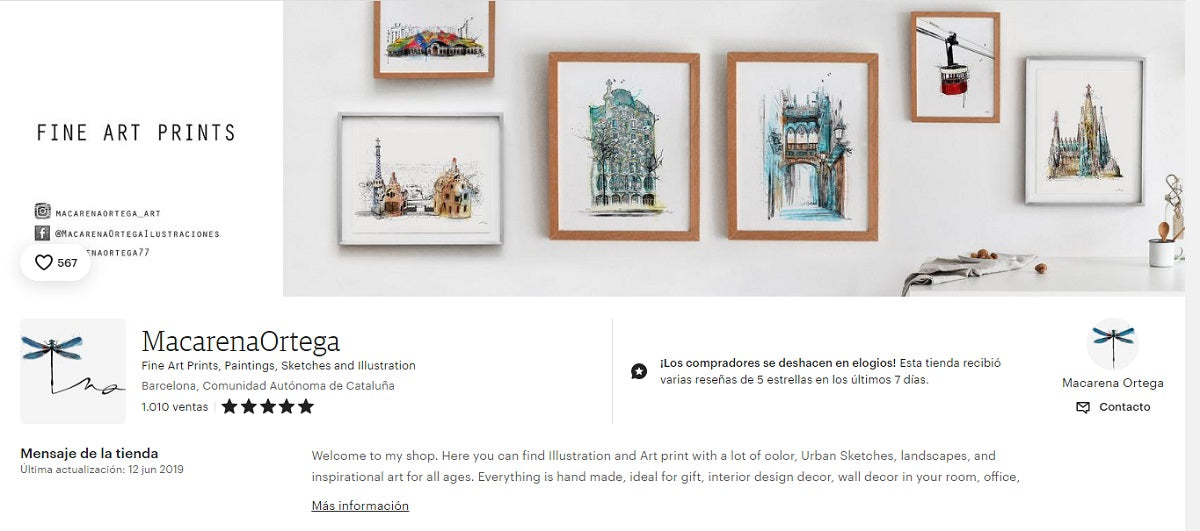
Ideally, the marketplace should allow the seller to create a landing page with:
- A description of your business.
- Your company's history.
- The entrepreneur's profile.
- Photographs of the entrepreneur, their team, and the company.
- Brand logo.
- Customization with corporate colors.
- Links to social media.
The idea is that each brand can show what distinguishes it from others and connect with the public with more than just the products it sells. Also, consider that online, the experience does not allow the customer to speak with a salesperson or store manager to know who is behind the business.
It is important that you investigate these aspects because we have encountered clients whose marketplace store in Chile only has a page that shows a consolidation of all their products, which does not allow for visual differentiation or brand differentiation, making the purchase decision difficult from the user's perspective.
Do you have experience selling on a marketplace in Chile or globally? Have you received good service regarding your store's management?




![Digital Marketing Strategy: Mistakes to Avoid [Part 2]](/content-images/ed2c5ae4-errores-comunes-marketing-digital.jpg)