SEO positioning errors are varied and also related to user experience. It's important to consider the following 9 most common errors when managing a website because, if you keep them in mind, your organic positioning will improve, frequent visits to your site will increase, and you'll get more conversions.
You need to understand where your audience is, evaluate your priorities and resources to select the most suitable channels to grow your brand. You should consider social media, marketplaces, websites, emails, among other ways to build relationships with your customers. The idea is to generate a strategy that includes several channels, thus cultivating commercial relationships.
For example, they might find you through social media or search engines where you've applied an SEO strategy to rank, and then you could continue that contact through email marketing.
It's not necessary to use all available channels; you should consider what best suits your target audience, but having more than one running is essential to avoid risks, such as when apps or social media go down.
If you want to grow, you must manage a website that contains relevant content; it's the way to attract more potential customers and generate authority for your brand.
With the website, you can capture different search needs, especially if you make an effort to grow it over time by creating content and optimizing what's already published from time to time.
It's important that there is consistency and coherence in content and aesthetics so that it makes sense when moving from one channel to another (social media, email, website, etc.). The potential customer's journey must be congruent and simple, so when your products or services are found through SEO positioning work, they will stay on your site and get back in touch through some channel.
You must understand that SEO positioning is a medium to long-term effort; it doesn't end in a few months. It's a vision for daily work based on understanding your audience. When choosing organic positioning, you must consider continuous and extended work to always perfect it further.
SEO positioning work must be monitored, distributed through email and social media, and continuously optimized. It must always be authentic, genuine, and quality content adapted to new trends.
You need the ability to network so that your website's audience grows. You need to contact bloggers, media, and other brands. The web needs time and links with other sites to generate authority.
For example, you should consider a link-building strategy where you create links with other websites that link one of your web pages to their site. This generates greater authority or popularity, improving your SEO positioning.
The beginning of SEO positioning is to search for terms that internet users use related to your products or services. These keywords should be used in the content you create for your site or sales pages, to improve your position in search engine results and be found by more people more easily.
It's important to repeat this process every so often, meaning you continue to optimize already uploaded content. But be careful, good SEO text should be written naturally, from a person for people, not forcing keywords to fit. In fact, if you over-optimize, you will harm your ranking on Google.
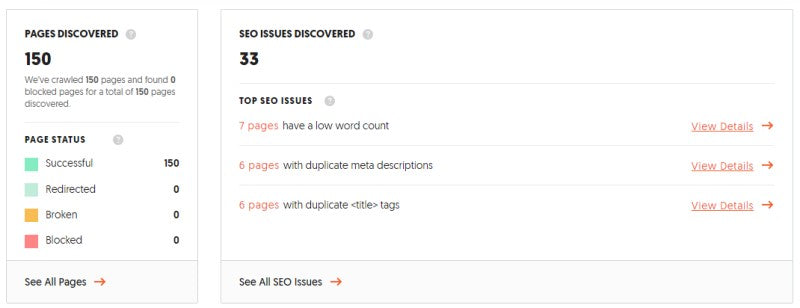
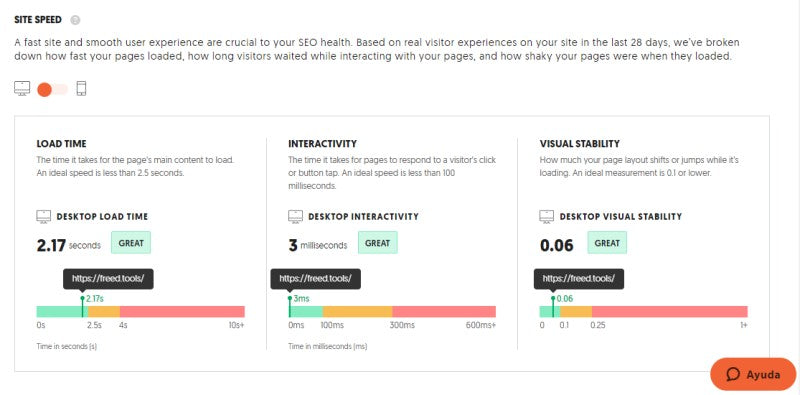
User experience on your website is important. You can perform an SEO positioning analysis using Ubersuggest and a data-driven design based on how customers use your website. If it loads slowly, is complex to navigate, or is not visually appealing, people will tend to leave your site and not return.
What can harm loading speed?
- Unoptimized images.
- Too many plugins.
- Slow hosting.
- Pages that are too large.
- Poor adaptation to different devices.
Your website must be adapted to any device where it can be viewed, and you shouldn't rely on the template you use or those offered by website creation platforms; sometimes manual adaptations are necessary.
Perhaps you need to position images well in the space, reduce your paragraphs, or fix buttons that will go off-screen on small devices. It's also possible that the menu doesn't unfold, links don't work, some functions don't execute, critical information is missing, and navigation becomes confusing.
It's important to ensure that on all devices, your website's design is appropriate in terms of colors and balance in content distribution, avoiding visual clutter, so as not to distract the potential customer's attention from the main objective.
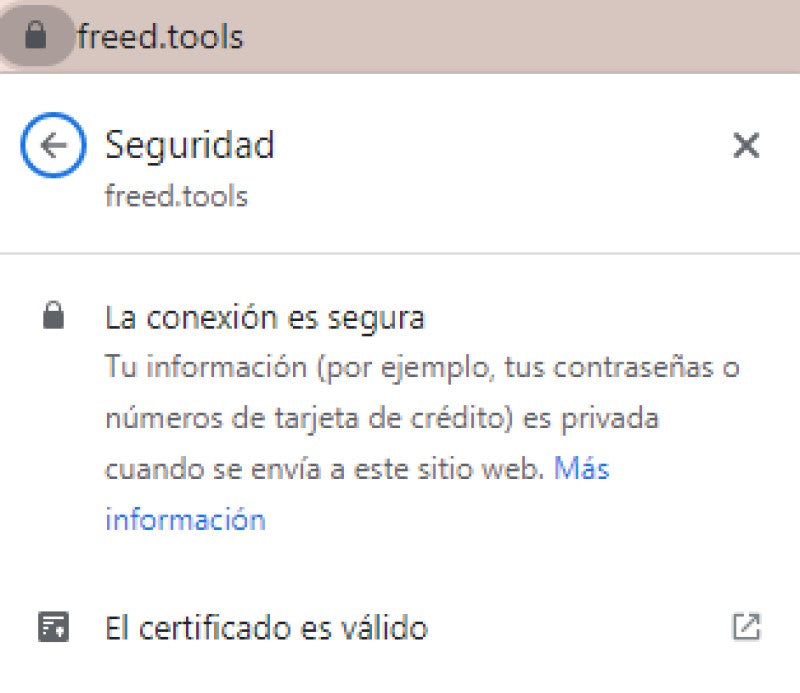
This is the secure version of the URL (SSL), and Google recommends using it. Without an SSL certificate, you don't guarantee secure transactions, such as a credit card purchase. Therefore, if your e-commerce site doesn't have one yet, you should contact a specialized company.
Additionally, users receive a warning about an insecure site. This can harm you by decreasing dwell time and increasing the bounce rate of users.
Article by Camila Oliva.