To design well, first you need to truly know your customer. Some argue that making design decisions based on instinct is not a negative thing. However, this only applies if the instinct is based on the experience of what has worked well or poorly in previous projects.
According to the point above, we cannot say that Data-Driven Design completely replaces other ways of making decisions in the creation or redefinition of a product.
What we can affirm is that data-driven design is an approach that is gaining more relevance every day.
This is because it has highlighted the value of user behavior data and how this data allows us to know what is working well or poorly with a product, in order to (re)design what we are building for others to use.
And if we want to be more specific, some argue that we should talk about data-informed design.
Data-driven design can be defined as an approach that links the human-centered design process with user research.
And based on information about user behavior or interactions with the product, we can guide and support our product (re)design decisions.
“Data-driven design is about using information obtained from both quantitative and qualitative sources to inform a set of stakeholders or users who make product design decisions.”
InVision.
In a product development context, data-driven design allows product designers to:
-
validate hypotheses about product usage,
-
resolve doubts about an information flow,
-
answer questions about the design, and
-
measure results, among other things.
Regardless of the development or improvement stage a product is in, it is advisable not to fall into the bad practice of thinking for our users and predicting what they want.
Decision-making is not an easy process, but if we manage to interpret information about product usage, we could make decisions with more certainty and objectivity about its construction, and what users expect from its use.
If we want our products and services to be part of a meaningful experience for people, our design processes must be guided by user behavior data, their usage contexts, and their attitudes when using our products.
Designing user-centered experiences is not always a priority in organizations. If this is your case, check out 6 tips on how to convince your boss to invest in usability and user experience.
The data-driven design approach does not aim to collect the largest amount of information, nor does it pretend to be the only factor in decision-making.
Each case of design, improvement, or redefinition of a product or part of it is a particular research project where we must plan and select the techniques for data collection.
In this context, our data research plan will depend on the objectives, hypotheses, and results we want to measure.
Data can be obtained from different information sources and by applying data collection techniques.
These are some of the quantitative data collection techniques:
- Surveys
- A/B testing
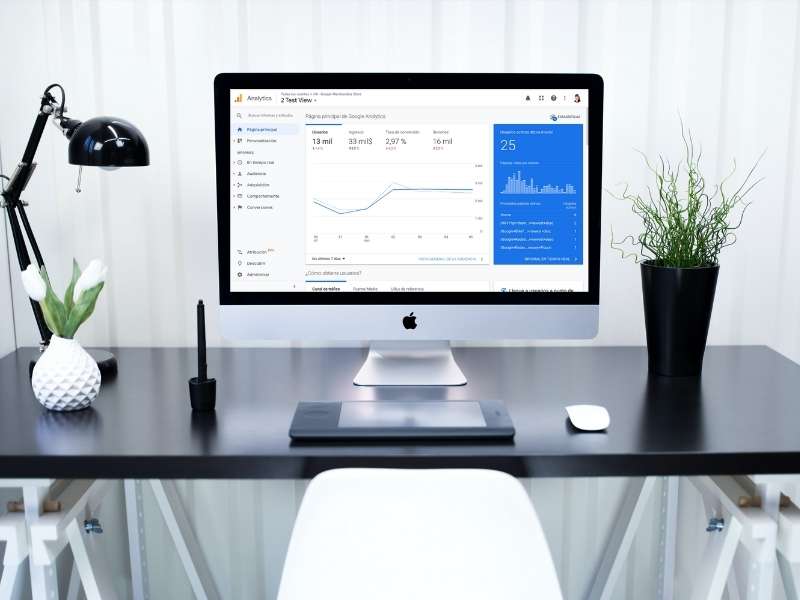
- Analytics
- Heatmaps
In the case of qualitative data collection, at FREED we have used the following qualitative research techniques and methods:
Throughout the design process, we can apply research methods, techniques, and tools to understand what the user needs and design experiences that adapt to their needs.
If you are still not convinced of the importance of designing people-centered solutions, here we tell you about the return on investment in user experience (UX).
What do you think about the need to design based on user behavior data? Have you considered it in your product or service development projects?
Article by Denise Sánchez, edited by Rafael Baquedano.
Main image by Christina @ wocintechchat.com on Unsplash.
Other images by FREED.