Before we start talking about usability, design, and user experience, I'd like to go back a bit to a component that is fundamental in this process of creating technological solutions: design. Let's see why design is important.
To begin with, design is everywhere; it's in all the big and small details of our lives. I want to show you some examples.
Everything around us must have been designed in some way. In urban environments, we normally experience visual overload that has a cognitive impact, confusing us, and ultimately, we don't know where to go if we are exposed to too many overwhelming messages.
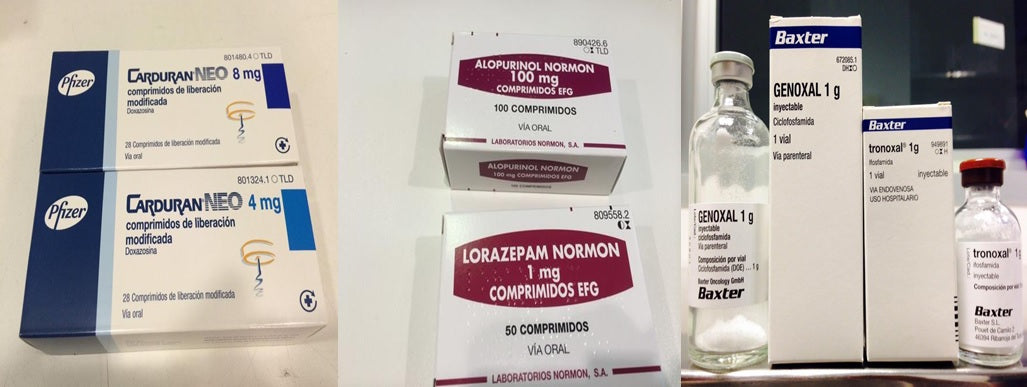
Design is also in the packaging. To see examples from the healthcare area, I will tell you about the iso-appearance of tablets. This is a very common design error that can have a negative impact, both in the clinical setting and at home. Let's think about the patient who has to take medication or the caregiver who helps them dispense medicines.
Source: Stop Medication Errors.
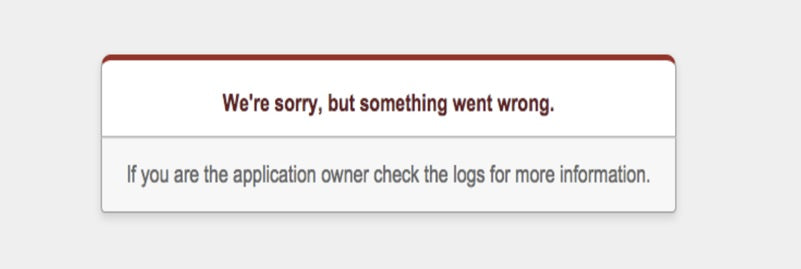
Software problems of various kinds cause the user to lose control. The system's message, instead of helping, confuses them. Control is a very important heuristic in usability.
From the previous examples, we can already infer that design is fundamental in our lives. But let's go a little beyond the obvious: some consequences of a poorly designed system in the world of chance.
A system that was not designed based on people's needs, considering their context of use, and that was not adequately tested, will have a negative impact. It will probably be synonymous with rejection by people. Because if a system does not meet our needs, we will not want to adopt it.
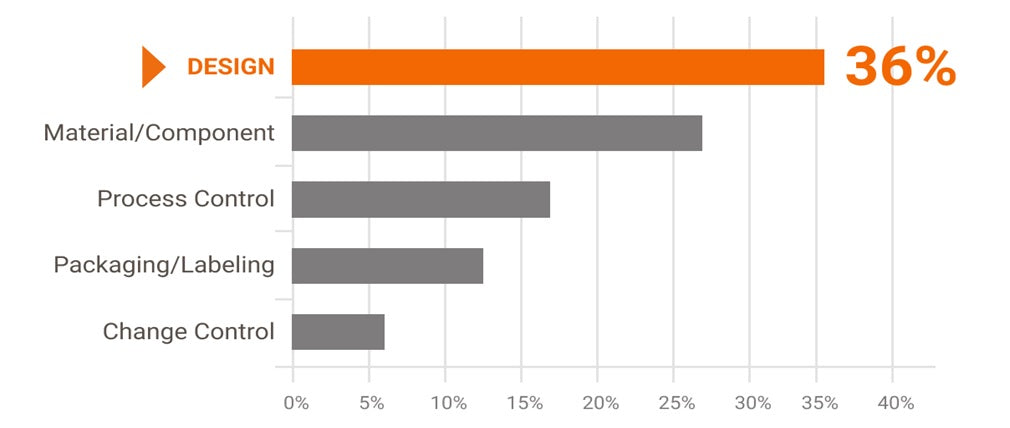
According to a report by the FDA (Food and Drug Administration of the United States), more than a third of medical devices are recalled due to design problems. If we look at a 2021 study, the main cause of medical device recalls in the United States is software problems. This cause has been constant for the last four years. (1)
Source: FDA, CRDH. 'Medical Device Recall Report FY2003 to FY2012'.
If we look at the particular case of electronic clinical records, a tool that has been incorporated into public and private institutions, some of its common problems usually are:
-
Documentation requirements are difficult for system users to manage. In practice, this occurs when the system asks for more documents than you, as a user, are capable of managing, or those documents have already been entered and the system asks for them again, or even requests information it should already have.
-
Usability problems in the interface: form fields that don't work, poorly structured screens, overly complex screens, or options that are difficult to access through navigation.
-
Workflow integrations that should exist and flow: sometimes they cause problems when using a system, such as having 5 screens open at once, jumping from one to another to complete a task.
All these problems are associated with too much management time for professionals suffering from burnout, but they can also have a negative impact on the patient, such as death, given that many procedures are lost. (2)
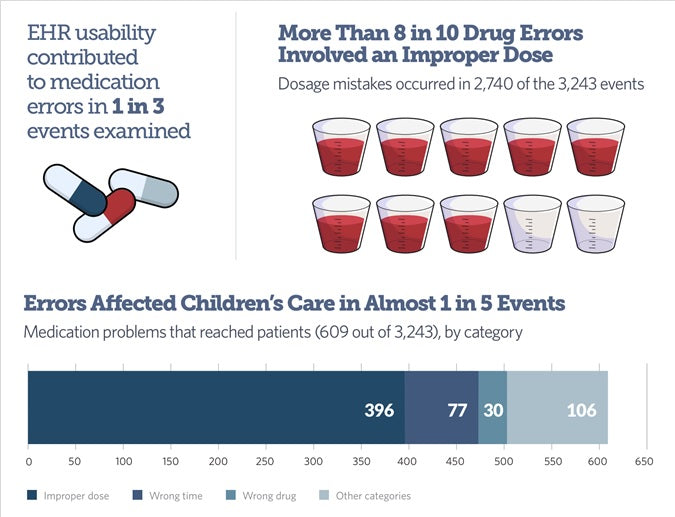
A study analyzed 9,000 pediatric patient safety events reported by 3 hospitals over a 5-year period and examined how the usability of the electronic health record impacted patient safety. Researchers found that lack of usability contributed to medication errors in 1 in 3 events and in more than 8 in 10 events there was a dosing error.
Source: Raj M. Ratwani et al., “Identifying Electronic Health Record Usability and Safety Challenges in Pediatric Settings", Health Affairs 37, no. 11 (2018): 1752-1759.
Illustration: The Pew Charitable Trust.
Another example of a very common design and user experience problem in software engineering is forms. A poorly designed form can have a negative impact at different levels. Let's imagine that to enter patient data, you have a default field: "the side of the surgery, left." A default field means that an option is pre-selected, so the software does not require filling in the patient's data.
In the post-operation, the patient takes the printed form to the insurance company, and according to the doctor's records, it was actually a right-side operation.
This difference may seem trivial, but in a procedure with an insurance company, it represents a major problem because they will likely reject the reimbursement request. This will lead to double work for the doctor and their secretary, unless the patient returns to the clinic to request a record rectification. We can assume there will be stress, wasted time, and, above all, a monetary impact if the insurance company does not agree to reprocess the request. Something as simple as a form field can become a drama for users.
In summary, a poorly designed system generates:
- Medical errors
- Long management times
- Frustration
- Burnout
- Low adoption and rejection: if a system is not user-friendly, if it doesn't allow us to work better, it's useless to us, so we tend to discard it.
Human factors and the context of use
And why do these design errors occur, causing so many problems for users?
-
Lack of concern for human factors when designing the product or service.
-
Lack of involvement of the end user and their context of use in the solution development process.
The context of use
Beyond people and technology, there is the context of use and the relationships that occur between different elements:
- Fatigue
- Distractions
- Multitasking
When designing technological solutions, it is important to clarify the context in which they will be used. It is not the same to devise a tool that will be used by one person on a mobile phone as it is a collaborative system.
We can think, for example, of professionals who must keep a record of home visits after seeing each patient, while in the car between two visits, versus a system that will be managed by 10 professionals who are simultaneously attending to 4 or 5 people in a clinic. The context of use here is totally different.
What happens to us? Why can a system work under certain conditions and not others?
Human beings are different and complex. We act in different contexts, sometimes we forgive when a system "makes a mistake" and we learn its quirks.
For example, let's consider a person who has been navigating a complicated system for 5 years but has grown accustomed to overcoming its complexity and knows they will achieve their goal, even if they have to try three times in a row for the information flow to progress. What would happen if we replaced that bad system with a good one? It's very likely that we would frustrate that person because they are already used to a certain way of doing things, and now we are changing it. Meanwhile, a new user who doesn't know the old system would be much more comfortable learning to use the good system directly. Hence the need to understand each user and their context of use.
Human factors relate to "the understanding of interactions among humans and other elements of a system, and the profession that applies theoretical principles, data, and methods to design in order to optimize human well-being and overall system performance" (International Ergonomics Association).
Some human factors you should consider when designing your product or service are:
- Memory
- Attention
- Stress
- Motivation
As human beings, we are not agnostic to cognitive biases; therefore, we are constantly faced with biases of:
- Confirmation
- Groupthink
- Omission
- Proximity
An example of confirmation bias is that we tend to seek ratification of what we already know. It is important to understand these biases when designing solutions, because our products or services do not come in isolation, but arise in a context, interact with other solutions, and the people who will use our systems also use other systems.
External factors (the context)
Some external or contextual factors that affect our cognitive capacity are workload and distractions. For example, the devices around us that constantly send notifications affect our ability to stay focused on a task. From there, it is also important that when we talk about designing simple solutions, we understand in what context this solution could avoid notifications or, on the contrary, if they are required and are a necessity, how the user will be able to send notifications and identify their importance over others that the person receives from other devices.
It is also important to understand that behavioral patterns emerge in people and in our users, and this has an impact on the context of our interaction with technology. For example, we get used to a certain way of doing things, and technology also modulates our behavior.
Furthermore, we have mental references that do not come from the same field: for example, a healthcare professional, like all of us, is a social media user, so they are accustomed to a certain way of navigating and viewing a menu; but they also navigate institutional websites and know that the login is at the top right and contact information is at the bottom in the footer.
That is, when we design solutions, it is important to understand how interfaces respond to these behavioral patterns or what type of behavioral pattern we want people to develop when using our systems: what things we want to favor, what positive behavior we want to encourage, and what negative behavior we want to reduce.
Now, while we are complex, we need multidisciplinary teams to design and implement simple solutions. What does multidisciplinary mean? Depending on the project, to design a technological solution for healthcare, we may need:
- A project manager who deeply understands the reality of the clinical context.
- Professionals specialized in ethnography or sociology to be able to identify people's needs.
- Software engineers.
- User experience designers.
- System area experts.
- Healthcare professionals.
- Administrative professionals, etc.
As we can see, there are a series of factors that can lead us to make mistakes in the different stages of designing and developing a solution. If it is a mass consumer product, we can assume an economic loss due to failure in sales by not hitting the mark with what the target audience needs and is looking for. In contrast, in the healthcare area, these errors can even cost patients' lives, as we have already seen with very current statistics.
What is the solution to avoid these types of errors, problems, and negative impacts? It is to involve the end user.
Before delving into this point, which I will address in a subsequent article on UX Research in healthcare, let's look at the definitions of two crucial terms:
-
Usability: It is the "Quality attribute that measures how easy interfaces are to use" (Jakob Nielsen). ISO 25010 defines usability as the "Capability of the software product to be understood, learned, used and attractive to the user, when used under specified conditions." These specified conditions are what I described earlier as the context of use.
-
Usability engineering: "is a structured approach to building software systems that meet the needs of users in diverse environments with different levels of computer experience." (3) The topic of experience has to do with knowing or not knowing a system and the learning that is established over time. But also with user usability, because when we design software, we have to know what the level of instruction and digitalization of the person who will use it will be.
Main activities of software usability engineering
Some activities involve, for example:
- Conducting on-site observations and interviews with system users. Ethnography has much to contribute to the healthcare field.
- Development of usability specifications.
- Evolutionary delivery of the system. That is, the system should be improved and improvable over time. How to do it? From usability testing in the early stages to encouraging recurring feedback from users.
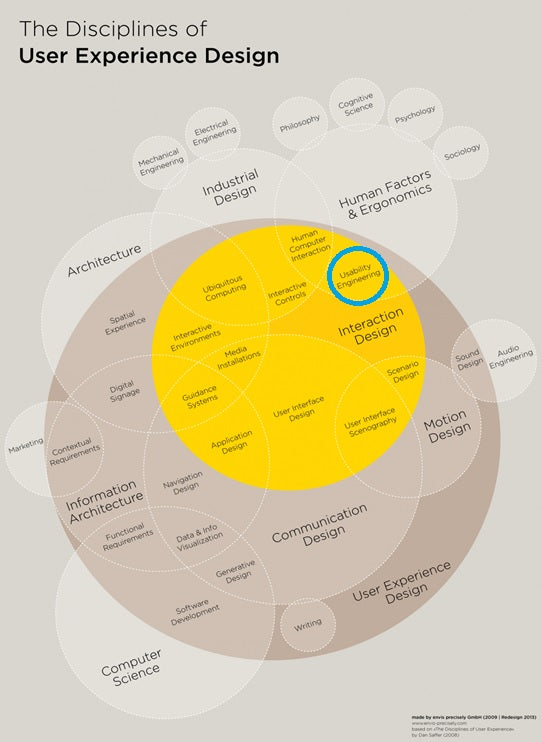
To place usability engineering within a multidisciplinary environment, that is, one encompassing all disciplines related to user experience design, we must link it with:
- interaction design,
- human-computer interaction,
- human factors and economics,
- interface design,
- ubiquity,
- industrial design,
- sound design,
- communication,
- writing and editing (the text accompanying the system),
- the decorative context,
- navigation, and
- information architecture.
So, when designing a system, while it's difficult to have a specialist in each of these areas, we should at least look for one or more people who have as much knowledge as possible in their area and, at the same time, are capable of seeking complementary knowledge outside of it. But this must be done by recognizing that need, understanding what one doesn't know in order to complement it with the skills and knowledge of another person.
By HCI, I refer to the term Human-Computer Interaction. This is a research area and practice that emerged in the early 1980s, initially as a specialty area of computer science encompassing cognitive science and human factors engineering. It primarily arose around usability, but over time both usability and HCI have evolved.
This evolution has created space for more holistic concepts such as user experience.
UX, beyond a system being usable, aims for it to be:
- Useful
- Desirable
- Accessible
- Credible
- Valuable
- Findable
That is, there are other attributes that make a product or service adopted by people over time.
When I talk about design, I mean design as a process, a process that allows us to find solutions taking into account people's needs. Basically, that goes far beyond interface design, graphic design, or making a brochure or editorial design. When we talk about solution design, we refer to what Steve Jobs said: "design is not just what it looks like and feels like. Design is how it works." It's everything behind an interface, for example.
It emerged in the 90s in the Nordic countries, in parallel with the work of the IDEO consultancy in the United States. What can it be useful for? As a discipline, it brings us methods and tools that go beyond software and allow us to approach people to design or redesign health services.
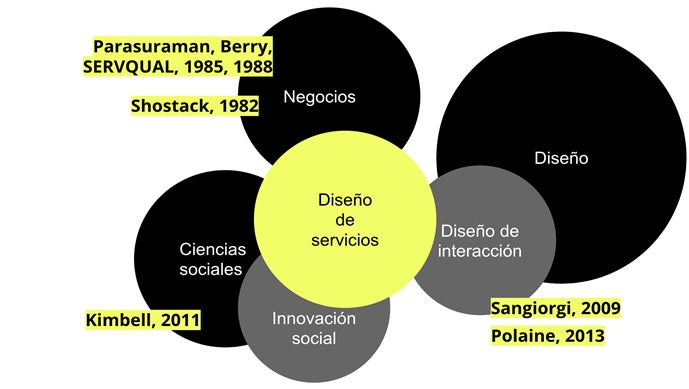
Service design also originates from multidisciplinarity and is mainly nourished by interaction design, social innovation, social sciences, business, etc.
Service design helps to innovate (create new) or improve (existing) services to make them more useful, usable, desirable for customers, and effective and efficient for organizations. It is a new, holistic, multidisciplinary, and integrative field.
It is integrative because, basically, it brings together different perspectives and articulates the needs of people at different levels within an organization, both internal and external.
Source: self-made.
Finally, as a summary of this article, I would like you to remember the following:
- Design is important for facilitating and improving people's lives.
- A poorly designed system can have serious consequences.
- The context of use is fundamental when designing technological solutions.
- Beyond usability, we need to focus on user experience (UX) and service design (which goes beyond the technological solution).
Have you had experience in developing services or products for the healthcare sector?
As I mentioned earlier, I will continue to address this topic in a subsequent article dedicated to UX Research in healthcare.
(1) Stericycle. (n.d.). Recall Index. Available online, accessed June 3, 2021.
(2) Fortune.com, Death by a Thousand Clicks: Where Electronic Health Records Went Wrong. Accessed June 3, 2021.
(3) Good, M. (1988), Digital Equipment Corporation (DEC). Digital Technical Journal, No. 6, February 1988, 125-133. Accessed June 3, 2021.
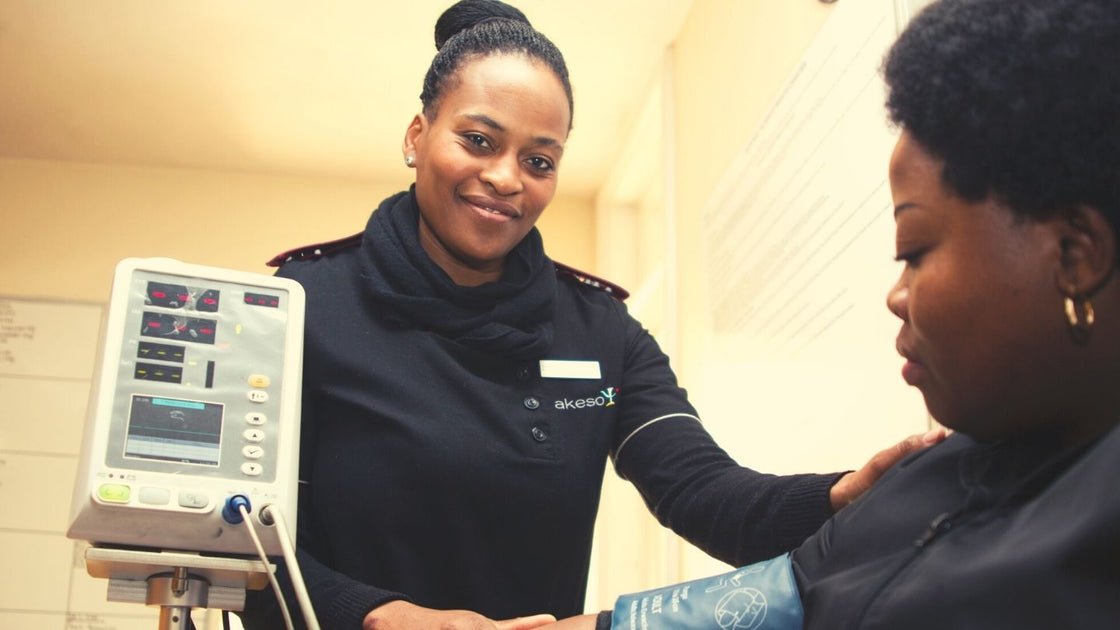
By National Cancer Institute on Unsplash.

 By
By