In a brand's lifecycle, it's common to opt for rebranding to adjust its image to new realities, whether internal (of the company) or external (of the environment). With this article and another one I'll publish soon, we'll delve into this world, explaining what rebranding means, reviewing practical illustrated tips, and I'll also tell you how this process went with FREED, my own company.
Rebranding is the process of changing a corporate image within an organization. Rebranding isn't just about changing a company's name or logo; it's a deeper procedure that ranges from strategic aspects, such as finding the brand's purpose, to more specific ones involving corporate identity.
Before we start - and especially if this is your first time on this blog or we haven't met yet - I want to quickly tell you about FREED. In short, I founded UsabilityChefs at the end of 2013: it was a startup focused on developing usability and user experience (UX) testing solutions for digital teams. Almost 7 years later, UsabilityChefs went through a rebranding and renaming process to become FREED, an acronym that stands for From Research to Experience Design. This rebranding is the logical consequence of a process of reflection, introspection, and work of more than a year.
Next, I want to share with you a synthesis of everything learned on that extensive and very fruitful journey.
Now that you know what rebranding means, let's look at the reasons that would lead to the need to review a brand's image, which can be based on positioning, expected growth, expansion plans, and even reputation issues or an outdated image.
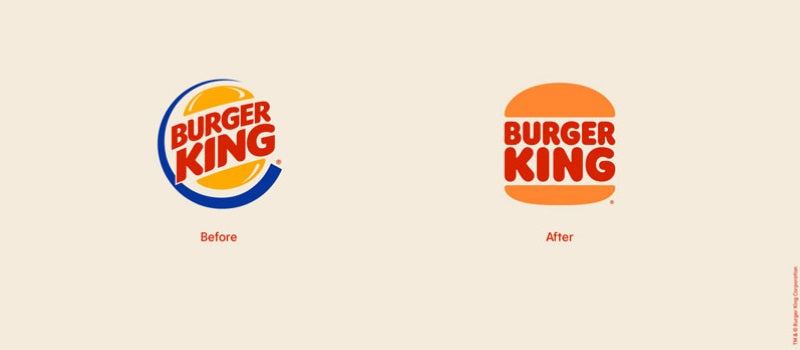
Before delving deeper, let's look at a very popular case: Burger King's rebranding highlights a visual identity optimized for the digital experience, but also closer to the world of food. This is the case, at least, in terms of shapes:
Are you thinking about rebranding your brand and don't know if it's the right time to do it? Some common scenarios that are usually indicated for it are the following:
-
The brand image no longer represents the company's purpose, nor its products or services. This can happen naturally as the company evolves or because it needs to enter new industries and the brand is no longer suitable for connecting with these new customers.
-
Corporate identity is inconsistent. This commonly occurs with large brands, although it also affects smaller ones. It happens when different fonts, inconsistent colors or photographs begin to be used, and the list could go on. Over time, in our daily lives, we move away from the brand definitions we have made or, simply, there are decisions we did not adopt at the beginning and stages we skipped, such as creating our brand manual. All of that, in the long run, takes its toll and leads us to improvise. That improvisation is what creates inconsistencies.
-
The brand architecture is very complex. This happens when several independent or semi-independent brands coexist under an umbrella brand.
-
The brand image is outdated, meaning it is perceived as old-fashioned or out of context. An outdated logo can perfectly make a brand be perceived as uninnovative and outdated.
-
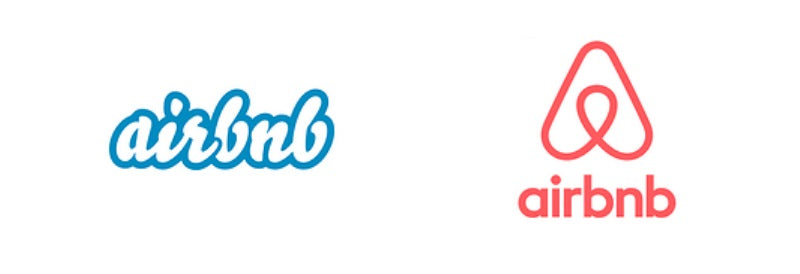
The company has grown and its new identity must convey this growth, as well as all the transformations that a process of this nature entails. This is the case of Airbnb's rebranding: a company founded in 2008 that rebranded after 6 years, launching its new corporate identity in 2014 after a rebranding process.
-
Market evolution: the market is changing and the brand requires an adjustment to be competitive. It is necessary to emphasize that brands must evolve according to their environment.
-
The company has acquired other brands or a merger process has occurred with another company, requiring adjustments at the corporate identity level and often at the name level as well. In some cases, rebranding is accompanied by renaming.
-
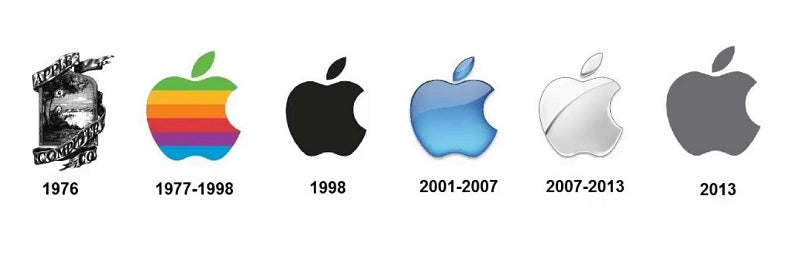
Significant structural changes, such as a new president. This was the case of Apple with the arrival of Steve Jobs in 1997, when the new CEO eliminated the rainbow from the corporate identity. Obviously, a change of direction is not a reason for rebranding but, if this change comes to move something relevant in the company, it may be necessary. If we take it to the world of small businesses, a change of owner (a new owner buys the goodwill of an existing business) or a generational change (children take over the family business), it makes sense to think about a rebranding, if not total, at least partial. Later we will see what the difference is.
-
The need for internationalization: when a company needs to expand internationally, it is often necessary to evolve its brand identity to be competitive in new markets. Or to be "positionable", for example, in a new cultural environment, a different language, a new way of doing things, etc.
-
Bad reputation. If for "x" reason your company is going through a bad time that affected its reputation in the market, a rebranding may be necessary. Be careful, rebranding without solving the underlying problems will not help at all, but in addition to solving the underlying problem, it may be necessary to review the brand's identity. Among the emblematic cases is McDonald's, whose reputation was impacted by the movie "Super Size Me", having to rethink everything from its menus (incorporating healthier options, such as salads) to the design of its premises.
-
The brand is very similar to others and confusion is generated. If both companies are in different markets, both geographically and industrially, confusion may not arise. However, if they have a presence in the same country and, moreover, in the same industry, it is very likely that an identical or almost identical name (suppose there is one letter difference), or a very similar logo, along with the use of very similar colors, will surely generate confusion among customers.
-
Need to reinvent itself. This last reason rarely comes alone. Generally, it is rather a sum of factors: for example, several of the 10 previous reasons.
Although several of the reasons we just saw have a negative connotation or are negative consequences of internal or external situations to the company, rebranding is not only necessary when things are going badly. It can be positive to rebrand in the midst of a boom period. Let's look at an example.
In FREED's case, the need for rebranding came mainly because we started delivering solutions that moved away from the world of usability and UX. Since the name UsabilityChefs was very much related to the word "usability," people associated us with this concept. That was very good at first, but then the name started to fall short. Indeed, a couple of years before the rebranding, we went from being a startup to a consulting-based business model. However, this gap between the name (UsabilityChefs) and the solutions (much more than usability testing and evaluation) did not generate an impact on sales.
In summary, what motivated our rebranding was reason #1 on the list: The brand image no longer represented the company's purpose, nor its products or services.
Adding to that, we can also say that the corporate identity was somewhat inconsistent (reason #2). In addition, there was a bit of reason #3: the brand architecture was somewhat complex since UsabilityChefs coexisted with FocusDesign, our brand of design kits that we used in consulting projects.
When I say that rebranding should not only happen when things are bad, that's exactly it: if a company has consolidated but its brand no longer meets its strategic needs, it may be time to rethink the brand.
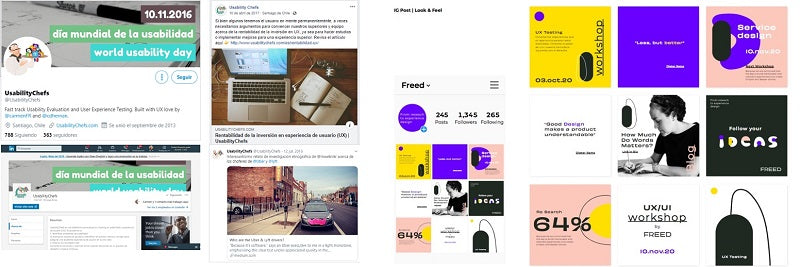
In this image, we see FREED's before and after rebranding:
A rebranding can be complete or partial. By complete, we mean a radical change in brand image, while a partial rebranding means making adjustments to the brand.
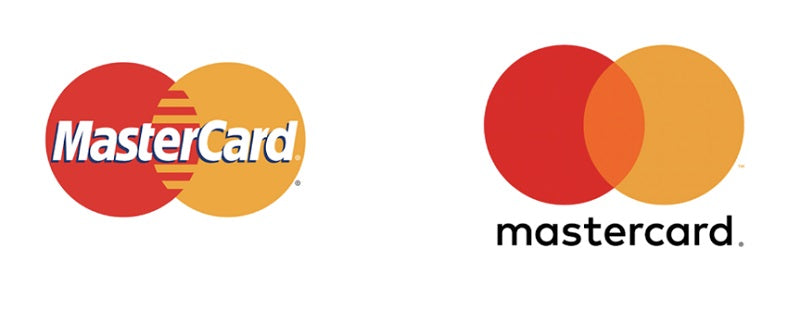
A classic example of partial rebranding or refresh (a "refreshed" brand) is Mastercard's, where the overlapping circles were maintained, but there was a significant change in typography:
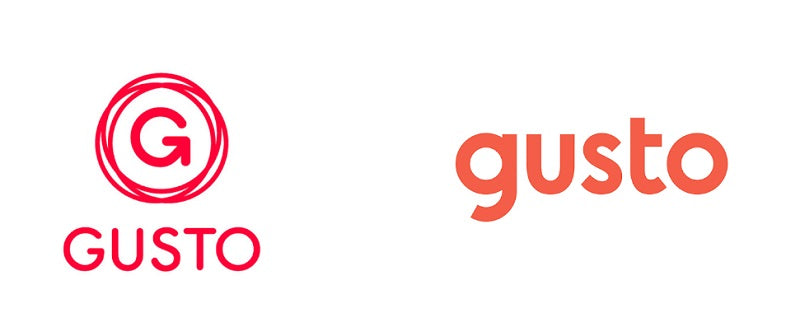
A radical change was seen in the Gusto brand, which abandoned the circular graphic element to focus on typography:
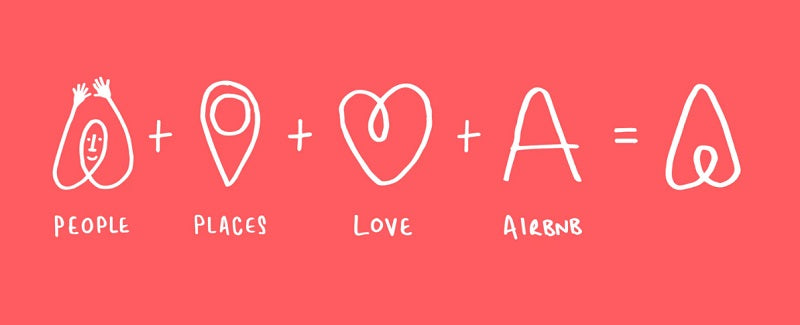
Airbnb's change has also been radical:
Source: Design.studio
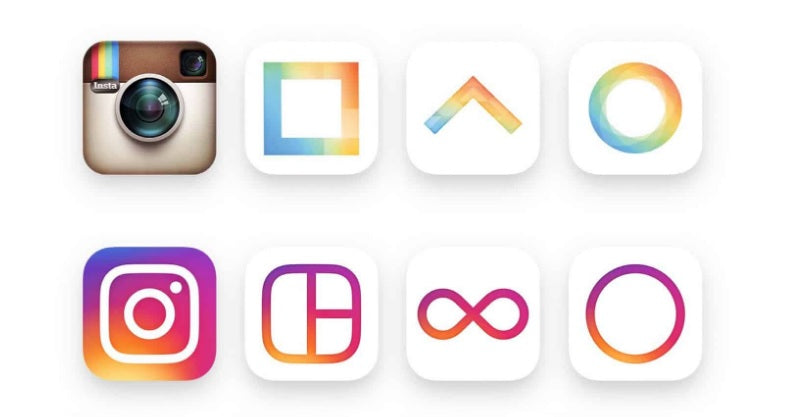
We can say the same about Instagram:
FREED's change was complete or radical as it not only involved an image renewal, but also a change in the brand's naming:
What did you think of this first approach to rebranding? With what you've read so far, do you understand what rebranding means? Do you think your company needs to make a change to its brand? Soon I will publish a new article where I will explain how we carried out our rebranding process and all the aspects you should consider if you want to embark on it.

 By
By