In a world where people expect integrated and seamless experiences with brands, omnichannel has become a central concept for organizations. That's why it's vital for you to understand exactly what omnichannel is and why it's so important today. Let's begin...
What is Omnichannel?
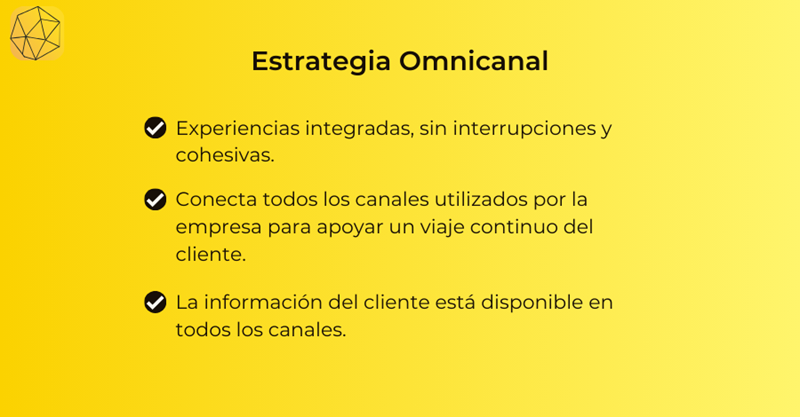
Let's start with the basics: omnichannel refers to the ability to provide current and potential customers with integrated and seamless experiences across multiple channels. That is, it's about connecting the different channels used by a company to support a continuous customer journey. This means that the customer experience should continue smoothly if they switch from one channel to another, whether online or offline.
Although it sounds like a relatively new concept, omnichannel was first defined by Verhoef et al. (2015) as:
“being an omnichannel organization means placing the customer at the center of the company's interaction through channel integration, consistency, and a frictionless customer experience.”
Get our analysis in your inbox
Subscribe to the FREED newsletter: applied research, trends and tools.
No spam. Unsubscribe anytime.
What does that look like in practice, from a people's perspective?
It will be clearer if we look at an example. Let's start with the video "Andrea's Journey," which tells us about the challenge of the purchasing journey for a person from the moment they discover they have a need, to researching options before making a purchase.
In an omnichannel experience, the transition from Instagram or another social network to the website, to the call center, and to the physical store would be seamless and frictionless for the customer. The necessary information would be available across all channels.
If this were not the case, it is likely that upon arriving at the branch, for example, they would not have all the information available to carry out the product delivery, because some customer data would have been lost in the journey and the experience would not be fluid.
Do you see the difference?
Now, even when the purchase experience is a fairly linear journey, the after-sales experience is often more complex to design and manage in practice. Even more so for traditional companies, meaning those that were not born in the digital realm and do not have integrated technology or processes because they added channels and touchpoints as they evolved. Think of banks that started with physical branches and call centers, then moved on to having websites, and finally began creating applications, and often more than one application. All that, plus social media.
A brief history
The first references to omnichannel can be found in the mid-1990s. At that time, a first wave of the phenomenon was identified, when retail businesses "launched the first online channels that were characterized by being technology-driven, managed in silos, and not integrated with traditional channels" (Huuhka et al. 2014).
In this evolution, we find a second wave of the omnichannel phenomenon around 2005 to 2014, when the need to integrate those channels that had been operating in silos was detected. "Retailers began to focus their strategies on consumer needs and to understand that customers had to shop in the channel of their choice" (Huuhka et al. 2014).
Finally, the third wave extends from 2015 to the present day, when "the rise of omnichannel retail as a response to a shift in people's purchasing behavior" is seen. Here, the integration between different channels is greater, and each of them is a point of contact between the person and the brand. Undoubtedly, the COVID-19 pandemic (WHO, 2019) played a crucial role in accelerating the adoption of omnichannel strategies and e-commerce platforms, such as Shopify, "allowed smaller local retailers to get online for the first time" (Business Insider, 2020).
Omnichannel vs. Multichannel
To make it even clearer, let's compare a multichannel strategy, which is the traditional and most common way to manage customer experience, with an omnichannel one.
Multichannel
In a multichannel strategy, the company manages different channels and touchpoints to connect and interact with its customers, such as a website, Instagram, chatbot, call center, and a physical store, for example. However, each channel is independent of the others, they are highly segmented, and there is little to no integration between them. The same applies to customer data, which makes it impossible for the experience to be fluid, continuous, and frictionless.
Omnichannel
On the other hand, an omnichannel strategy unites all channels, offering a complete view to customers. This means that regardless of the channel, the customer and company employees will always find the necessary and updated information. So, while multichannel offers a fragmented experience, omnichannel provides an integrated and cohesive experience.
Let's look at this with another very simple example:
In this case, a customer starts an interaction in the website chat but decides to end the session and call customer service. In a multichannel strategy, the customer would have to re-enter all their data from the beginning, whereas in an omnichannel strategy, the customer's information would automatically be available to the call center executive, thus ensuring a seamless experience.
Why is omnichannel so important?
Today, consumers expect fluid and consistent interactions across the multiple channels a brand makes available. Therefore, omnichannel has become essential because it allows companies to meet those expectations and differentiate themselves from the competition. To understand the importance of omnichannel, let's review some of its most significant benefits.
Benefits of omnichannel
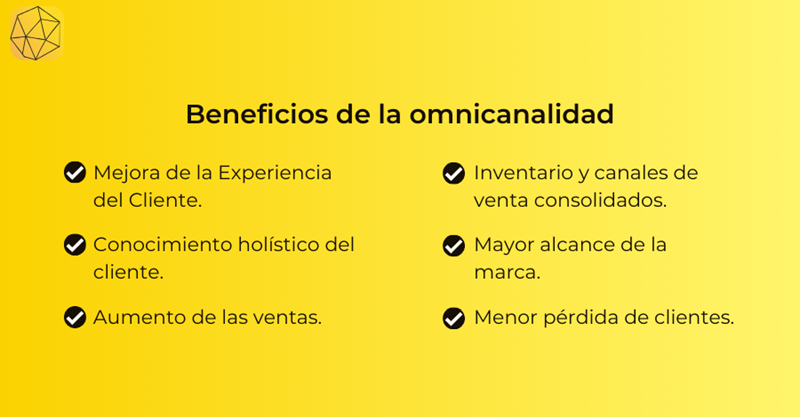
Improved Customer Experience: Channel integration allows customers to switch channels seamlessly, improving satisfaction levels and facilitating brand loyalty.
Increased sales: By making it easier for customers to purchase through their preferred channel, conversion probabilities increase.
Complete customer knowledge: Allows companies to better understand their customers and personalize their offers and communications.
Inventory and sales channel consolidation: This saves resources and simplifies operational processes.
Expanded brand reach: Through multiple channels, companies can reach more potential customers.
Reduced customer churn: Improves customer satisfaction and loyalty, reducing the churn rate.
Transitioning from a multichannel to an omnichannel organization
Obviously, not all companies were born omnichannel, nor were they born digital. Therefore, it must be understood that an evolution can exist, and any organization could perfectly transition from multichannel to omnichannel.
This is a transformational process that arises because within the organization, in the industrial, social, and market context, there is a change that forces it to move from one state to another. For example, we already saw that the COVID-19 pandemic accelerated this process in many organizations.
But the biggest driver for a transition from multichannel to omnichannel is for it to become a top-down strategic priority. This means there is a willingness to invest in systems, people, and processes, with an integrated brand view and integrated customer-centric metrics.
For an organization to achieve an omnichannel customer experience, "its actual structure should be customer-driven, not channel-driven. Furthermore, people interact with a brand, not specific channels. In this context, the focus should be on the CX with the brand throughout the entire customer journey, beyond a single channel" (Gerea and Herskovic, 2022).
The Maturity Model for Omnichannel CX Management
Implementing an omnichannel strategy presents significant challenges, such as the need for specialized experience designers and the modernization of service systems. If you want to delve deeper, I suggest several readings on how to evaluate an organization's capabilities in omnichannel management. To start, learn about our Maturity Model for Omnichannel Customer Experience Management, which helps understand your company's current level.
As you can see, omnichannel is essential for providing integrated and consistent customer experiences across all brand channels. Although it presents implementation challenges, the advantages, such as improved customer satisfaction, increased sales, and better customer understanding, make the effort worthwhile. In that sense, companies that adopt an omnichannel strategy will be better positioned to compete and thrive in today's market.
References
Verhoef, PC; Kannan, PK; Inman, JJ From Multichannel Retailing to Omnichannel Retailing. Introduction to the Special Issue on Multichannel Retailing. J. Retail. 2015, 91, 174–181.
Huuhka, A.; Laaksonen, M.; Laaksonen, P. The Evolution of New Systemic Forms in Retail and Digital Business. Contrib. Int. Bus. Acta Wasaensia 2014 , 303 , 239–249. [ Google Scholar ]
Rebranding: What it is and how to know if your brand needs it. Here, we answer these questions with real-world examples and by sharing our own experience.

 By
By