We already anticipated this in our 2022 article: TikTok and Instagram endanger Google. Since then, various studies have confirmed this trend, and it is now clear that Generation Z is moving away from Google as their primary search engine, preferring to use TikTok and Instagram to find local information instead.
This is mainly due to social platforms becoming increasingly popular search tools, especially among young people. Moreover, these social networks are incorporating more robust search functions that allow users to find content, local businesses, and information in a similar way to how they would on Google.
The impact on the search giant is notable. A SOCi study reveals that among young people aged 18 to 24 (1):
- 67% use Instagram to search for information.
- 62% use TikTok for their searches.
- Google ranks third with 61%.
It should be clarified that most people use multiple platforms for searching, which is why the figures exceed 100%.
So, what should be done about it? While Google remains the preferred option for older generations, brands that want to reach Generation Z must have a robust presence on social platforms like TikTok and Instagram to connect with them and leverage the tools they offer to create content in various formats, paying attention to what is most popular among the target audience.
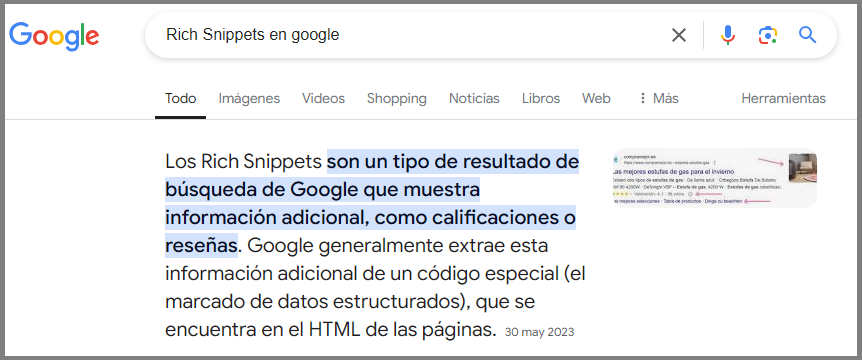
These occur because Google, or other search engines, primarily display content that can answer the searcher's query (Rich Snippets), instead of the traditional blue links that lead to different websites that might respond to the search intent. In other words, they provide answers automatically and prominently, without the user having to click to go to another website.
It's important to understand that this happens because the search engine wants to keep us on its website for as long as possible. On the other hand, users prefer zero-click results due to the ease and speed with which they get answers to specific questions, concisely and directly, which saves them time and effort.
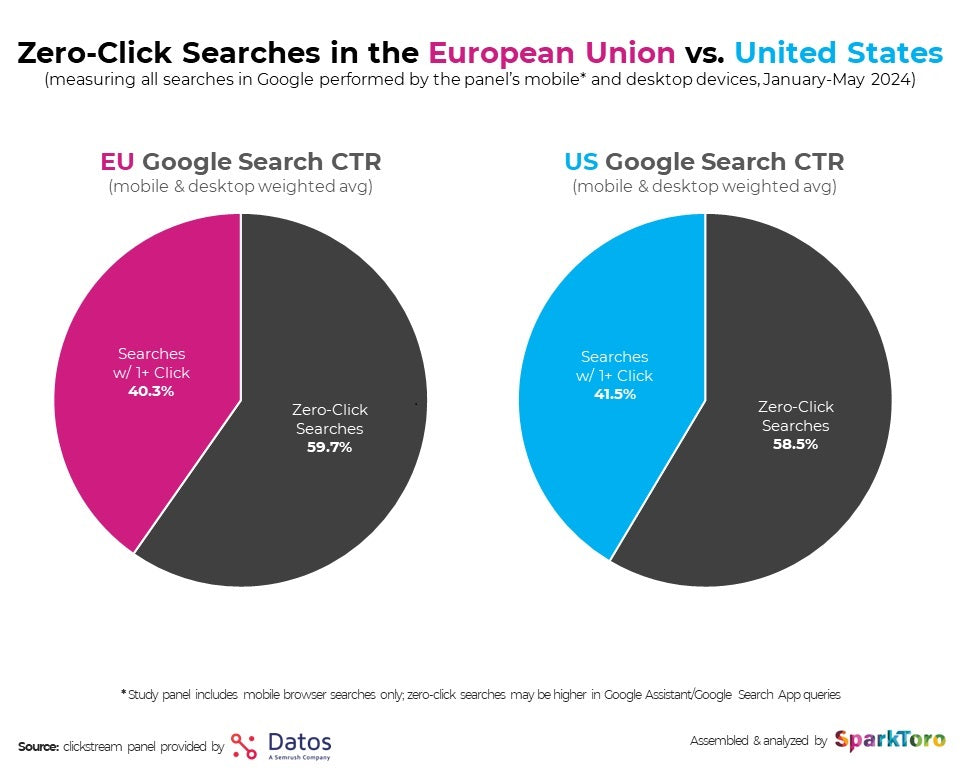
According to data from the 2024 Zero-Click Search Study, combining mobile and desktop devices (2):
- In the United States, almost 59% of searches are zero-click.
- In Europe, almost 60% of searches are zero-click.
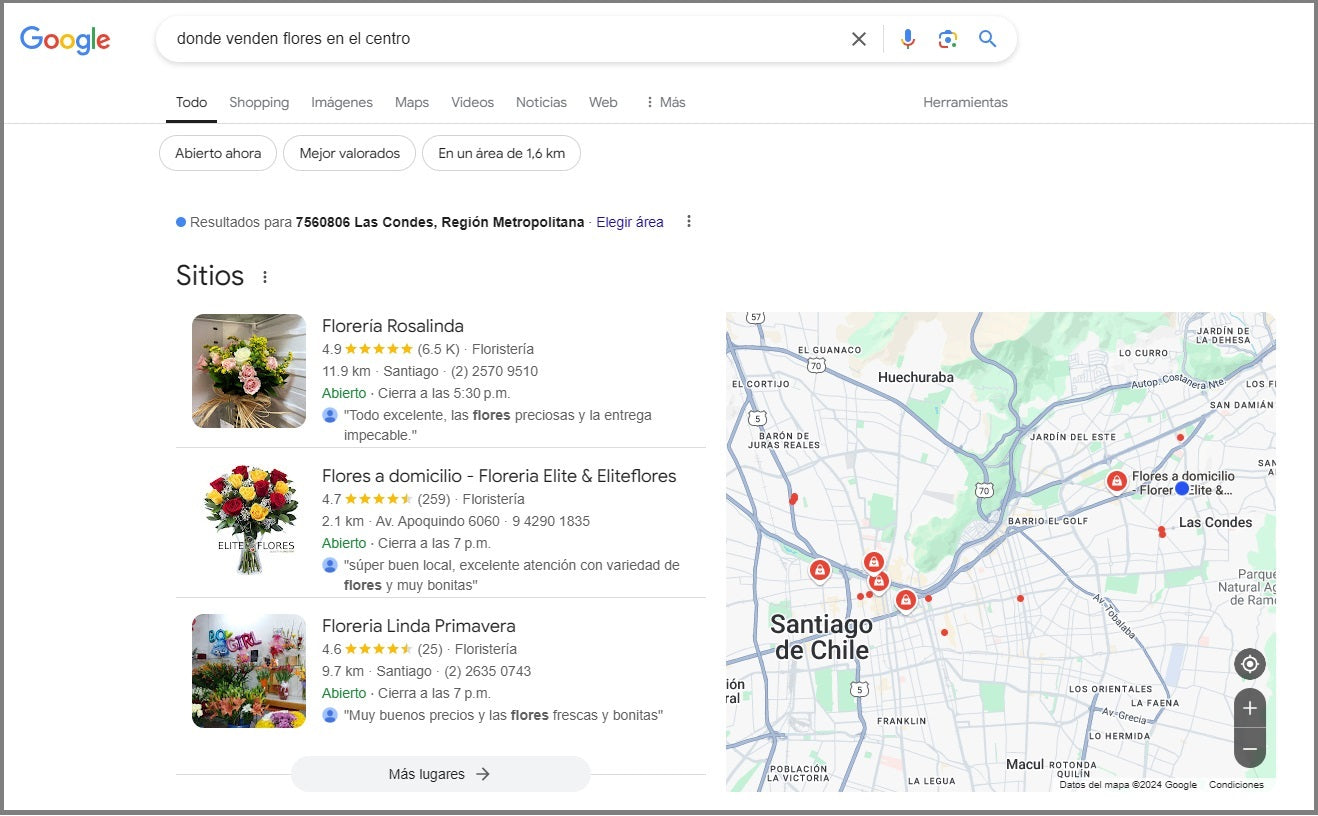
This response format is common in more precise searches and closed questions, such as:
- The location of a place.
- A rating.
- The meaning of a word.
- Song lyrics.
- The opening hours of a local business.
The increase in zero-click searches significantly affects website traffic. As search engines like Google offer more direct answers, fewer people click on links leading to websites because the search is resolved directly on Google. This can result in a significant decrease in traffic for websites that rely on organic results for traffic.
On the one hand, this trend has forced adaptation and optimization of content to appear in featured snippets and rich answers. This involves:
- using the correct keywords,
- creating relevant content, and
- optimizing for local SEO if you have a physical store.
On the other hand, it is important to understand that, within certain usage contexts, zero-click searches are the natural evolution of people's behavior, and this is not necessarily synonymous with a problem or performance drop for a business. For example, if people search for a restaurant's opening hours and end up going to the location without visiting the website or using Google Maps, we can say that the information they found on Google was useful to them. In this context, the Google Business Profile administrator should continue to update that data and not overlook it.
We must consider within the zero-click trend Google's AI overview or general descriptions and artificial intelligence searches in general, a technology we will discuss later.
It became popular as mobile phone use became widespread and also with the introduction of this technology in other devices such as smart TVs and voice assistants (Google Assistant, Amazon Alexa, Apple Siri, and Microsoft Cortana).
According to an UpCity study, half of the US population uses voice search functions (3). Another study by PricewaterhouseCoopers indicated that 70% of consumers prefer to use voice search instead of typing (4).
These preferences can be explained because voice search simplifies the task and speeds up the satisfaction of a person's needs. By using voice instead of typing, search terms can be longer, more detailed, and conversational. Indeed, voice searches that yield good results often have three or more words in the query, precisely because longer search terms have a much stronger intent, as users know specifically what they want.
Furthermore, being more conversational searches, people use natural language, ask more questions, and include words that can provide more clues about what is needed.
And a very important aspect is accessibility, because voice search is a good inclusion tool for blind people.
To understand how voice search differs from written search, let's look at some examples:
| Written Search | Voice Search |
| White linen summer dress size 40 | Where can I buy a white linen summer dress size 40 for humid weather? |
| Men's size 11 rubber sole shoes | What are the best size 11 rubber sole shoes for a young man? |
| Organic face cream | What is the best organic face cream to buy for women aged 40? |
From an SEO strategy perspective, you can optimize your content for voice search by working on the following:
-
Use long-tail keywords: Voice searches often include complete phrases and questions, rather than short keywords. To do this, research the questions potential customers might ask about your products and services.
-
Use natural, conversational language: Write texts as if you were talking to a friend. Avoid overly technical or formal language.
-
Anticipate questions users might have about your products or services and provide answers in the content. A good resource is to create FAQs or guides that directly answer common questions.
-
Think about search intent: What is the user really looking for when performing a voice search? Are they looking for information or do they want to buy something? You should adapt your content to meet those needs.


Image search is a search engine feature, like Google and Bing, that allows us to search for information using an image instead of having to enter text. This functionality is becoming increasingly popular in total queries, and most come from mobile devices.
It's so popular because:
- It facilitates the search for a product or object, making the task more agile.
- Images can be very attractive.
- Image searches provide additional information.
Regarding SEO strategy, this point is particularly important for online stores, as image search presents a great opportunity. In this case, the work for positioning involves optimizing product images to improve visibility in search results. Let's look at some tips:
- Pay attention to appearance:
- Use original, high-quality images that show product details.
- Images should be attractive, with a background that highlights the product and good lighting.
- They should have good resolution (minimum 1200 pixels on the longest side).
- They should allow clear appreciation of the product's characteristics and elements, showing textures, size, and inspiration for its use.
- Publish several photographs to show different angles of the product.
- Optimize the image:
- Name the file with relevant keywords, separated by underscores (e.g., "men_blue_pants.jpg"). This helps images be found in search.
- Encourage your customers and users to share images on websites and social media, mentioning and linking to the brand's website.
- Add data to the image properties, such as the author's name, copyright license link, and website link.
- Add the ALT attribute (alternative text) with a brief, keyword-rich description of the image. This helps with positioning and for people using screen readers.
If you want to delve deeper, you can read our article Image search: position your online store's photos.
Large Language Models (LLMs) were introduced into search engines, ushering in the next stage in the evolution of online search as we know it from the Yahoo era and as we have experienced it with Google and Bing.
And what's the difference? Until then, we knew that traditional search engines simply indexed websites and presented a list of links in response to a query, where we clicked to access the information we needed. Generative search, on the other hand, uses artificial intelligence (AI) to analyze and synthesize information extracted from multiple sources (web pages), presenting the user with a complete and personalized answer.
In other words, generative search can directly answer our queries, and it would no longer be necessary to click on links to web pages, unless you want to delve deeper into the topic or verify that the AI is correct.
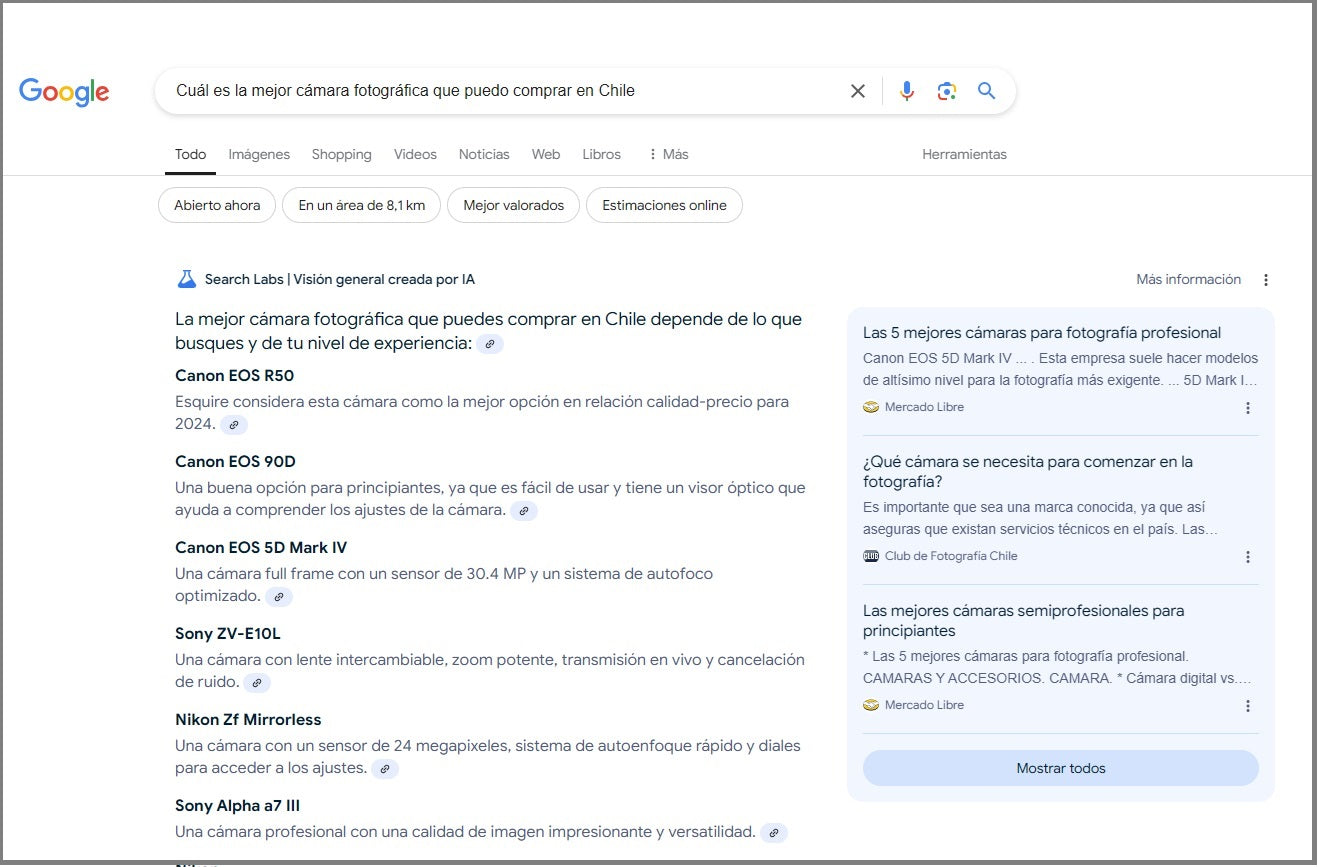
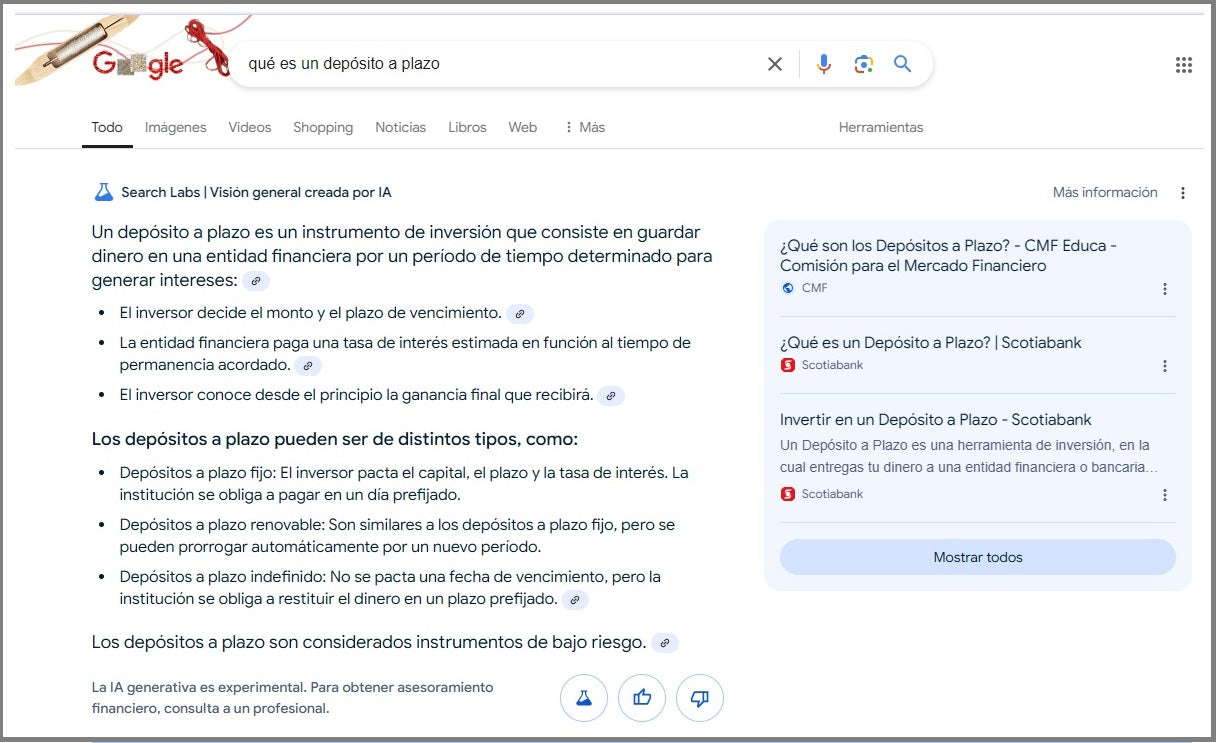
Example of generative search with Google AI overview:
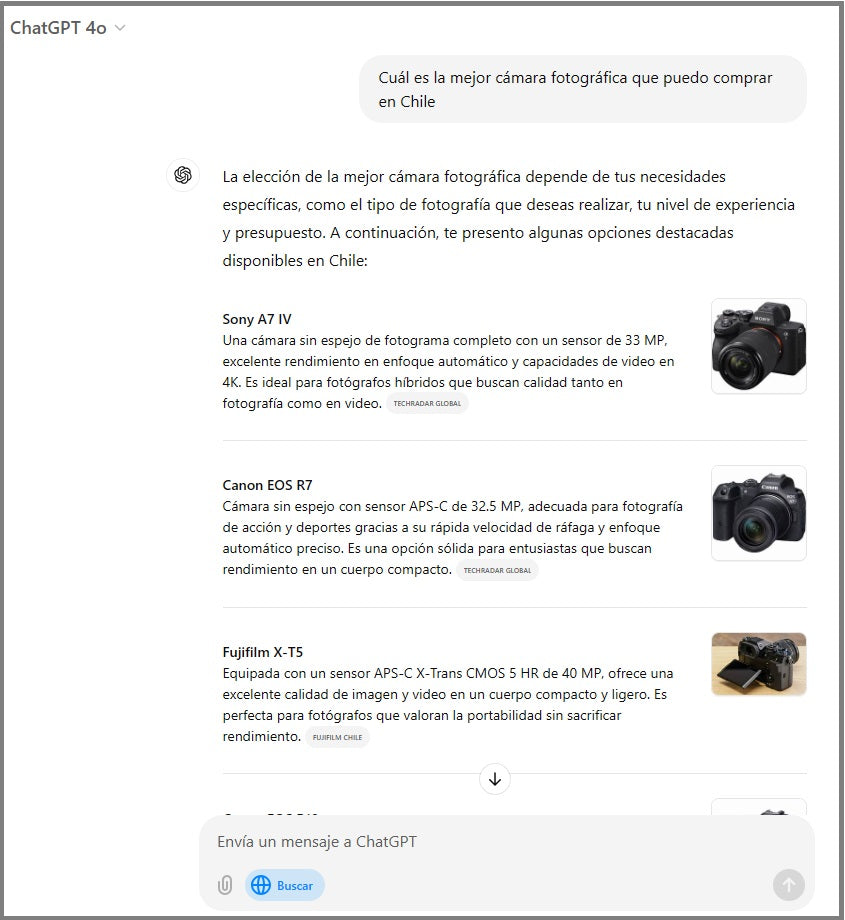
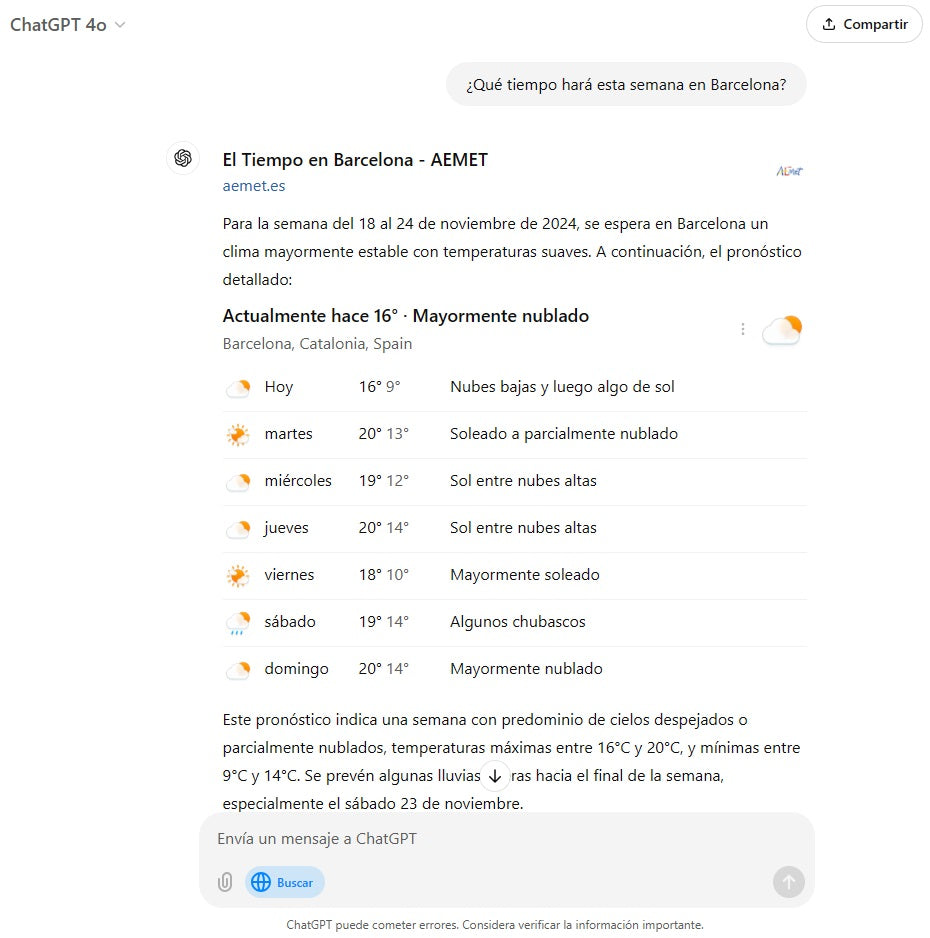
Example of generative search with ChatGPT Search:
From the user's perspective, generative search offers a number of advantages, such as:
-
Fast and personalized answers: AI analyzes and synthesizes information from multiple sources for the user on a single screen, eliminating the need to navigate through several web pages to find the desired information, saving time and effort. Because artificial intelligence can understand the context of the query, it presents more relevant and useful information to the person.
-
Answers to complex searches: By using AI that understands conversational language, we can ask multidimensional questions based on more than one search intent, rather than relying on simple keywords. AI can even anticipate user needs and present more complete information before it is explicitly requested in a new query.
-
A conversational and intuitive interface: It allows interacting with AI in a similar way to how we would with a human expert, facilitating the formulation of follow-up questions and obtaining clarifications, deepening the understanding of the topic. Likewise, AI can present information in different formats, including text, images, videos, and audio, which facilitates the understanding and consumption of information.
From the user's point of view, AI can provide biased or false information that includes racist, sexist, or classist assertions, or that responds to very marked stereotypes. It has even gone viral with responses that suggest performing actions that can be dangerous for the user.
Furthermore, AI often hallucinates, inventing information that does not correspond to reality or is outright erroneous. This forces us to check other sources to verify the information provided by AI.
On the other hand, there is the reality faced by website administrators who primarily depend on traffic generated by searches and who have worked for years to achieve good organic positioning on Google or Bing. The decrease in organic traffic occurs because, by providing complete answers directly on the search results page, the need to click on links to visit the original web pages is dramatically reduced. And this happens even if the AI's answers include citations with links to the web pages used as sources of information. Of course, we are talking about zero-click searches.
Also known as Search Generative Experience (SGE), it represented a fundamental shift in how we interact with search engines. It was the first AI search experience where the user gets personalized answers directly on the search results page (SERP).
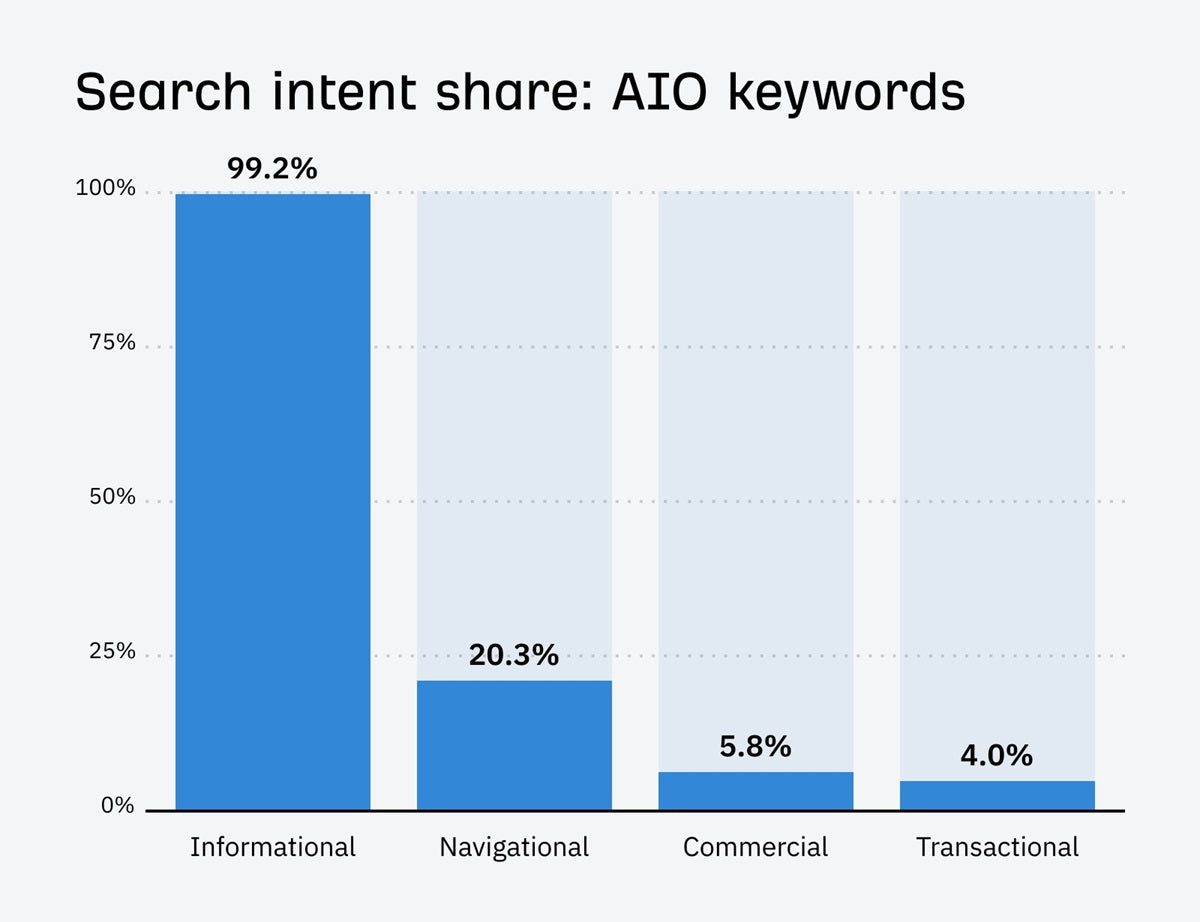
According to an Ahrefs study, informational search intents, which belong to the top of the sales funnel, are the most likely to appear in the AI Overview (99.2%) (5). This means that when we are looking for "informative or educational content aimed at a broader audience," the answer is more likely to be generated by artificial intelligence, which implies a significant reduction in organic traffic to websites focused on informational searches that have been used as sources to create the automatic response.
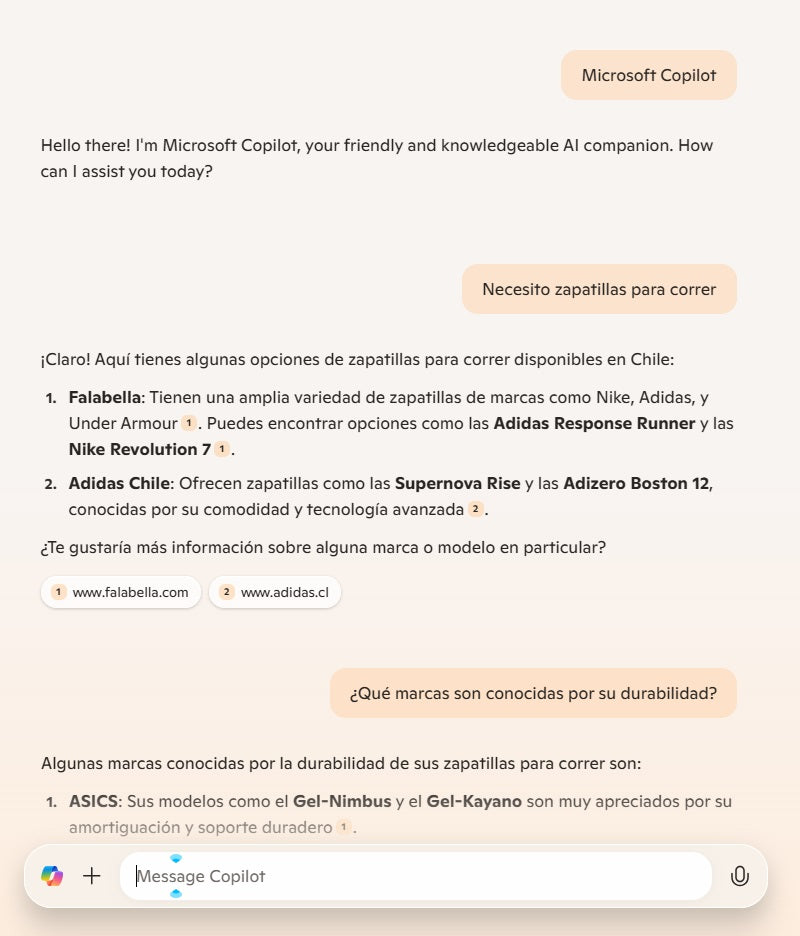
It is Microsoft's search engine powered by OpenAI's AI, the creators of ChatGPT. It also offers direct answers to complex questions, so people can interact with the search engine through a chat, asking follow-up queries to get more specific information. For example, after getting an initial answer about the best running shoes, the user might ask, "What brands are known for their durability?"
It allows users to search for updated information on the internet within the ChatGPT interface. Unlike its previous versions, which relied on fixed training data, ChatGPT Search can access real-time information through a combination of search technologies, including Microsoft's Bing search engine. It works by integrating a "search" button into the ChatGPT interface. By activating this mode, users can ask questions or make requests in natural language, such as "What will the weather be like this week in Barcelona?" or "Do I need to bring an umbrella next week if I travel to Madrid?".
Instead of simply providing links to websites, ChatGPT Search retrieves relevant information from the internet and presents it concisely along with a list of consulted sources. Additionally, it can display information more attractively through widgets, for example, with weather, stock market, sports, news, and map information.
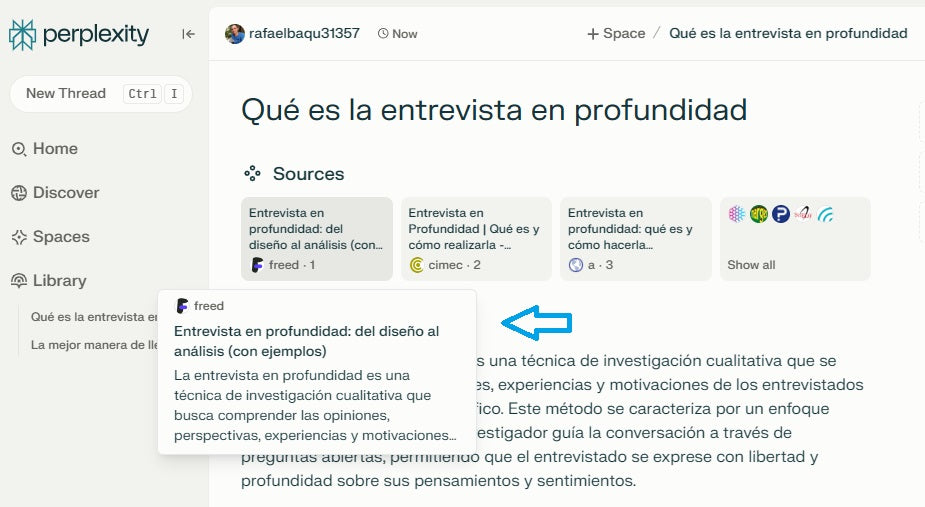
It focuses on providing a single answer to the user, eliminating the need to navigate through multiple links. For example, if a person searches for "the best way to get from Barcelona to Madrid," Perplexity AI will provide a concise answer that includes information on transportation, schedules, and nearby attractions.
Generative search is transforming the way people search for information on the internet. Undoubtedly, it presents challenges for organic traffic that involve adopting new approaches in SEO strategies to adapt them to this new landscape and work to ensure that websites can counteract the negative effects.
Let's look at some actions that can be integrated into an SEO strategy to address the challenges of generative search:
- Go beyond traditional SEO, focusing on thematic authority and thought leadership, prioritizing high-quality content that comprehensively answers user queries.
- Create unique and engaging content that stands out from the flood of generic and superficial content being massively created with artificial intelligence. The focus should be on unique experiences, human perspectives, and thought-provoking content.
- Use AI tools ethically and strategically to generate content. The result should always be edited and reviewed to ensure accuracy, reliability, and a natural style.
- Emphasize E-E-A-T signals, demonstrating expertise and authority on the subject. The idea is to build trust to give the right signals to generative search.
-
Build reputation by encouraging positive reviews and managing negative ones. This is achieved by being active on social media and managing online presence to improve brand perception. Public relations campaigns to generate mentions in reliable sources also help increase website authority.
- SEO optimization for long-tail queries. That is, creating content that answers specific questions, because generative search often relies on queries in question format. In this way, we take advantage of the high conversion rates of long-tail queries that have a stronger purchase intent.
- Experiment and innovate, testing different types of content and formats. Don't forget to leverage user-generated content.
With all of the above, we mean that the most logical thing is to keep the focus on people-centered content, but we must also be realistic and diversify traffic sources so as not to depend entirely on Google, just as we should not depend on social networks and AI.
Therefore, there is no need to fear AI. In fact, if you are an SEO professional and you keep your focus on users and follow the good practices that are the foundation of SEO, your content will probably be optimized for AI, and platforms like ChatGPT Search or Perplexity will become traffic sources for your digital assets.
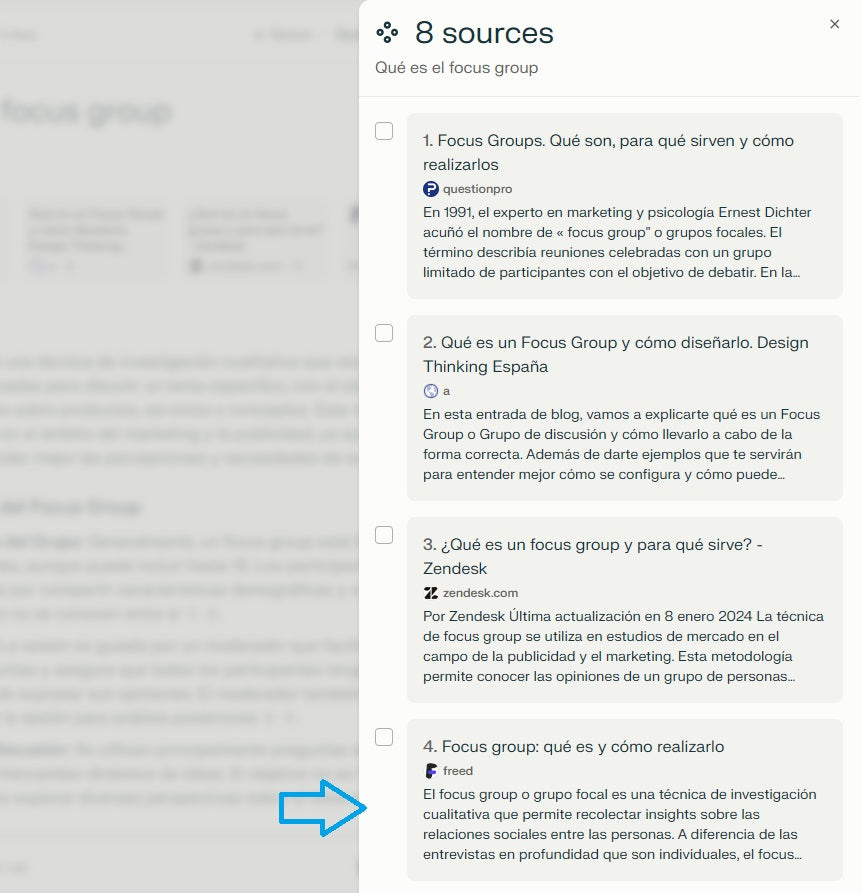
Here are some examples of how Perplexity is using the content we have created at FREED:
- Zero-click searches are on the rise.
- New generations search more on social media.
- Voice and image searches will continue to boom.
- Artificial intelligence, with generative search, is rapidly changing how we experience information retrieval.
- SEO faces new challenges due to search trends that can decrease organic traffic to websites.
- It is necessary to adapt SEO strategies to optimize content for this new landscape.
The introduction of artificial intelligence in search engines like Google and in conversational chats connected to the internet is reducing direct traffic to websites by synthesizing information on their results pages. This change presents a great challenge for sites that now compete to be included in these summaries, facing strict selection criteria. Additionally, AI is facilitating the massive creation of content, which forces websites to stand out through unique experience, authenticity, and a focus on building strong brands, as brand mentions are replacing the traditional role of links.
In this context, the future of SEO demands adaptation to new AI-based technologies. Strategies must be oriented towards optimizing content for AI-powered search engines, such as Google's summaries, ChatGPT Search, or Perplexity, ensuring proper indexing of websites. It is also crucial to offer high-quality content, based on experience and differential value for the user. At the same time, building a solid and recognizable brand becomes a priority, as mentions and references gain greater relevance in the digital environment.
(1) Kelly, C. (2024, March 14). Google loses in local search to Instagram, TikTok among Gen Z. Marketing Dive.
(2) Fishkin, R. (2024, July 3). 2024 Zero-Click Search Study: For every 1,000 EU Google Searches, only 374 clicks go to the Open Web. In the US, it’s 360. - SparkToro. SparkToro.
(3) UpCity. (2024, May 31). 50% of U.S. Consumers Use Voice Search Daily: 2022 Survey.
(4) PricewaterhouseCoopers. (n.d.). Consumer Intelligence Series: Prepare for the voice revolution. PwC.
(5) Linehan, L. (2024, November 15). I analyzed 300K keywords. here’s what I learned about AI overviews. SEO Blog By Ahrefs.

 By
By